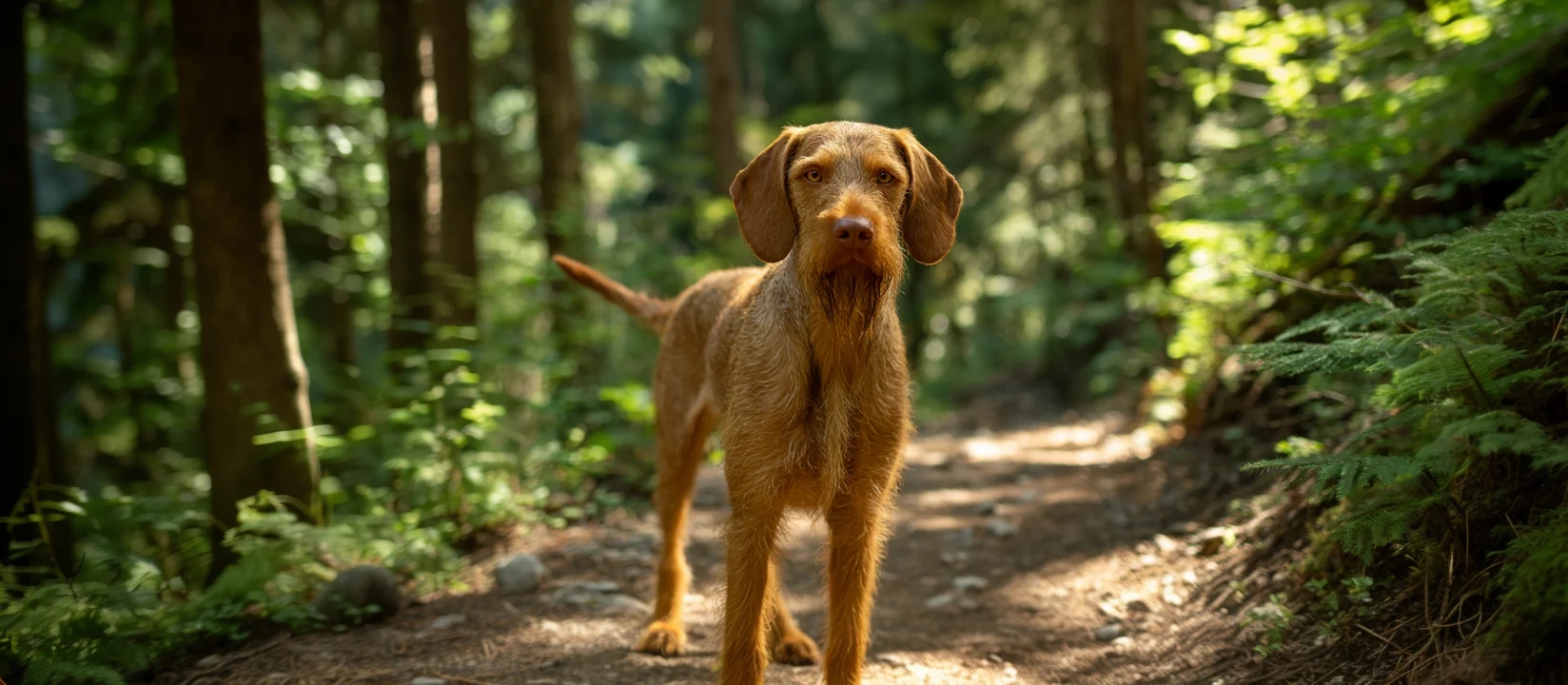
Wirehaired Vizsla
Breed Facts
Height
22-25 inches
Weight
45-65 pounds
Lifespan
12-14 years
Key Traits
Overview
Energetic, devoted companions with wiry coats and a gentle, eager spirit. These intelligent, affectionate dogs blend strong hunting instincts with deep loyalty—perfect for active families and individuals seeking a versatile, loving friend who thrives on adventure, close bonds, and plenty of outdoor fun.
Temperament & Personality
The defining trait of the Wirehaired Vizsla is his profound connection to his people. Often called "Velcro dogs," they form incredibly tight bonds and need to be an integral part of family life. This is not a breed that does well left alone in a backyard; they are happiest when they are in the same room, right in the middle of the action with their family. At home, a well-exercised WHV is calm, gentle-mannered, and demonstrably affectionate.
This gentleness is paired with a high-octane energy level and a sharp intellect. Bred for long days in the field, they are exuberant athletes who need an outlet for their physical and mental stamina. Their temperament is also marked by a notable sensitivity. They respond best to patient, gentle training and cannot tolerate harsh handling, which can cause them to shut down. While generally good-natured with children and other dogs when properly socialized, their strong, innate hunting instinct means they may not be suitable for homes with cats or other small pets that could be mistaken for prey.
Care, Living Environment, & Grooming
Providing the right care for a Wirehaired Vizsla centers on meeting their immense need for exercise and maintaining their functional coat. This is not a breed suited for apartment living. They thrive in a home with an active family and, most importantly, a securely fenced yard. Their prey drive is extremely strong, and if they catch an interesting scent, they will follow it without a second thought, making a physical barrier essential for their safety. They are indoor dogs who need to live and sleep inside with their family to be happy.
Exercise is the single most important daily requirement. You must be prepared to provide a minimum of one to two hours of vigorous activity every day. This is not a suggestion but a necessity for the breed's well-being. Brisk walks are a start, but they need regular opportunities to run hard in a safe, off-leash area. They make ideal partners for jogging, hiking, and swimming.
The WHV's wiry coat is designed to be protective and requires specific care:
- Brushing: A thorough brushing with a slicker brush or comb a few times a week will help remove dead hair, manage moderate shedding, and keep the coat clean.
- Field Maintenance: The coat is a magnet for burrs, twigs, and ticks. You must inspect it carefully and remove any debris after every outdoor excursion.
- Stripping: To maintain the coat's correct harsh, wiry texture, some owners learn to hand-strip the coat once or twice a year. This involves pulling out the dead outer coat by hand or with a special tool. Clipping the coat can damage the texture, making it soft and less protective.
- Facial Furnishings: The charming beard and eyebrows may need an occasional trim to keep hair out of your dog's eyes and food out of their beard.
Training & Socialization
Training a Wirehaired Vizsla is about building a partnership with a smart and sensitive canine. Their intelligence and eagerness to learn make them very trainable, but their "soft" temperament is the key to unlocking their potential. They require a patient, consistent leader who uses positive reinforcement techniques like praise and treats. Harsh words or physical corrections are highly counterproductive and will damage your bond with this sensitive breed.
A primary training goal must be to establish a rock-solid recall. Their powerful hunting instincts can override everything else when they are on the trail of a scent, so teaching them to come back reliably is a matter of safety. Training sessions should be kept fun and varied to hold their attention.
Early and ongoing socialization is vital. Exposing your WHV puppy to many different people, places, and well-behaved dogs during their first few months will help them grow into a confident, stable adult. While generally friendly, this socialization helps temper any potential aloofness with strangers and ensures they interact appropriately with other animals.
Health Considerations
Wirehaired Vizslas are generally robust dogs with a typical lifespan of 12 to 14 years. As a purpose-bred hunting dog, they are built for stamina and health. However, they are susceptible to certain genetic conditions that responsible breeders screen for. It is crucial to work with a breeder who is transparent about health testing. Common concerns include:
- Hip and Elbow Dysplasia: An abnormal formation of the joints that can lead to arthritis. Screening of parents via X-ray is a standard practice for reputable breeders.
- Eye Conditions: The breed can be affected by several eye issues, including entropion (inward-turning eyelids), glaucoma, and progressive retinal atrophy (PRA).
- Hyperuricosuria (HUU): An inherited metabolic disorder that predisposes dogs to forming painful bladder stones. A simple DNA test can identify carriers and affected dogs, making it an essential tool for breeders.
- Vizsla Inflammatory Polymyopathy (VIP): A serious and complex autoimmune condition that primarily affects the muscles used for swallowing.
- Cancer: Like many breeds, certain types of cancer, such as lymphoma and hemangiosarcoma, are a concern.
The Wirehaired Vizsla Club of America (WVCA) recommends breeders test for hip dysplasia, eye conditions, and utilize the available DNA tests for HUU and Exfoliative Cutaneous Lupus Erythematosus (ECLE), another autoimmune issue found in the breed.
Cost of Ownership
Owning a Wirehaired Vizsla requires a solid financial plan. As a relatively rare breed, often from proven hunting or show lines, the initial purchase price from a responsible breeder can be significant, generally ranging from $1,700 to over $3,000. First-year costs are also high, including supplies for a medium-large dog (crate, beds, etc.) which can cost $500-$1,000.
After the first year, you can expect an average annual cost of around $2,200. A large portion of this budget goes to high-quality food to fuel their active lifestyle, likely costing $600-$800 per year. Routine veterinary care, parasite prevention, and pet insurance are also major expenses. A budget for "enrichment," such as training classes, durable toys, and sporting event entry fees, should also be considered a necessary cost to meet their mental and physical needs.
Pros and Cons
Pros
- Intensely loyal and affectionate with family
- Highly intelligent and trainable with gentle methods
- An excellent, tireless partner for running, hiking, and outdoor sports
- Generally calm and gentle in the home when exercised
- Unique and distinguished appearance
Cons
- Extremely high daily exercise requirements are non-negotiable
- Strong prey drive can be a risk for smaller pets
- Prone to separation anxiety if left alone too often
- Not suitable for apartment living; requires a fenced yard
- Sensitivity requires a patient and experienced owner
Fun Facts
- The Wirehaired Vizsla is a modern creation with a clear purpose. The breed was developed in Hungary in the 1930s by crossing the traditional smooth-coated Vizsla with the hardier German Wirehaired Pointer. The goal was to create a dog with the Vizsla's color and drive but with a coat that could withstand punishing cover and icy water.
- When the breed was first imported to the United States in the 1970s, one importer called them "Uplanders" to help distinguish them from their smooth-coated cousins.
- Their affectionate, clingy nature has earned them the very fitting nickname "Velcro dogs."
Frequently Asked Questions
Do Wirehaired Vizslas shed a lot?
They have a moderate shedding level. Their dense, wiry coat does shed, but regular brushing a few times per week can effectively remove loose hair and keep it under control. You will find hair in your home, but it's manageable with routine grooming.
Are Wirehaired Vizslas good apartment dogs?
No, they are not recommended for apartment living. Their high energy levels and need for vigorous daily exercise make them a poor fit for smaller, confined spaces. They thrive in a home with a large, securely fenced yard where they have room to run.
How much exercise does a Wirehaired Vizsla need?
They require a significant amount of exercise—at least 60 to 120 minutes of vigorous activity every single day. This should include opportunities for off-leash running, swimming, or participation in canine sports to keep them physically and mentally satisfied.
Can first-time owners handle a Wirehaired Vizsla?
A first-time owner can succeed with a WHV, but only if they are exceptionally active and fully committed to meeting the breed's needs. Their combination of high energy, intelligence, and sensitivity can be overwhelming for a novice who is not prepared for the lifestyle adjustment this dog requires.
References
Personality Profile
Find your perfect puppy pair!
Take our quick personality quiz to find the breeds that match your personality.
Start Quiz NowKey Traits
Temperament
affectionate
Reserved
Cuddly
energy Level
Calm Companion
High-Energy Dynamo
Social Behavior
good With Children
Best with Adults/Older Kids
Kid-Friendly
barking Level
Quiet-Natured
Talkative
Care & Maintenance
shedding Level
Light Shedder
Heavy Shedder
exercise Needs
Short Walks Enough
Needs Daily Workouts
Learning & Cognition
trainability
Independent Thinker
Eager Learner
mental Stimulation Needs
Content Relaxer
Needs Challenges
Breed Facts
Height
22-25 inches
Weight
45-65 pounds
Lifespan
12-14 years
Key Traits
You Might Also Like
Find Your Perfect Puppy Pair
Take our scientifically-backed personality quiz to discover which dog breeds align with your personality.
Start the Quiz