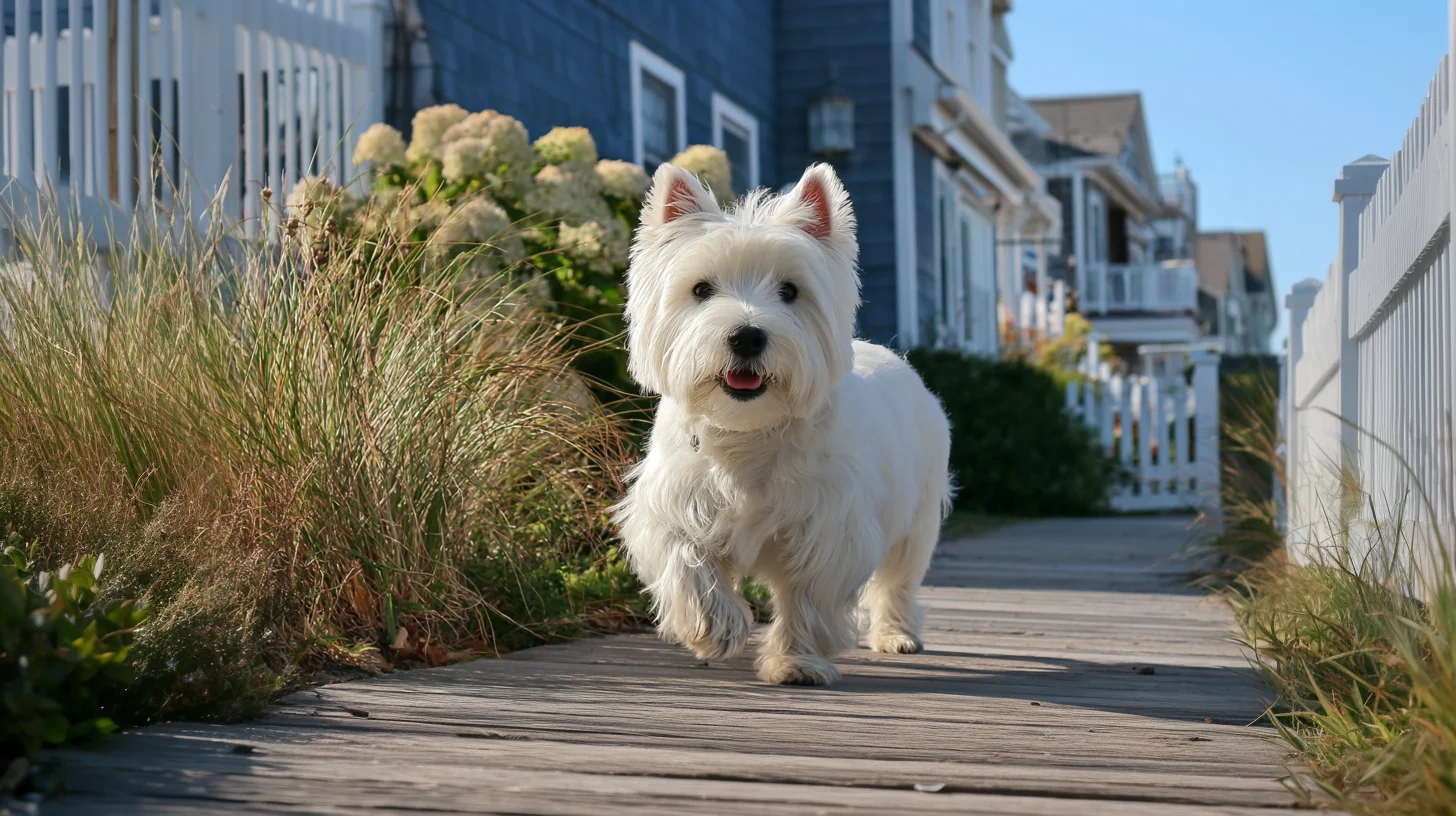
West Highland White Terrier
Breed Facts
Height
11 inches (male), 10 inches (female)
Weight
15-20 pounds
Lifespan
13-15 years
Key Traits
Overview
Confident, lively companions with bright white coats and a spirited personality. These bold, cheerful dogs blend playful charm with a strong-willed, adventurous spirit—perfect for individuals and families seeking a fun-loving, affectionate friend in a compact, charismatic package.
Temperament & Personality
You'll find the West Highland White Terrier friendly, playful, and confident. These spunky little dogs are smart and affectionate. Westies love to play and make you laugh with their lively antics. They bond deeply with their family and usually get along well with children and other pets. Their loyalty and eagerness to please mean they enjoy spending time with you, whether it's exploring outside or cuddling on the couch. One thing to watch: Westies have a strong prey drive (they were bred to hunt vermin), so they might chase small animals. They also tend to bark when something catches their attention. Despite this, their bright, good-natured personality and loving companionship make them a joy for active families who can give them lots of playtime and attention.
Care, Living Environment & Grooming
Westies do well in homes of all sizes. They adapt to apartments or houses as long as they get daily exercise. Plan on at least 30–60 minutes of walks or play each day to keep your terrier happy. Their white double coat needs regular maintenance: many owners brush a Westie daily with a pin or slicker brush to prevent mats. Also remember routine pet care: monthly nail trims, regular ear checks, and teeth brushing are important for long-term health.
- Daily brushing: Keeps the white coat clean and free of tangles.
- Regular exercise: Provide at least 30–60 minutes of play or walking every day.
- Secure environment: A fenced yard or leash is ideal, since Westies love to dig and chase small creatures.
- Companionship: These dogs thrive on attention. Avoid leaving a Westie alone for long periods to prevent separation anxiety.
- Routine vet care: Plan for annual check-ups, vaccinations, and preventative treatments to catch any issues early.
Training & Socialization
Westies are intelligent but can also be a bit stubborn, so consistent, positive training works best. Start socializing a Westie puppy early by introducing them to different people, pets, and environments. Puppy classes or playdates can build confidence and good manners. Use gentle praise and tasty treats when training – Westies respond well to rewards and encouragement. Harsh corrections won't get you far because these terriers are sensitive; instead keep training sessions fun and short. With patience, your Westie will learn basic commands and walk politely on a leash. Early socialization and obedience training help ensure your Westie remains friendly and well-adjusted around children and strangers.
Health Considerations
Westies are generally healthy, but there are some breed-specific conditions to watch for. Regular vet check-ups will help catch any problems early. Common issues include:
- Atopic dermatitis: Skin allergies that cause itching, redness, or infections.
- Addison's disease: An endocrine disorder causing lethargy, poor appetite, and vomiting.
- Craniomandibular osteopathy: A "lion jaw" bone disorder in puppies that causes painful jaw growth.
- Inherited cataracts: Lens opacities (often present at birth) that can impair vision.
Keeping up with flea prevention, a balanced diet, and routine wellness care (dental cleaning, eye and ear checks) helps Westies stay healthy.
Cost of Ownership
Owning a Westie typically costs around $2,000–$3,000 per year. Food and treats may run $250–$700 annually. Routine veterinary care (vaccinations, check-ups, preventives) is about $500–$800 per year. Grooming expenses can add another $400–$900 (Westies often need hand-stripping or professional trims every few months). Pet insurance averages $200–$600 annually. Together with toys and supplies, plan on budgeting for these recurring costs to give your Westie the care they deserve.
Pros and Cons
Pros:
- Playful and entertaining companion.
- Affectionate and loyal with family members.
- Adaptable to various living spaces (apartments or houses).
- Low-shedding coat compared to many breeds.
- Generally good with children and other pets.
Cons:
- Can be barky and stubborn without proper training.
- Requires regular grooming (daily brushing, occasional strip/trim).
- Prone to separation anxiety if left alone too long.
- Has a strong prey drive – not ideal with very small pets.
- May inherit certain health issues (allergies, skin problems).
Fun Facts
- Originally called the "Poltalloch Terrier," Westies were bred in Scotland in the 1700s to hunt rodents on estates.
- Their trademark white coat was chosen after a hunting accident, prompting breeders to keep only white dogs to avoid confusion.
- The Westie's friendly face made it famous: it starred in many Cesar dog food commercials starting in the late 1990s.
Frequently Asked Questions
Are Westies good with children?
Yes. Westies are friendly and playful. They generally enjoy the company of children, especially if kids know how to interact gently with a small dog. Supervise young kids, teach respectful handling, and your Westie can be a fun family pet.
How much exercise does a Westie need?
Westies have moderate energy. About 30–60 minutes of activity per day is recommended: a brisk walk or some backyard playtime will do. They'll also enjoy games that challenge their mind. Regular exercise keeps them fit and prevents boredom.
How often do Westies need grooming?
Plan on brushing a Westie every day and professional grooming every few months. Their double coat should be brushed with a slicker or pin brush daily. Many owners take their Westie to a professional groomer (or hand-strip) every 6–8 weeks to maintain coat health.
Are Westies hypoallergenic?
No dog is completely hypoallergenic. Westies are low shedders, which can be easier for allergy sufferers, but they still produce dander. If you have allergies, regular grooming and cleaning help minimize reactions, but it's wise to spend time with a Westie first to see how you react.
References
Personality Profile
Find your perfect puppy pair!
Take our quick personality quiz to find the breeds that match your personality.
Start Quiz NowKey Traits
Temperament
affectionate
Reserved
Cuddly
energy Level
Calm Companion
High-Energy Dynamo
Social Behavior
good With Children
Best with Adults/Older Kids
Kid-Friendly
barking Level
Quiet-Natured
Talkative
Care & Maintenance
shedding Level
Light Shedder
Heavy Shedder
exercise Needs
Short Walks Enough
Needs Daily Workouts
Learning & Cognition
trainability
Independent Thinker
Eager Learner
mental Stimulation Needs
Content Relaxer
Needs Challenges
Breed Facts
Height
11 inches (male), 10 inches (female)
Weight
15-20 pounds
Lifespan
13-15 years
Key Traits
You Might Also Like


Find Your Perfect Puppy Pair
Take our scientifically-backed personality quiz to discover which dog breeds align with your personality.
Start the Quiz