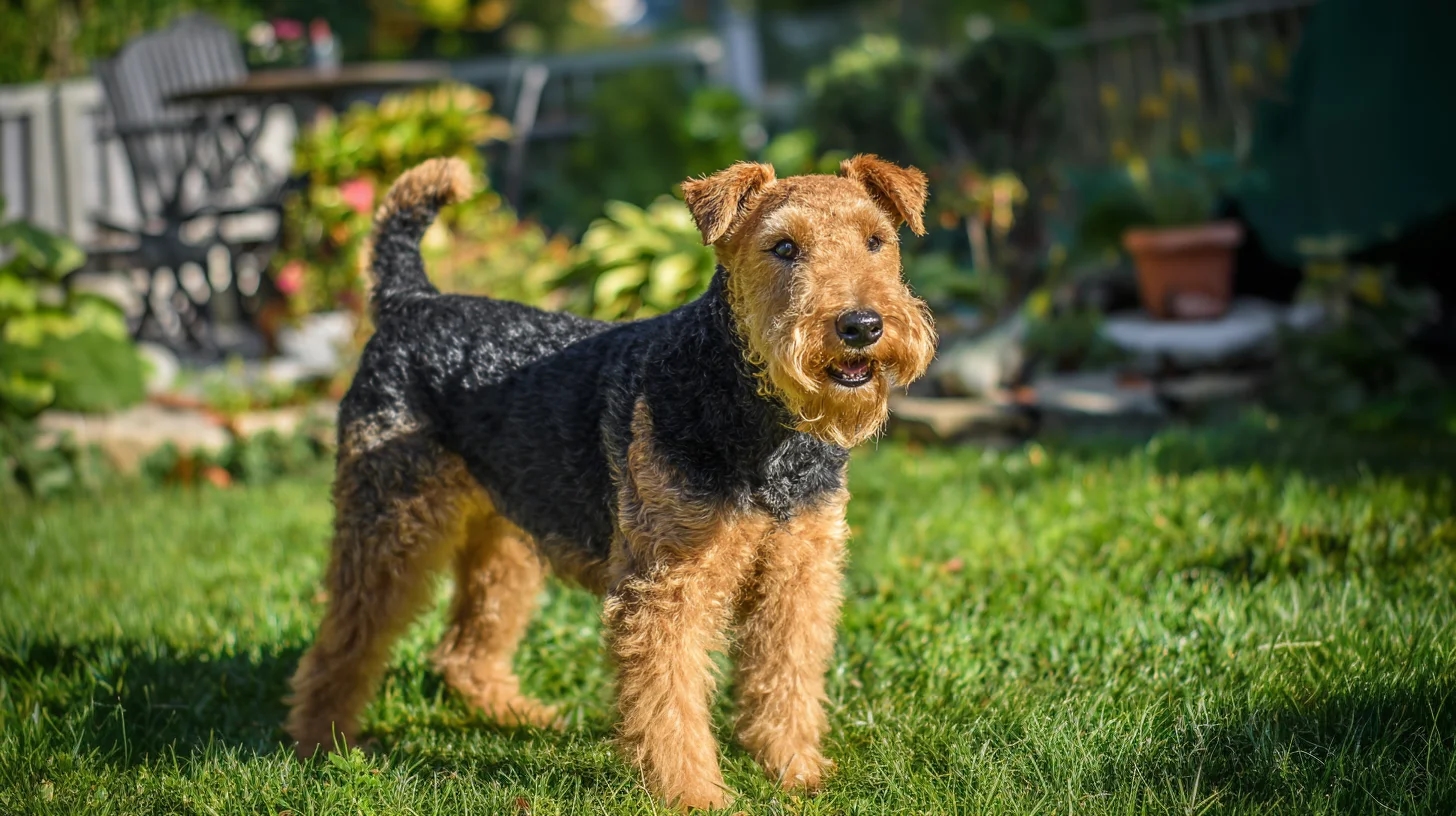
Welsh Terrier
Breed Facts
Height
15-16 inches
Weight
22-24 pounds
Lifespan
12-15 years
Key Traits
Overview
Cheerful, confident companions with wiry coats and an adventurous, spirited personality. These lively, affectionate dogs blend fearless determination with playful charm—perfect for active families and individuals seeking a fun-loving, devoted friend who brings energy, humor, and unwavering loyalty to daily life.
Temperament & Personality
You'll find the Welsh Terrier to be an affectionate, lively little dog. They are outgoing, intelligent, and playful, with a joyful, eager-to-please nature. Welshies bond closely with their families and generally do well with children and other dogs when raised together. True to their terrier roots, they have high energy and are very curious – always ready to explore, chase, and dig. Their prey drive is strong (they may chase small pets like cats or rodents), so careful introductions are wise. Welsh Terriers can be vocal and alert, making good watchdogs, but they're typically friendly rather than aggressive. In short, expect a cheerful, smart companion with a hearty zest for life – and a bit of terrier stubbornness.
Care, Living Environment, & Grooming
Welsh Terriers are active, so daily exercise is essential. Plan on at least an hour each day of walks, play, or other activity. They also love digging and chasing small critters, so a securely fenced yard is ideal. Though some owners manage one in an apartment, Welshies truly shine with yard access. A bored Welsh Terrier might bark or dig holes, so regular dog sports (agility, barn hunt) help burn energy.
Their grooming needs are moderate. Welsh Terriers have a dense, wiry double coat that sheds very little (only blowing 2–3 times per year). However, the coat requires periodic hand-stripping or clipping to stay neat. Brush your Welshie 2–3 times a week to remove loose hairs. A bath every few months (or as needed) is sufficient. Routine care also includes trimming nails weekly and checking ears; brush their teeth regularly to prevent dental issues.
Typical grooming tasks include:
- Weekly: Brush coat 2–3 times, trim nails, and clean ears; maintain dental care
- Monthly: Hand-strip or trim excess coat; bathe if needed
For feeding, Welsh Terriers enjoy their food but can get chubby. Feed a measured amount of high-quality diet and limit treats to keep weight in check.
Training & Socialization
You'll find that Welsh Terriers are smart and generally eager to please, making training relatively straightforward. They respond very well to positive, reward-based methods. Keep training sessions short, fun, and consistent to hold their interest – Welshies live for games and treats. They can also be a bit independent, so establish yourself as a kind but firm leader early on. Socialize your Welsh Terrier puppy from the start: expose him to different people, animals, and environments so he grows up confident.
Remember their high prey drive: teach a reliable recall and practice leash manners. Engage their mind with activities (like puzzle toys or dog sports) to prevent boredom. With consistent, gentle guidance, a Welsh Terrier can learn a wide range of commands and really enjoy pleasing you.
Health Considerations
Welsh Terriers typically live around 12–15 years. They are generally healthy, but can inherit some issues. Watch for Legg-Calve-Perthes disease (affecting hip joint blood supply), hip dysplasia, and patellar luxation (loose kneecaps). Welsh Terriers are also prone to certain eye conditions (cataracts, lens luxation, glaucoma) and itchy skin problems (atopic dermatitis). Seizures (epilepsy) and thyroid problems occasionally occur. Work with a reputable breeder who screens for these; recommended health tests include hip/patella evaluations and eye exams.
Cost of Ownership
Plan on about $1,800 per year for a Welsh Terrier. Food costs are modest (roughly $250–$350 annually for premium dog food). Routine vet care (vaccines, check-ups, preventives) is around $300–$400 per year. Pet insurance may be $500–$600 annually. Grooming costs are similar to other small dogs: you might spend about $100–$150 on brushes, stripping tools, and occasional professional trimming. The remainder covers toys, treats, and basic supplies.
For example, you might budget $300 for food, $350 for vet care, $550 for insurance, and $150 for grooming tools per year. Other expenses (toys, training classes, travel) fill out the budget. The first year is steeper: add costs for spay/neuter ($200), puppy vaccinations, a crate, and initial supplies, which can push first-year expenses above $2,000.
Pros and Cons
Pros
- Outgoing and affectionate with family
- Low-shedding wiry coat
- Smart and eager to please
- Hardy, spirited terrier with strong instincts
- Excellent watchdog (alert, responsive bark)
Cons
- Very energetic; needs a lot of exercise
- Strong digging/chasing instincts
- Independent and sometimes stubborn
- Requires frequent grooming/stripping
- Can be vocal and bold
Fun Facts
- Mentioned in a Welsh poem as early as 1450
- Bred to hunt badgers and foxes, giving Welshies an extremely high prey drive
- John F. Kennedy's family dog "Charlie" was a Welsh Terrier
- Black-and-tan coat is their sole color combination, although puppies are born almost entirely black
Frequently Asked Questions
Do Welsh Terriers shed a lot?
No – Welsh Terriers have a wiry coat that sheds minimally. They do shed dead hairs during the coat's seasonal "blow" (about 2–3 times a year), so you'll need to hand-strip or brush them extra at those times. Otherwise, daily brushing keeps loose hairs under control.
Are Welsh Terriers good apartment dogs?
They can adapt if you're committed. Welshies are energetic and will bark to alert, so they do better with a yard or regular outdoor time. An active owner who provides daily exercise and mental stimulation can raise a Welsh Terrier in an apartment, but beware: without outlets, they may become restless.
How much exercise does a Welsh Terrier need?
Quite a bit – Welsh Terriers thrive on activity. Aim for 1–2 hours of exercise every day. This can include long walks, play sessions, fetch, or dog sports. Their terrier background means they love a job to do, so regular vigorous play is essential.
Can first-time owners handle a Welsh Terrier?
Yes, often. Welsh Terriers are friendly and trainable, responding well to fun, positive methods. However, they are spirited terriers and need consistent leadership. A first-time owner should be ready to provide plenty of exercise, grooming, and steady training. With patience and enthusiasm, a novice can successfully raise a Welsh Terrier.
References
Personality Profile
Find your perfect puppy pair!
Take our quick personality quiz to find the breeds that match your personality.
Start Quiz NowKey Traits
Temperament
affectionate
Reserved
Cuddly
energy Level
Calm Companion
High-Energy Dynamo
Social Behavior
good With Children
Best with Adults/Older Kids
Kid-Friendly
barking Level
Quiet-Natured
Talkative
Care & Maintenance
shedding Level
Light Shedder
Heavy Shedder
exercise Needs
Short Walks Enough
Needs Daily Workouts
Learning & Cognition
trainability
Independent Thinker
Eager Learner
mental Stimulation Needs
Content Relaxer
Needs Challenges
Breed Facts
Height
15-16 inches
Weight
22-24 pounds
Lifespan
12-15 years
Key Traits
You Might Also Like



Find Your Perfect Puppy Pair
Take our scientifically-backed personality quiz to discover which dog breeds align with your personality.
Start the Quiz