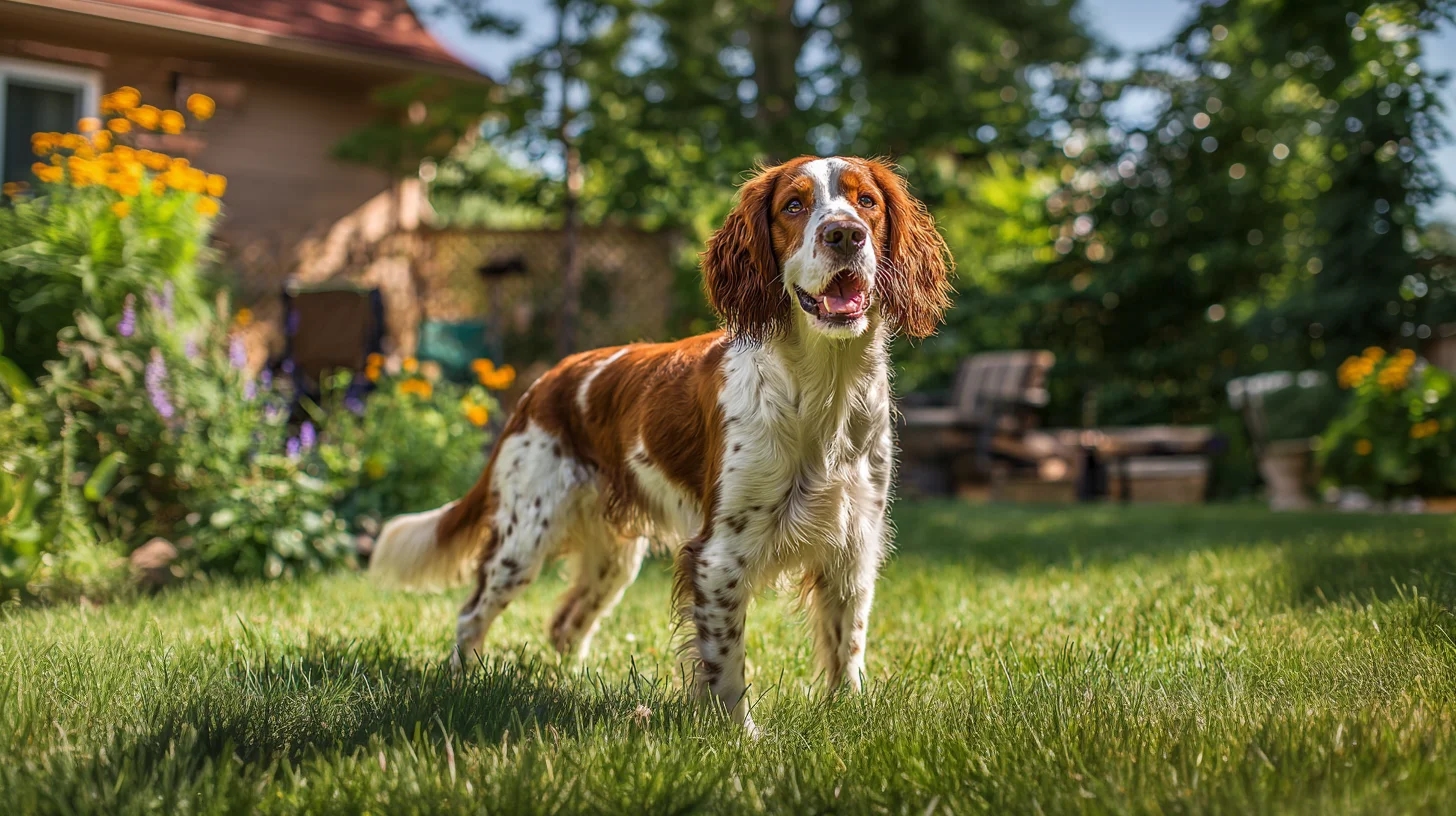
Welsh Springer Spaniel
Breed Facts
Height
18-20 inches
Weight
40-50 pounds
Lifespan
12-15 years
Key Traits
Overview
Cheerful, devoted companions with rich red-and-white coats and a lively, affectionate spirit. These energetic, intelligent dogs blend strong hunting instincts with gentle loyalty—perfect for active families and individuals seeking a loving, playful friend who thrives on adventure, close bonds, and shared fun.
Temperament & Personality
The Welsh Springer Spaniel, or "Welshie," is best known for one defining trait: a deep and unwavering devotion to its people. Often called "Velcro dogs," they form incredibly strong bonds and will happily follow you from room to room, content just to be in your presence. This people-oriented nature makes them exceptionally affectionate and loyal family members with a famously merry disposition. They are typically gentle and patient with children, making them a wonderful addition to an active family.
While loving with their inner circle, Welshies are naturally reserved and sometimes aloof with strangers. This is not shyness or timidity but a cautious nature that requires extensive early socialization to build their confidence. Beneath their sweet exterior lies the sharp mind of a working dog. They are intelligent and eager to please, but this intelligence can manifest as a stubborn streak if they become bored. A Welshie thrives on partnership and needs to feel like a valued member of the family.
Care, Living Environment, & Grooming
Caring for a Welsh Springer Spaniel is a significant commitment, primarily due to their high energy and social needs. This is not a couch potato breed; a full-grown Welshie needs up to two hours of vigorous physical and mental exercise every day. They excel at activities like long hikes, swimming (they have slightly webbed feet), and canine sports like agility that engage both body and mind. An under-exercised Welshie will likely channel their pent-up energy into destructive behaviors like chewing or digging.
Welshies are adaptable and can live in an apartment, but only if their owner is exceptionally dedicated to providing extensive daily outdoor activity. A home with a securely fenced yard is a much better fit. Because they are "Velcro dogs," they do not do well when left alone for long periods and are prone to separation anxiety. The ideal owner is someone who is home most of the day or can include the dog in their daily activities.
Your Welshie's grooming routine is manageable with consistency:
- Weekly: Brush their silky coat with a slicker brush and comb to prevent tangles and mats, paying special attention to the longer "feathering" on the ears, chest, and legs where burrs can get caught. Clean their ears to prevent infections, a common issue for spaniels.
- Monthly: Bathe as needed with a gentle dog shampoo. Trim their nails if they aren't worn down naturally from activity.
Feed your Welshie about 2.5 cups of high-quality dog food daily, split into two meals.
Training & Socialization
Training a Welsh Springer Spaniel is a rewarding experience, as they are both intelligent and eager to please their person. However, their sensitivity means they respond best to patient, gentle, and consistent training methods rooted in positive reinforcement. Praise, play, and treats will motivate them far more effectively than harsh corrections.
Socialization is the single most important key to raising a well-adjusted Welshie. Because of their natural reserve with strangers, they must be exposed to a wide variety of people, animals, places, and sounds from a very young age. This early, positive exposure helps them learn that new experiences are not threatening and allows their confident, merry personality to shine through.
Their history as a hunting dog means they have a strong prey drive, particularly for birds. While they can coexist peacefully with cats if raised together, they should not be trusted around pet birds. Mastering a reliable recall command is essential for safety during off-leash activities.
Health Considerations
The Welsh Springer Spaniel is a relatively healthy breed with a long lifespan of 12 to 15 years. Their comparative rarity has protected them from many of the issues associated with over-breeding. However, like all purebred dogs, they are predisposed to certain genetic conditions, and it is vital to work with a responsible breeder who performs all recommended health screenings.
Key health concerns you should be aware of include:
- Hip and Elbow Dysplasia: A genetic malformation of the joints that can lead to arthritis. Reputable breeders will have their dogs' hips and elbows evaluated by the Orthopedic Foundation for Animals (OFA).
- Eye Conditions: Welshies are at risk for several eye problems. Glaucoma is a particularly painful condition that can lead to rapid blindness, and epilepsy is a known inherited seizure disorder in the breed. They can also develop cataracts and entropion (inward-rolling eyelid). Annual eye exams by a veterinary ophthalmologist are recommended.
- Thyroid Issues: Autoimmune thyroiditis and hypothyroidism can occur, affecting the dog's metabolism and overall health.
- Ear Infections: Like all spaniels with long, pendulous ears, they are prone to ear infections if their ears are not kept clean and dry.
Choosing a puppy from a breeder who is transparent about the health history of their lines and provides health clearances is the best step toward a healthy companion.
Cost of Ownership
You can expect the average annual cost of owning a Welsh Springer Spaniel to be around $1,600. This does not include the initial purchase price of a puppy, which can be substantial, or higher first-year veterinary costs for vaccinations and spaying/neutering.
Your annual budget will be allocated across several key areas. Food will cost approximately $400 to $550 per year. Routine and preventative veterinary care can range from $600 to $1,500 annually, depending on your location and your dog's needs. Given the potential for costly hereditary conditions like hip dysplasia or epilepsy, pet insurance is a wise investment. You should also budget for grooming supplies, durable toys, and enrichment activities like training classes, which are essential for this intelligent breed's well-being.
Pros and Cons
Pros
- Intensely loyal and affectionate "Velcro dog"
- Merry, gentle, and good with families
- Highly intelligent and eager to please
- Beautiful, eye-catching coat that is relatively easy to maintain
- A healthy breed with a long lifespan
Cons
- Very high energy; requires up to 2 hours of exercise daily
- Prone to separation anxiety; cannot be left alone for long
- Reserved with strangers; requires extensive socialization
- Can have a stubborn streak if not mentally stimulated
- Strong prey drive for birds and small animals
Fun Facts
- The Welsh Springer Spaniel is one of Britain's most ancient sporting breeds, with roots tracing back centuries. Before the invention of firearms, they were known as "Welsh Starters" and worked with falconers, using their skills to "spring" or flush game from dense cover for the hunter's falcon to catch.
- Despite their similar names, the Welsh Springer and English Springer are two entirely separate breeds, not varieties of one another. The Welshie has a uniquely tapered head and its coat is always a rich red and white.
- The breed has twice faced the brink of extinction, having been nearly wiped out after both World Wars, and was rebuilt by dedicated enthusiasts.
Frequently Asked Questions
Do Welsh Springer Spaniels shed a lot?
They are moderate shedders. Their silky, medium-length coat requires regular brushing, at least once a week, to remove loose hair and prevent the feathering on their legs and chest from getting matted or tangled.
Are Welsh Springer Spaniels good apartment dogs?
They can adapt to apartment living, but only if their owner is extremely committed to meeting their high exercise needs. This means providing up to two hours of vigorous outdoor activity every single day, regardless of the weather.
How much exercise does a Welsh Springer Spaniel need?
This is a very high-energy breed. An adult Welshie requires a great deal of exercise—up to two hours a day is often recommended. This should be a mix of physical activity like running and swimming, and mental stimulation like training or scent games.
Can first-time owners handle a Welsh Springer Spaniel?
A Welshie can be a wonderful choice for an active first-time owner who is prepared for their needs. The ideal novice owner is someone who is home most of the day and is eager to engage in training, extensive socialization, and daily adventures.
References
Personality Profile
Find your perfect puppy pair!
Take our quick personality quiz to find the breeds that match your personality.
Start Quiz NowKey Traits
Temperament
affectionate
Reserved
Cuddly
energy Level
Calm Companion
High-Energy Dynamo
Social Behavior
good With Children
Best with Adults/Older Kids
Kid-Friendly
barking Level
Quiet-Natured
Talkative
Care & Maintenance
shedding Level
Light Shedder
Heavy Shedder
exercise Needs
Short Walks Enough
Needs Daily Workouts
Learning & Cognition
trainability
Independent Thinker
Eager Learner
mental Stimulation Needs
Content Relaxer
Needs Challenges
Breed Facts
Height
18-20 inches
Weight
40-50 pounds
Lifespan
12-15 years
Key Traits
You Might Also Like

Find Your Perfect Puppy Pair
Take our scientifically-backed personality quiz to discover which dog breeds align with your personality.
Start the Quiz