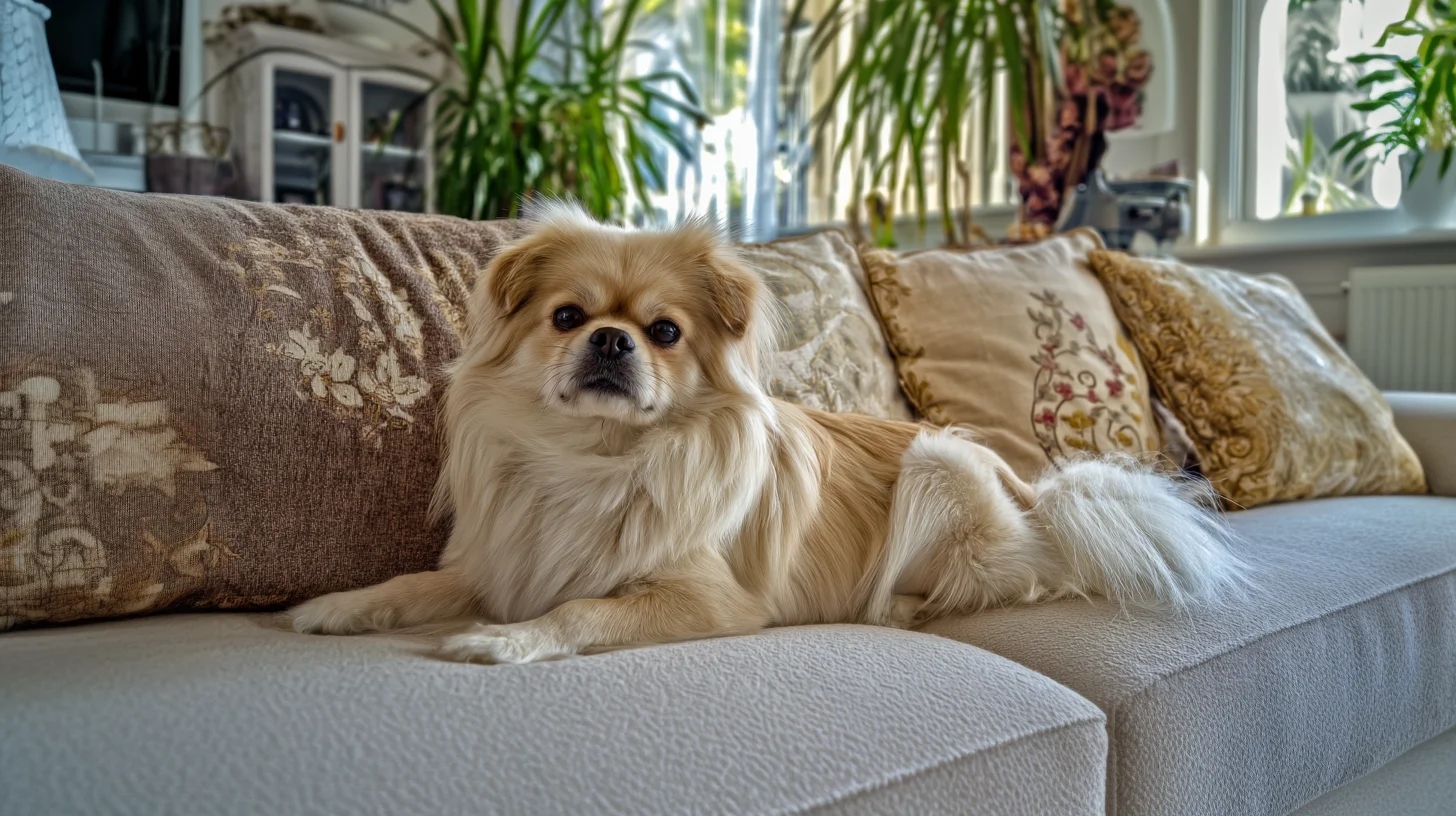
Tibetan Spaniel
Breed Facts
Height
9-10 inches
Weight
7-10 pounds
Lifespan
12-15 years
Key Traits
Overview
Confident, charming companions with silky coats and an alert, cat-like spirit. These intelligent, affectionate dogs blend playful independence with deep devotion—perfect for individuals and families seeking a cheerful, watchful friend who loves close bonds and brings warmth and lively personality to the home.
Temperament & Personality
You'll find your Tibetan Spaniel is an affectionate and playful companion. Tibbies tend to form very tight bonds with family and can be fiercely loyal. They have a happy, curious nature and often keep watch from high perches. These little dogs are alert but not yappy – they alert you to visitors but aren't barkers by default. Tibetan Spaniels are sensitive and intelligent; they learn quickly with positive reinforcement but also have an independent streak. In social situations, they are usually friendly with other pets and children (under supervision), but they're more reserved or shy around strangers. Overall, this breed is loyal, affectionate with its family, and enjoys snuggling after exercise.
Care, Living Environment, & Grooming
Tibetan Spaniels thrive indoors and adapt well to apartment living. They only need moderate exercise—one or two short walks or play sessions daily is enough. They enjoy chasing toys and exploring, but after exercise they're equally content to curl up with you. These little dogs may wear sweaters in cold weather due to their small size, and like most dogs, they should be kept cool in extreme heat.
Their coat is medium-length and silky, requiring regular care:
- Brush coat 2–3 times a week. Remove loose hairs and prevent mats, especially around the mane and tail.
- Comb feathered areas. Check the long hair on ears, tail, and thighs and comb gently to avoid tangles.
- Manage seasonal sheds. Tibbies "blow coat" twice a year. During those periods, brush daily to keep up with extra shedding.
- Clean ears weekly. Check for debris and clean the ears to prevent infections.
- Trim nails monthly. Keeping nails short prevents discomfort.
Feed your Tibetan Spaniel a measured amount of high-quality food (about ¾–1 cup daily). Small dogs can gain weight easily, so avoid free-feeding and give meals on a schedule. Overall, the Tibetan Spaniel's grooming needs are moderate: regular brushing at home covers most care, and they seldom need professional grooming beyond an occasional bath.
Training & Socialization
Tibetan Spaniels are bright and generally eager to please. They respond best to positive reinforcement (treats and praise). Training sessions should be fun and consistent. Start early: socialize your puppy from 8–12 weeks of age with many people, places and other dogs to curb shyness. Use gentle, reward-based methods and keep sessions short – Tibbies can be a bit stubborn if bored. Games like agility or fetch can be excellent training tools. With patience and early exposure, most Tibetan Spaniels learn commands quickly and become well-adjusted companions. Clicker training or click-and-reward methods work well for this sensitive breed. Consistency is key: a well-socialized Tibbie will be more confident around new people and avoid becoming headstrong.
Health Considerations
Tibetan Spaniels are generally healthy and long-lived (around 12–15 years on average). However, they can inherit certain breed-related conditions. As a responsible owner, be aware of:
- Patellar Luxation: A common issue in small breeds where the kneecap slips out of place. Mild cases may be managed with pain meds, but severe luxation can require surgery.
- Progressive Retinal Atrophy (PRA): A genetic eye disease causing gradual vision loss leading to blindness. No cure exists, so regular eye exams are important.
- Retinal Dysplasia: Another developmental eye defect to watch for.
- Congenital Deafness: Some Tibbies are born with partial or total hearing loss. Puppy hearing tests can detect this early.
- Epilepsy: Seizures can occur in the breed. If your dog has seizures, work with a vet on a management plan.
Breeders typically perform health clearances on knees and eyes (OFA patella evaluations and CERF eye exams). Watch for symptoms like lameness, vision changes, or excessive lethargy. With good care and appropriate screenings, most Tibetan Spaniels remain healthy into their teens.
Cost of Ownership
Owning a Tibetan Spaniel involves typical dog care expenses. For example, a month's budget might look like: Food ($25–$40), Routine Vet Care ($20–$40), Preventive Medications ($15–$25), and Grooming Supplies ($5–$10). In one year, expect roughly $300 on food and $200–$300 on routine veterinary care (checkups, vaccines, and preventives). Pet insurance averages around $400–$600/year for a small dog. Because Tibetan Spaniels require moderate grooming, budget a few hundred dollars annually for brushes, shampoos, and the occasional professional bath or trim. The first year is higher: spaying/neutering ($300), puppy vaccines ($200), and gear (crate, leash, bed) can easily add $800 or more. After the first year, plan on about $1,500–$2,000 per year in ongoing expenses.
Pros and Cons
Pros
- Loyal, affectionate family companion
- Small and adaptable (great for apartments)
- Active watchdog alertness (will bark to warn)
- Long lifespan (often 12–15 years)
- Low exercise needs and minimal matting in coat
Cons
- Can be stubborn/independent during training
- Reserved or aloof around strangers
- Sheds heavily twice a year (needs extra brushing then)
- Sensitive to being alone; may bark or whine if left too long
- Some hereditary health issues (knees, eyes) to monitor
Fun Facts
- Tibetan Spaniels are sometimes called "little lions" because monks bred them to have a thick mane around their neck.
- They were prized by Tibetan Buddhist monks as sentries on monastery walls, alerting monks to strangers or predators.
- Tibbies are known for a loud alarm bark dubbed the "Tibbie Scream" when startled.
Frequently Asked Questions
Do Tibetan Spaniels shed a lot?
They have a medium double coat and do shed, especially twice a year during seasonal blow. With regular brushing (a few times a week) you can keep loose hair under control. During heavy shedding, brushing daily will reduce mats and fur around the house.
Are Tibetan Spaniels good apartment dogs?
Yes. Their small size and moderate energy level make them well-suited to apartment living. A daily walk or indoor play session keeps them satisfied. They just crave companionship, so you'll need to spend time with your Tibbie and not leave it alone for long periods.
How much exercise does a Tibetan Spaniel need?
Just a moderate amount. Typically one or two 15–20 minute walks a day plus playtime is sufficient. Tibetan Spaniels love to romp with you or chase toys, but they don't require vigorous exercise. They're perfectly happy with short outings followed by lots of indoor snuggles.
Can first-time owners handle a Tibetan Spaniel?
Generally, yes. They are intelligent and eager to please, which makes training easier. Their independent streak means consistency is important, but with positive-reward training and early socialization, novice owners can do well. Be prepared to invest time in their training and affection, and you'll find them to be loyal and manageable companions.
References
Personality Profile
Find your perfect puppy pair!
Take our quick personality quiz to find the breeds that match your personality.
Start Quiz NowKey Traits
Temperament
affectionate
Reserved
Cuddly
energy Level
Calm Companion
High-Energy Dynamo
Social Behavior
good With Children
Best with Adults/Older Kids
Kid-Friendly
barking Level
Quiet-Natured
Talkative
Care & Maintenance
shedding Level
Light Shedder
Heavy Shedder
exercise Needs
Short Walks Enough
Needs Daily Workouts
Learning & Cognition
trainability
Independent Thinker
Eager Learner
mental Stimulation Needs
Content Relaxer
Needs Challenges
Breed Facts
Height
9-10 inches
Weight
7-10 pounds
Lifespan
12-15 years
Key Traits
You Might Also Like
Find Your Perfect Puppy Pair
Take our scientifically-backed personality quiz to discover which dog breeds align with your personality.
Start the Quiz