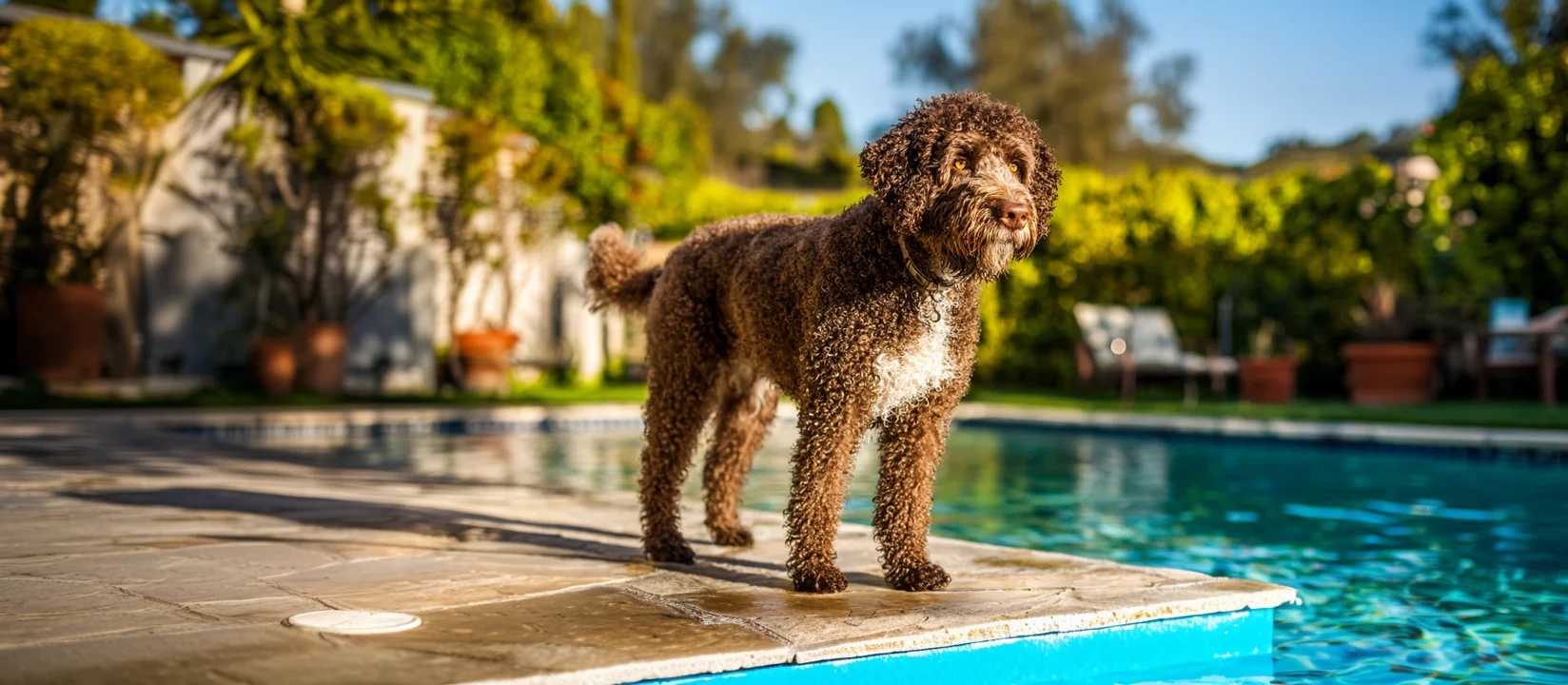
Spanish Water Dog
Breed Facts
Height
17-21 inches
Weight
30-50 pounds
Lifespan
12-14 years
Key Traits
Overview
Energetic, versatile companions with curly coats and an eager, intelligent spirit. These lively, devoted dogs blend strong working instincts with deep affection—perfect for active families and individuals seeking a cheerful, loyal friend who thrives on adventure, close bonds, and staying busy both in and out of the water.
Temperament & Personality
The Spanish Water Dog (SWD) is an upbeat, intelligent, and deeply loyal companion, perfectly suited for an active household. You'll find your SWD to be diligent and hardworking, with a playful and affectionate nature. They form powerful bonds with their families and are often described as "Velcro dogs" because they thrive on human contact and love to be by your side. While they are devoted to their entire family, they may choose one person as their special favorite.
This is a high-energy breed that is both physically and mentally active. With strangers, they can be naturally wary or suspicious, so early socialization is key to building a confident, well-adjusted dog. They are generally good with children and other pets, especially when raised with them. However, you must be prepared to manage their strong, innate herding instinct. Your SWD may try to "herd" running children or other animals by circling and nipping at their heels, a behavior that requires consistent training and redirection from a young age.
Care, Living Environment, & Grooming
Caring for a Spanish Water Dog means committing to an active lifestyle. This breed has very high energy levels and requires at least 1.5 to 2 hours of vigorous exercise every day to stay happy and well-behaved. They are not couch potatoes; they need a job to do. Long walks, jogging, hiking, and especially swimming are excellent outlets for their energy. They also excel in dog sports like agility, flyball, and herding trials that challenge both their body and their sharp mind. An SWD can adapt to apartment living, but only if their extensive exercise needs are rigorously met every single day.
The SWD's coat is one of its most distinctive features and requires very specific, non-traditional care. It is a single coat of woolly, curly hair that, if left to grow, will form natural cords.
- The Golden Rule: You must never brush or comb the coat. Brushing will break up the curls, creating frizz and leading to mats.
- Cord Maintenance: As the coat grows, you may need to gently separate the cords with your fingers to prevent them from merging into large, uncomfortable mats.
- Clipping: At least once or twice a year, the coat should be sheared down to a short, even length all over. This prevents matting and keeps the coat healthy.
- Bathing: When you bathe your SWD, use a mild shampoo and gently squeeze it into the coat. Do not rub or scrub. Rinse thoroughly and blot dry with a towel, then allow the coat to air dry completely.
Training & Socialization
You will find the Spanish Water Dog to be a highly intelligent and trainable partner who is eager to please. They are quick learners and thrive on the problem-solving nature of training sessions. The best approach is positive reinforcement, using praise, treats, and play as rewards for a job well done. Harsh training methods are counterproductive and can cause this sensitive breed to "shut down" and lose their enthusiasm.
Early and continuous socialization is essential for your SWD puppy. Exposing them to a wide variety of people, places, and other animals will help them grow into confident adults and temper their natural wariness of strangers.
Managing their powerful herding instinct is a key part of training. This instinct is not a "bad habit" but a core part of who they are. You must teach them appropriate outlets for this drive. Redirect nipping or circling behaviors toward games like fetch or herding balls. With consistent guidance, you can channel their instincts constructively, making them a well-behaved and reliable companion.
Health Considerations
The Spanish Water Dog is a generally robust breed with a life expectancy of 12 to 14 years. Like all breeds, they are predisposed to certain hereditary health conditions. Reputable breeders perform health screenings on their dogs to minimize the incidence of these issues. The Spanish Water Dog Club of America (SWDCA) has a list of required and recommended tests for breeders to follow.
Common health concerns to be aware of include:
- Hip Dysplasia: A genetic condition where the hip joint does not form correctly. According to OFA data, it is a significant concern in the breed.
- Progressive Retinal Atrophy (PRA): A group of genetic eye diseases that cause gradual vision loss, eventually leading to blindness. DNA tests are available for different forms of PRA.
- Hypothyroidism: An underactive thyroid gland. The breed can also be affected by a specific form called Congenital Hypothyroidism with Goiter (CHG), for which a DNA test exists.
- Glaucoma: A condition that causes increased pressure within the eye, which can be painful and lead to blindness if not treated.
- Allergies: Skin allergies can be an issue for some Spanish Water Dogs.
Before purchasing a puppy, you should always ask the breeder for proof of these health clearances for both parents.
Cost of Ownership
Owning a Spanish Water Dog is a moderate financial commitment. The average annual cost for routine care is estimated to be around $1,800.
The initial cost is significant, with puppies from reputable breeders typically costing between $1,500 and $2,500. First-year expenses for supplies, initial vet visits, and vaccinations will add to this.
Your estimated annual budget of $1,800 can be broken down into these major categories:
- High-Quality Food: $500 - $700
- Routine Vet Care & Preventatives: $600 - $800
- Grooming: $100 - $200 (for 1-2 professional shearings per year)
- Pet Insurance & Miscellaneous: $300 - $500 (includes toys, training aids, etc.)
This estimate does not include costs for treating unexpected injuries or major health conditions, which is why pet insurance is a wise investment.
Pros and Cons
Pros
- Highly intelligent and eager to please, making them very trainable
- Deeply loyal, loving, and affectionate with their family
- Low-shedding coat can be a good choice for people with allergies
- An athletic and versatile partner for an active, outdoorsy lifestyle
- Generally good with children and other pets when socialized
Cons
- Requires extensive daily exercise and mental stimulation
- Strong herding instinct needs consistent management and training
- Can be wary and reserved with unfamiliar people
- Unique coat has very specific, non-intuitive grooming rules
- Can become bored and destructive without enough activity
Fun Facts
- Despite their name, the Spanish Water Dog's primary historical role was not in the water. For centuries, they were prized on the Iberian Peninsula as all-purpose herding dogs for sheep and goats.
- Their distinctive woolly coat is a single layer of hair that, if left to grow, will naturally form rustic, felt-like cords, similar to the coat of a Puli or Komondor.
- Over the centuries in Spain, the breed has been known by many different names, including the intriguing moniker "Perro Turco," which translates to "Turkish Dog".
Frequently Asked Questions
Do Spanish Water Dogs shed a lot?
No, they are a low-shedding breed, which can be beneficial for those with allergies. However, their unique coat requires special care: it must never be brushed and should be sheared down once or twice a year to prevent matting.
Are Spanish Water Dogs good apartment dogs?
They can adapt to apartment living, but only if their very high exercise needs are met without fail. This means a commitment to at least 1.5 to 2 hours of vigorous, engaging activity every single day, regardless of your living situation.
How much exercise does a Spanish Water Dog need?
A great deal. This is a high-energy working breed that needs extensive daily exercise to thrive. They require both physical exertion, like running and swimming, and mental challenges, like training games and dog sports, to prevent boredom and destructive behaviors.
Can first-time owners handle a Spanish Water Dog?
A dedicated and highly active first-time owner can be successful with an SWD. However, you must be fully prepared to commit to their significant exercise, training, and socialization needs, and be willing to learn how to manage their innate herding instincts.
References
Personality Profile
Find your perfect puppy pair!
Take our quick personality quiz to find the breeds that match your personality.
Start Quiz NowKey Traits
Temperament
affectionate
Reserved
Cuddly
energy Level
Calm Companion
High-Energy Dynamo
Social Behavior
good With Children
Best with Adults/Older Kids
Kid-Friendly
barking Level
Quiet-Natured
Talkative
Care & Maintenance
shedding Level
Light Shedder
Heavy Shedder
exercise Needs
Short Walks Enough
Needs Daily Workouts
Learning & Cognition
trainability
Independent Thinker
Eager Learner
mental Stimulation Needs
Content Relaxer
Needs Challenges
Breed Facts
Height
17-21 inches
Weight
30-50 pounds
Lifespan
12-14 years
Key Traits
You Might Also Like
Find Your Perfect Puppy Pair
Take our scientifically-backed personality quiz to discover which dog breeds align with your personality.
Start the Quiz