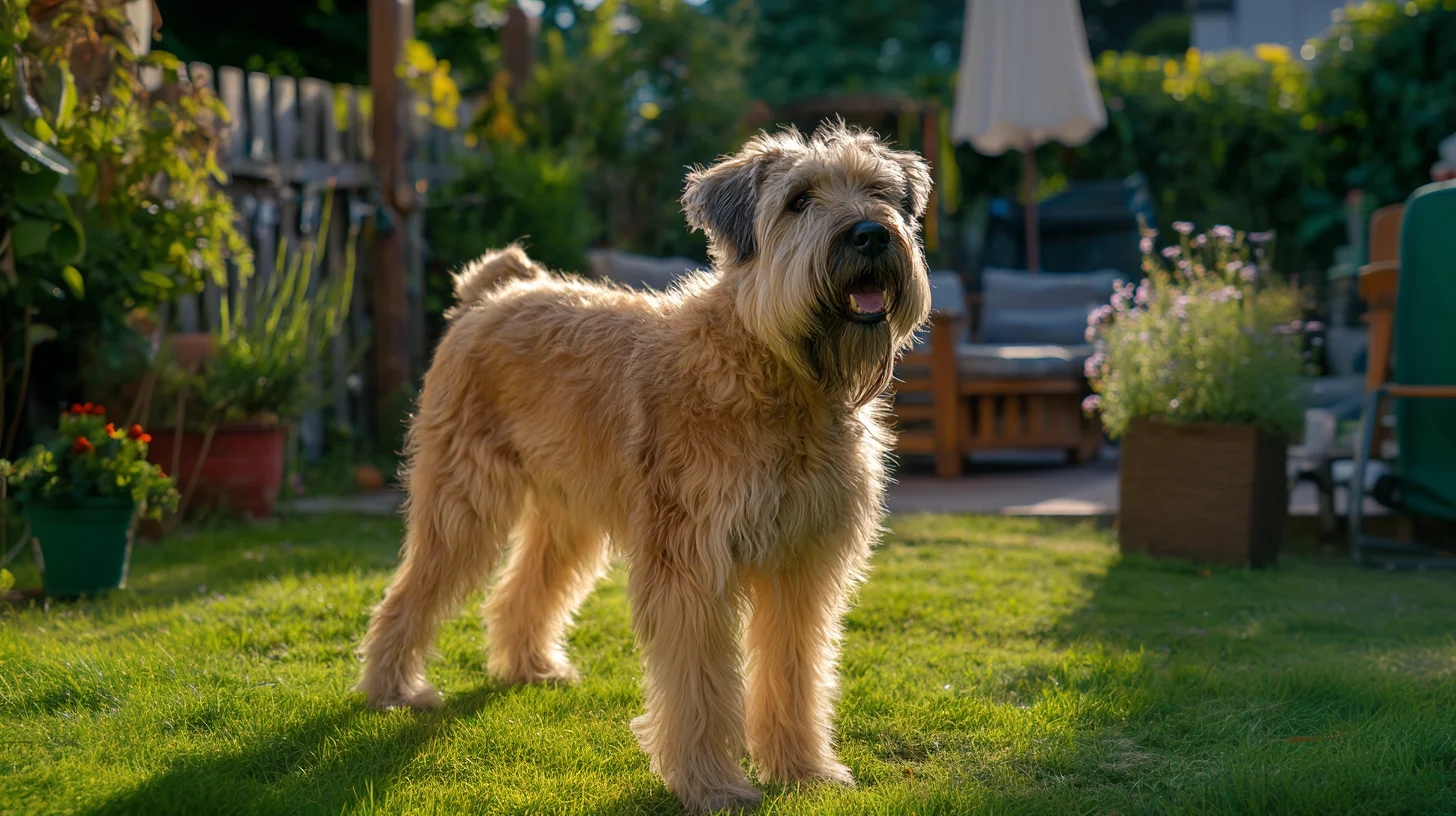
Soft Coated Wheaten Terrier
Breed Facts
Height
18-19 inches (male), 17-18 inches (female)
Weight
35-40 pounds
Lifespan
12-14 years
Key Traits
Overview
Cheerful, affectionate companions with silky, wavy coats and an endlessly joyful spirit. These lively, friendly dogs blend playful energy with deep devotion—perfect for families and individuals seeking a spirited, loving friend who thrives on close bonds and brings constant sunshine into daily life.
Temperament & Personality
The Soft Coated Wheaten Terrier is fun-loving, energetic, and very affectionate. You’ll find your Wheaten Terrier to be extroverted and bouncy, often greeting family with enthusiastic tail-wags and puppy kisses. They are deeply devoted to their people, though they may be cautious around strangers. Thanks to their history as farm dogs, Wheatens are alert and can be quick to bark at new sights or sounds. With proper socialization, they generally do well with children and other pets, but their exuberance can make them a handful around very young children.
Care, Living Environment, & Grooming
Your Wheaten will need plenty of exercise and interaction. These terriers have moderate-to-high energy; aim for about 30–60 minutes of activity daily (walks, fetch, or agility play). They enjoy outdoor time but adapt to apartments if exercised. Never leave a Wheaten outdoors alone for long—they may dig, bark or wander. Wheatens do not tolerate heat well, so keep activity moderate on hot days. Coat care is important: their single-layer coat sheds very little but needs regular attention. Plan to brush the coat several times a week and budget for a professional trim every 6–8 weeks. Also clean their ears weekly and trim nails monthly to stay on top of grooming.
- Weekly: Brush coat thoroughly 3–4×/week to prevent mats; clean ears and check skin for tangles.
- Monthly: Take your Wheaten to a groomer for a haircut or trim (6–8 week schedule); trim nails and bathe as needed.
Training & Socialization
Soft Coated Wheaten Terriers are intelligent but can be quite stubborn. It’s important to start training and socialization early, ideally in puppyhood. Use positive-reinforcement methods—treats, praise and fun games—to keep training sessions enjoyable. Consistency and patience are key: harsh corrections can make this sensitive breed shut down. Puppy obedience classes are highly recommended to expose your Wheaten to people and other dogs; this helps curb any strong-willed or wary behavior. With early socialization, most Wheatens get along with other pets and display good manners around people. (Keep in mind some Wheatens may show aggression toward other dogs of the same sex, so supervise introductions.)
Health Considerations
Soft Coated Wheaten Terriers typically live around 12–14 years. They are generally healthy but do have some hereditary conditions to watch for. Regular veterinary check-ups (including blood and urine tests) are recommended to catch problems early. Key concerns include:
- Protein-losing nephropathy (kidney disease): causes protein loss in the urine.
- Protein-losing enteropathy: gastrointestinal condition where protein is lost through the gut.
- Addison’s disease (hypoadrenocorticism): adrenal gland failure, disrupting electrolyte balance.
- Renal dysplasia: abnormal kidney development leading to kidney dysfunction.
(Other conditions sometimes seen: hip dysplasia, eye problems like PRA.) Your vet may recommend genetic testing or regular screening for these issues. Early detection (e.g., blood tests for adrenal/thyroid function, urinalysis for kidney health, eye exams) can improve outcomes.
Cost of Ownership
On average, expect to spend about $1,800 per year caring for a Wheaten. Major annual costs include:
- Food: ~$300/year for high-quality kibble.
- Routine vet care: ~$225/year for exams and vaccines plus ~$185/year for flea/heartworm preventives.
- Pet insurance/wellness plan: ~$500–$600/year.
- Grooming: Moderate. Professional trims (6–8 week) and grooming supplies can cost a few hundred dollars per year.
First-year costs will be higher due to puppy expenses: initial veterinary exams, vaccinations, microchipping and spaying/neutering (around $300–$600), plus supplies (crate, leash, training classes, etc.).
Pros and Cons
Pros
- Affectionate and playful: Soft Coated Wheaten Terriers are sweet-natured, loyal companions that adore their families. They tend to be patient and good with children, making them solid family pets.
- Low-shedding (hypoallergenic) coat: Their single-layer coat sheds very little. In fact, their hair grows continuously rather than shedding out; this means you’ll need to trim and brush the coat instead of cleaning up large amounts of fur.
- Good with active families who meet their exercise needs: Wheatens are energetic but adaptable. With 30–60 minutes of daily walks and play, they adjust well to apartment living.
Cons
- High grooming maintenance: Frequent brushing and trims.
- Can be stubborn to train: Wheatens are intelligent but can be stubborn, so consistent, positive training from the start is key.
- Not suited to being left alone: Prone to barking/destruction.
- May not do well with very small children or in very hot climates: Their exuberance can make them a handful around very young children and they do not tolerate heat well.
Fun Facts
- Farm Dog Heritage: Wheatens were first recorded in County Kerry, Ireland in 1785, used as all-purpose farm dogs (ratters, watchdogs, hunting companions). Their tails were traditionally docked to mark them as farm dogs.
- Changing Coat Color: Wheaten puppies often have darker coats that gradually fade to golden wheaten as they mature.
- “Wheaten Greetin’”: These terriers are famous for the enthusiastic way they welcome family home, with jumping, tail-wags and joyful wiggles.
Frequently Asked Questions
Do Soft Coated Wheaten Terriers shed a lot?
No. Soft Coated Wheatens have a single-layer, silky coat that sheds very little. In fact, their hair grows continuously rather than shedding out; this means you’ll need to trim and brush the coat instead of cleaning up large amounts of fur.
Are Soft Coated Wheaten Terriers good apartment dogs?
They can be, if you provide enough exercise. Wheatens are energetic but adaptable. With 30–60 minutes of daily walks and play, they adjust well to apartment living. Because they don’t need excessive space, many Wheatens do fine in apartments or city homes. Just avoid leaving them outside alone—bored Wheatens may bark or dig.
How much exercise does a Soft Coated Wheaten Terrier need?
Plan on about 30–60 minutes of activity every day. This breed enjoys brisk walks, fetch, agility or free play in a yard. They have a high energy level, so supplement walks with games or puzzle toys to keep their mind busy. In general, an hour of varied exercise daily will keep a Wheaten happy and well-behaved.
Can first-time owners handle a Soft Coated Wheaten Terrier?
Yes, if you’re prepared for a lively, strong-willed terrier. Wheatens are intelligent but can be stubborn, so consistent, positive training from the start is key. First-time owners should be ready to invest time in exercise and grooming. With patience and the right approach (gentle reinforcement and socialization), many new owners successfully enjoy this affectionate, loyal breed.
References
Personality Profile
Find your perfect puppy pair!
Take our quick personality quiz to find the breeds that match your personality.
Start Quiz NowKey Traits
Temperament
affectionate
Reserved
Cuddly
energy Level
Calm Companion
High-Energy Dynamo
Social Behavior
good With Children
Best with Adults/Older Kids
Kid-Friendly
barking Level
Quiet-Natured
Talkative
Care & Maintenance
shedding Level
Light Shedder
Heavy Shedder
exercise Needs
Short Walks Enough
Needs Daily Workouts
Learning & Cognition
trainability
Independent Thinker
Eager Learner
mental Stimulation Needs
Content Relaxer
Needs Challenges
Breed Facts
Height
18-19 inches (male), 17-18 inches (female)
Weight
35-40 pounds
Lifespan
12-14 years
Key Traits
You Might Also Like



Find Your Perfect Puppy Pair
Take our scientifically-backed personality quiz to discover which dog breeds align with your personality.
Start the Quiz