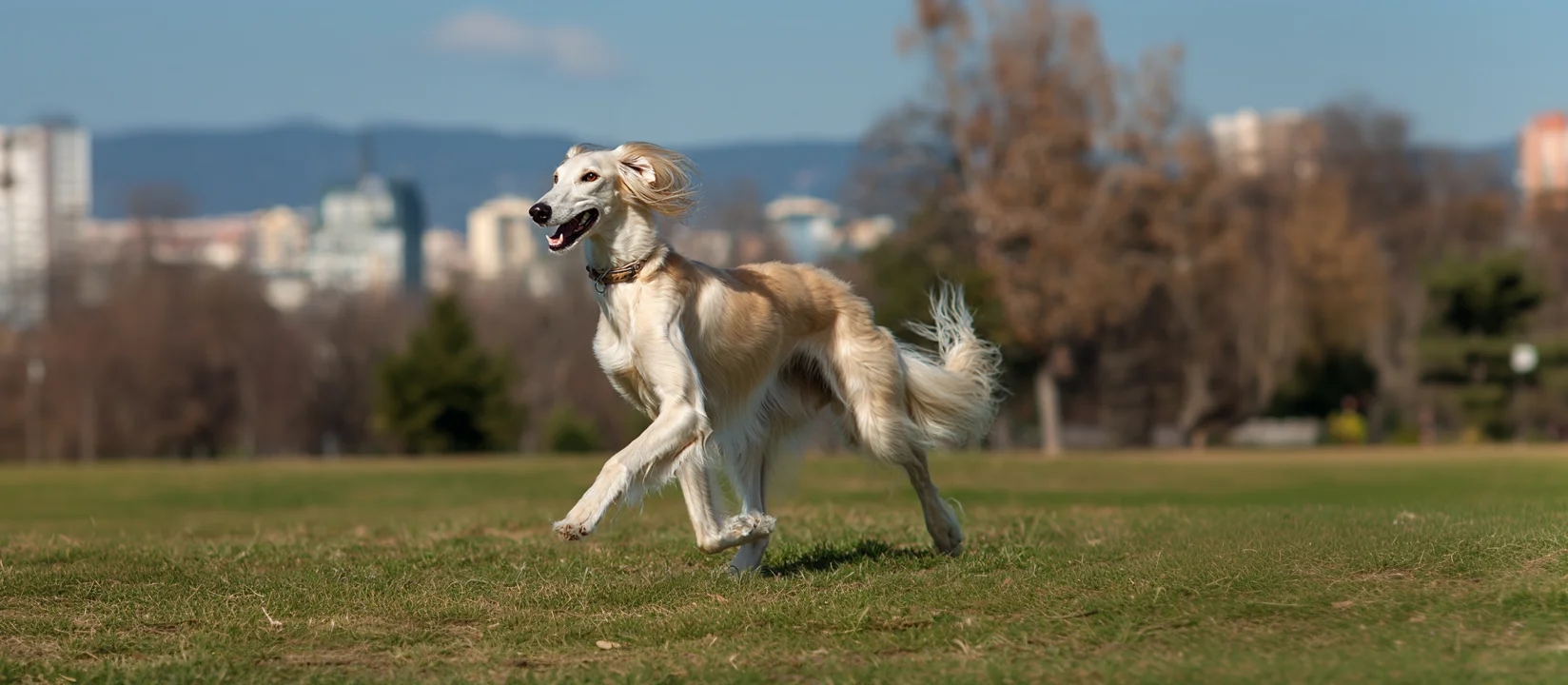
Saluki
Breed Facts
Height
23-28 inches
Weight
40-65 pounds
Lifespan
12-14 years
Key Traits
Overview
Elegant, graceful companions with silky coats and a quiet, noble spirit. These sensitive, independent dogs blend dignified aloofness with deep devotion to their family—perfect for individuals and families seeking a gentle, loyal friend who enjoys peaceful companionship and bursts of spirited athleticism.
Temperament & Personality
The Saluki is dignified, gentle, and loyal. They bond closely with family but tend to be reserved with strangers. Salukis are usually calm and quiet indoors, though they have bursts of high energy when they exercise. They are very intelligent but also independent, so training requires patience. Salukis generally do well with older, respectful children.
Care, Living Environment, & Grooming
Salukis have a short (or feathered) coat that sheds very little. Brush once a week to remove loose hair, paying attention to the long ears and tail. They seldom need baths. Clean and check the ears regularly.
Housing: Provide a secure, tall-fenced yard. Salukis love to run (they can reach 30–35 mph) and will escape ordinary fences. Never leave them unattended outside. They tolerate heat well but should always have shade and water.
Exercise: Plan on at least 2 hours of vigorous activity per day. Long walks, jogging, and safe off-leash runs are ideal. Provide toys or puzzle games for mental stimulation.
Weekly Care:
- Brush the coat (especially feathering)
- Trim nails and brush teeth
Monthly Care:
- Bathe if dirty
- Continue routine ear and eye checks
- Provide fresh water and a balanced diet
Nutrition: Feed a high-quality diet for an active dog. Salukis are lean, so avoid overfeeding. To reduce bloat risk, do not exercise 1–2 hours before or after meals.
Training & Socialization
Salukis can be trained, but they need patient, consistent methods. Use positive reinforcement and short, engaging sessions. Begin socialization early with people and other dogs. Crate training helps them feel secure when alone.
Always exercise a Saluki on leash or in a secure area. Teach a solid recall and basic commands. Salukis are affectionate with family once bonded but do not guard or bark much. Avoid harsh corrections – these sensitive dogs respond best to gentle guidance.
Health Considerations
Salukis live about 12–14 years. Potential health issues include:
- Heart Disease (DCM): Dilated cardiomyopathy
- Eye Disorders: Progressive retinal atrophy (PRA) and cataracts
- Hip Dysplasia: Uncommon, but hip evaluation is recommended
- Hypothyroidism: Underactive thyroid
- Bloat (Gastric Torsion): A life-threatening stomach twist
Annual vet checks should include heart, eyes, thyroid, and hips. Keeping your Saluki lean and exercising safely helps minimize health risks.
Cost of Ownership
Owning a Saluki costs roughly $1,800/year. A typical breakdown:
- Food & Treats: ~$400/year (active breed, high-quality diet)
- Routine Vet Care: ~$400/year (annual exams, vaccines, preventatives)
- Pet Insurance: ~$600/year (for breed-specific risks)
- Grooming/Supplies: ~$100/year (minimal grooming)
- Miscellaneous: ~$300/year (toys, bedding, etc.)
First-year costs (puppy vaccines, spay/neuter, supplies) are higher but future years will resemble these estimates.
Pros and Cons
Pros
- Graceful, gentle companion
- Very low shedding (easy grooming)
- Quiet and loyal
- Generally healthy
- Elegant appearance
Cons
- Extremely high exercise needs
- Strong prey drive (chases small animals)
- Independent/stubborn nature
- Sensitive (needs gentle training)
- Not suited to households with small children
Fun Facts
- The Saluki is one of the world's oldest dog breeds. Egyptian tomb carvings (~2100 B.C.) and 7,000-year-old Mesopotamian artifacts depict dogs very much like modern Salukis.
- Bedouin tribes called the Saluki El Hor, "The Noble." It was the only dog allowed in their tents, and they were often buried alongside their owners.
- Salukis can sprint at 30–35 mph, ranking them among the fastest dog breeds.
Frequently Asked Questions
Do Salukis shed a lot?
No – Salukis have very low shedding coats. The short coat (or feathered variety) loses very little hair. A weekly brushing is usually enough to manage any loose hairs.
Are Salukis good apartment dogs?
Generally not. Salukis need space to run. They do best in a home with a large, secure yard. In an apartment, they require very long daily runs or hikes to burn off energy. Without it, they can become bored or anxious.
How much exercise does a Saluki need?
A lot – plan on at least 2 hours per day. Salukis were bred for endurance. Daily activities like long jogs, lure coursing, or hikes keep them fit. Interactive play and training also help keep them mentally sharp.
Can first-time owners handle a Saluki?
Salukis can be challenging for beginners due to their independent, sensitive nature. They require consistent, gentle training and lots of exercise. However, an attentive first-time owner who meets these needs can do well. Patience and understanding of sighthound traits are key.
References
Personality Profile
Find your perfect puppy pair!
Take our quick personality quiz to find the breeds that match your personality.
Start Quiz NowKey Traits
Temperament
affectionate
Reserved
Cuddly
energy Level
Calm Companion
High-Energy Dynamo
Social Behavior
good With Children
Best with Adults/Older Kids
Kid-Friendly
barking Level
Quiet-Natured
Talkative
Care & Maintenance
shedding Level
Light Shedder
Heavy Shedder
exercise Needs
Short Walks Enough
Needs Daily Workouts
Learning & Cognition
trainability
Independent Thinker
Eager Learner
mental Stimulation Needs
Content Relaxer
Needs Challenges
Breed Facts
Height
23-28 inches
Weight
40-65 pounds
Lifespan
12-14 years
Key Traits
You Might Also Like

Find Your Perfect Puppy Pair
Take our scientifically-backed personality quiz to discover which dog breeds align with your personality.
Start the Quiz