Russian Toy
Breed Facts
Height
6-8 inches
Weight
3-6 pounds
Lifespan
12-14 years
Key Traits
Overview
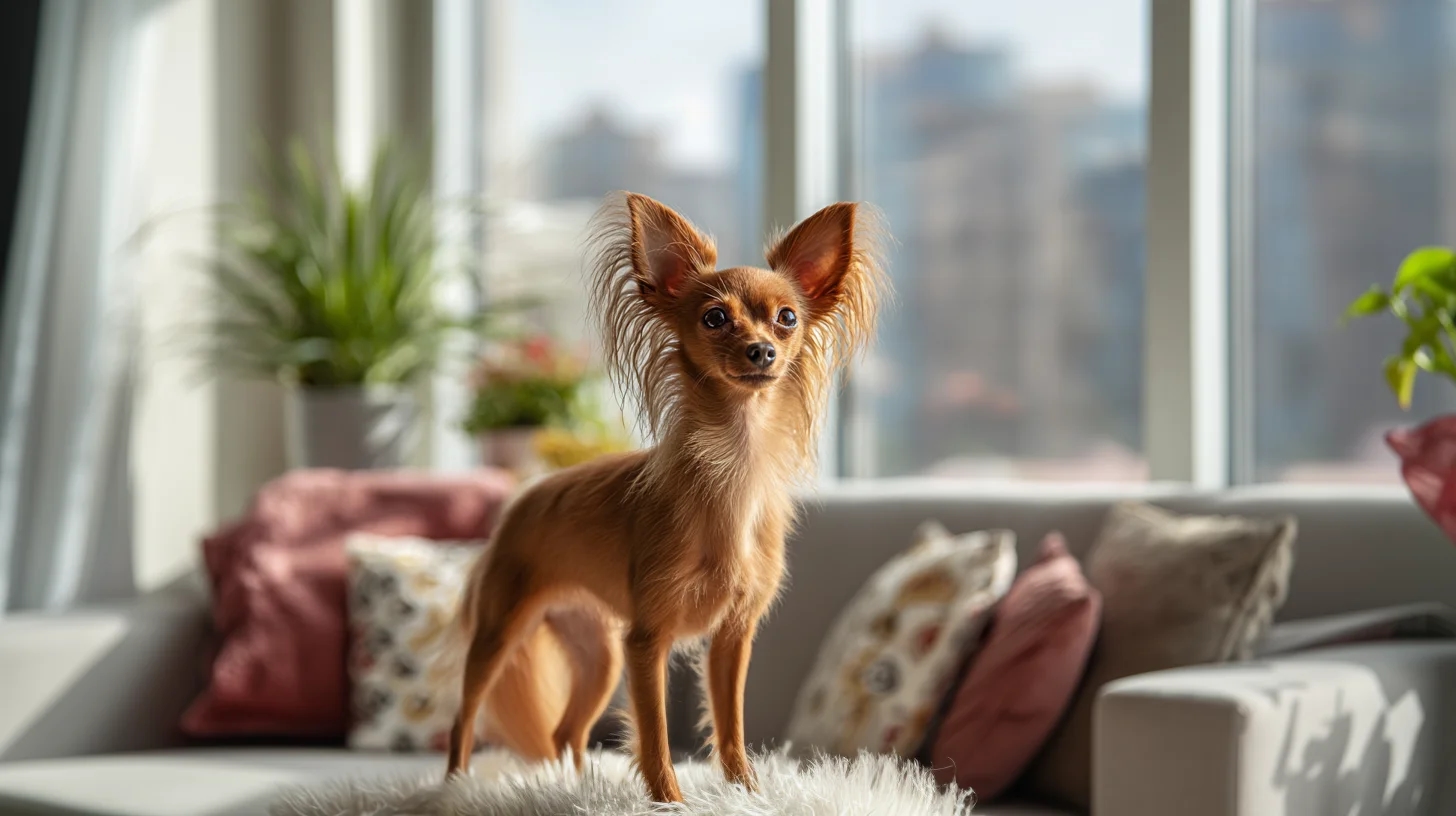
Delicate, lively companions with elegant frames and big, expressive eyes. These playful, affectionate dogs blend spirited energy with deep devotion—perfect for individuals and families seeking a tiny, charming friend who loves close bonds, entertaining antics, and being the center of attention.
Temperament & Personality
The Russian Toy's personality is a fascinating duality. On one hand, you'll have an incredibly affectionate lap dog that thrives on human companionship and loves nothing more than to snuggle close. They form powerful bonds with their families and will follow you from room to room, content to be your little shadow. On the other hand, a true terrier heart beats in that tiny chest. This means your Russian Toy will be playful, bold, and can possess a stubborn streak, sometimes trying to be the boss despite their small stature.
This breed is active and cheerful, with a keen intelligence that makes them engaging companions. While they are loyal and protective of their people, they can be somewhat aloof with strangers at first, making them excellent little watchdogs who are quick to announce a visitor. They generally get along well with other pets and older, gentle children, but their extreme fragility is a major consideration. Due to the risk of accidental injury, they are not recommended for households with toddlers or boisterous larger dogs without constant, careful supervision.
Care, Living Environment, & Grooming
Caring for a Russian Toy is primarily about managing their physical vulnerability while meeting their exercise and grooming needs. Their tiny size makes them perfectly suited for apartment living, as long as they receive daily activity. The most critical aspect of their environment is safety. Your home must be "puppy-proofed" for a dog that can easily be injured by a fall from a couch or by being stepped on. Providing doggy stairs to furniture is a wise investment. Because they lack an undercoat, they are sensitive to the cold and will appreciate a sweater in chilly weather.
Despite their delicate appearance, Russian Toys have a moderately high energy level. You should plan for about 30 minutes of activity each day, which can easily be met with a couple of short walks, games of fetch in the living room, or a romp in a secure yard. When walking your Russian Toy, it is crucial to use a harness instead of a collar to protect their fragile neck and trachea from injury.
Grooming needs differ by coat type, but both are relatively easy to maintain:
- Smooth Coat: This variety requires minimal effort. A quick brush once a week with a soft bristle brush and a daily wipe-down with a shammy cloth will keep their coat glossy and free of loose hair.
- Long Coat: The beautiful, silky feathering on the ears, legs, and tail requires more attention. You'll need to brush these areas two to three times a week to prevent tangles and mats. The impressive ear fringe that is a hallmark of the variety can take up to three years to fully grow in.
Training & Socialization
Training a Russian Toy is a rewarding experience, as their high intelligence and eagerness to please make them quick studies. However, their terrier heritage can surface as a stubborn or headstrong streak. Without clear and consistent leadership, they can develop "small dog syndrome," leading to behaviors like excessive barking or bossiness.
The key to success is positive reinforcement. Your Russian Toy will respond beautifully to training sessions that are fun, rewarding, and full of praise and treats. Harsh corrections are counterproductive and will cause this sensitive dog to shut down. Their clownish antics and agility make them great candidates for trick training and dog sports.
Early and thorough socialization is not just recommended; it's essential. The breed's parent club strongly advises exposing your puppy to a wide variety of people, sounds, and environments from a young age. This builds a confident, well-adjusted adult and prevents their natural aloofness with strangers from developing into fearfulness. Puppy kindergarten classes are an excellent way to provide structured, positive social experiences.
Health Considerations
The Russian Toy is a generally healthy breed with a lifespan of 12 to 14 years. However, like all breeds, they are prone to certain conditions, and their rarity means a limited gene pool requires careful, responsible breeding.
The most significant health concern is dental disease. Their small mouths often lead to overcrowded teeth and a high propensity for plaque and tartar buildup. Furthermore, it is very common for Russian Toy puppies to retain their deciduous (baby) teeth, which fail to fall out on their own. This almost always requires a veterinary procedure under anesthesia to remove the retained teeth and prevent future alignment and decay problems. Other potential issues include:
- Patellar Luxation: A condition common in toy breeds where the kneecap can slip out of place. It is often hereditary.
- Progressive Retinal Atrophy (PRA): An inherited eye disease that can lead to blindness. Reputable breeders screen their dogs for this.
- Bone Fractures: Their fine bones and delicate structure make them susceptible to fractures from falls or rough handling.
- Legg-Calve-Perthes Disease: A degenerative hip joint disease also seen in some toy breeds.
Responsible breeders screen their breeding stock for genetic conditions. The Russian Toy Club of America recommends breeders perform a Patella Evaluation, Cardiac Evaluation, and an Ophthalmologist Evaluation.
Cost of Ownership
Bringing a Russian Toy into your home is a significant financial commitment, especially in the first year. As a rare breed in North America, the initial purchase price for a puppy from a reputable breeder typically ranges from $1,500 to $2,500.
The estimated average annual cost of ownership is around $1,800. This figure is heavily influenced by veterinary needs rather than day-to-day expenses. Food costs are minimal, likely around $300-$400 per year. However, you should budget for routine vet care, and given the breed's fragility and predisposition to dental issues, pet insurance is a very wise investment. The first year is particularly expensive, as it includes not only the purchase price and initial supplies ($250-$925) but also the high likelihood of needing to pay for the surgical removal of retained baby teeth.
Pros and Cons
Pros
- Exceptionally affectionate and loyal companion
- Ideal size for apartment living
- Intelligent and eager to please
- Low grooming needs, especially the smooth-coat variety
- Long lifespan for a toy breed
Cons
- Extremely fragile and prone to injury
- High likelihood of needing costly dental procedures
- Can be stubborn and exhibit "terrier" willfulness
- Can be vocal (yappy) if not trained
- Rare, making them expensive and difficult to find
Fun Facts
- The Russian Toy has a history as colorful as its personality. These dogs were treasured companions of the Russian aristocracy in the 18th century, and an early English-style terrier owned by Emperor Peter the Great is still preserved at the Zoological Museum in St. Petersburg.
- Amazingly, the entire long-coat variety traces its roots back to a single puppy named Chikki, born in 1958 to two smooth-coated parents who happened to carry a gene for longer hair.
- Today, the Russian Toy remains one of the smallest and rarest dog breeds in the world.
Frequently Asked Questions
Do Russian Toys shed a lot?
No, they are a low-shedding breed. Both coat varieties shed minimally, though the short hairs of the smooth coat are less noticeable than the longer hairs of the other variety. Regular brushing is usually enough to manage any loose hair.
Are Russian Toys good apartment dogs?
Yes, they are exceptionally well-suited for apartment life. Their tiny size means they don't need a large home or yard. As long as their daily exercise needs are met with short walks and indoor play, they are happy city dwellers.
How much exercise does a Russian Toy need?
A Russian Toy needs about 30 minutes of activity per day. This doesn't have to be strenuous; a couple of short, leashed walks (on a harness) and some dedicated playtime indoors are typically sufficient to keep them happy and healthy.
Can first-time owners handle a Russian Toy?
Yes, a first-time owner can be a great match for a Russian Toy, provided they are prepared. An owner must be committed to providing a safe environment for such a fragile dog and be confident enough to handle their terrier-like stubbornness with patient, positive training.
References
Personality Profile
Find your perfect puppy pair!
Take our quick personality quiz to find the breeds that match your personality.
Start Quiz NowKey Traits
Temperament
affectionate
Reserved
Cuddly
energy Level
Calm Companion
High-Energy Dynamo
Social Behavior
good With Children
Best with Adults/Older Kids
Kid-Friendly
barking Level
Quiet-Natured
Talkative
Care & Maintenance
shedding Level
Light Shedder
Heavy Shedder
exercise Needs
Short Walks Enough
Needs Daily Workouts
Learning & Cognition
trainability
Independent Thinker
Eager Learner
mental Stimulation Needs
Content Relaxer
Needs Challenges
Breed Facts
Height
6-8 inches
Weight
3-6 pounds
Lifespan
12-14 years
Key Traits
You Might Also Like
Find Your Perfect Puppy Pair
Take our scientifically-backed personality quiz to discover which dog breeds align with your personality.
Start the Quiz