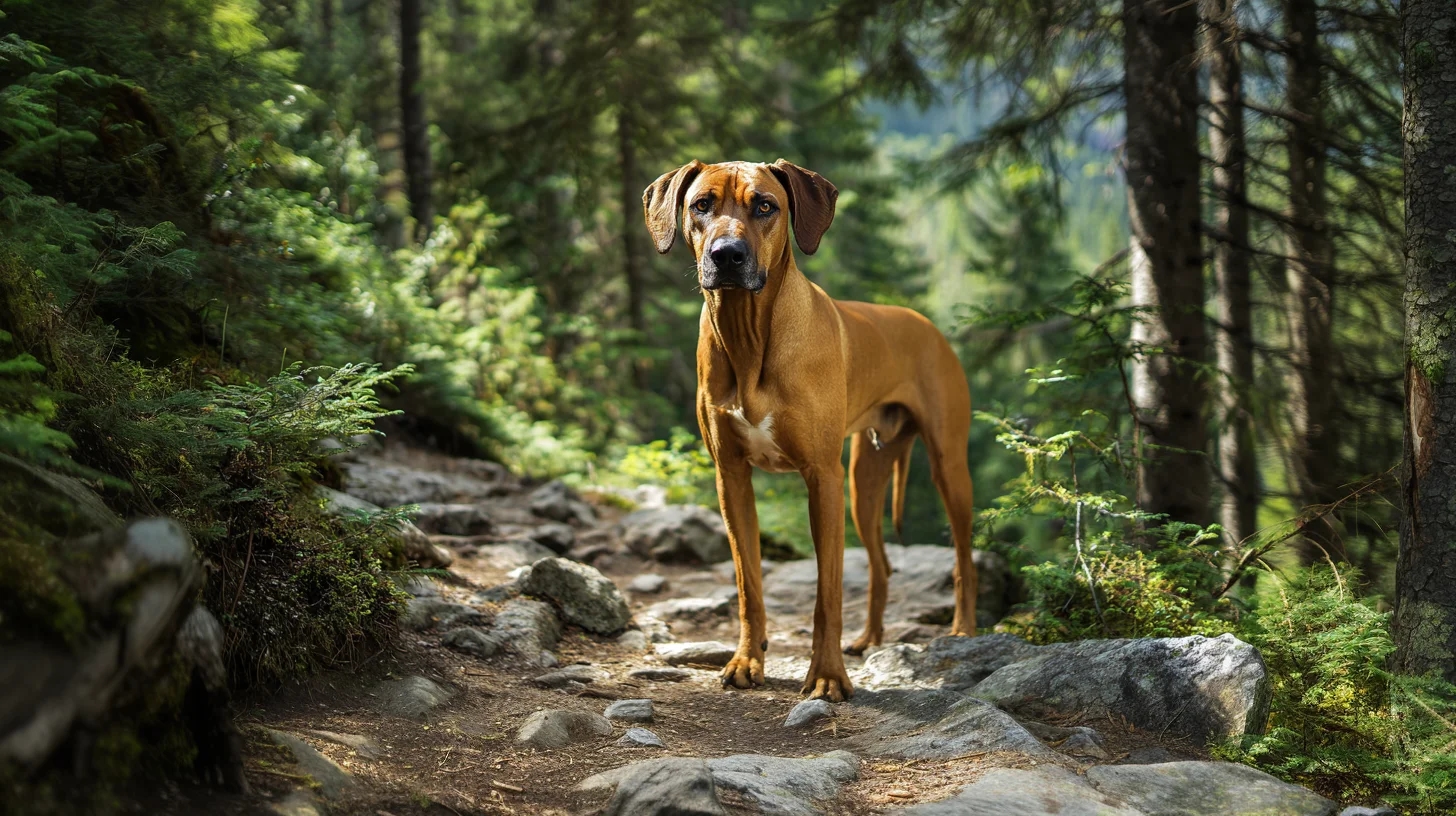
Rhodesian Ridgeback
Breed Facts
Height
25-27 inches (male), 24-26 inches (female)
Weight
85 pounds (male), 70 pounds (female)
Lifespan
10-12 years
Key Traits
Overview
Strong, dignified companions with sleek coats and a distinctive ridge of hair down their back. These athletic, independent dogs blend quiet confidence with deep loyalty—perfect for experienced owners seeking a courageous, affectionate friend who thrives on adventure and close family bonds.
Temperament & Personality
Your Rhodesian Ridgeback will likely be protective and deeply loyal to your family. They often appear calm or aloof around strangers, which can seem serious but usually doesn't signal aggression. They must be socialized and trained consistently from a young age; Ridgebacks have a sensitive side and accept correction only when it's fair. Your Ridgeback is athletic and energetic, requiring daily walks and play to stay happy; without enough activity they can become bored and destructive. These dogs are smart and strong-willed, so training should be consistent and patient. As a bold, independent breed, Ridgebacks can be a challenge for a first-time owner. With early socialization and reward-based training, many become patient, gentle companions for children, though you should still supervise them around very young kids. Because of their hunting background, they may follow their instincts and ignore commands if not properly motivated. Early obedience classes and positive training can help keep your Ridgeback engaged and strengthen the bond.
Care, Living Environment & Grooming
As a Rhodesian Ridgeback owner, you should plan to give your dog regular exercise and space. These large, athletic dogs do best in homes where they have room to run. Ideally your Ridgeback has a securely fenced yard, but many can adapt to apartment or indoor living if given daily long walks or runs. Experts recommend at least 45 minutes of exercise per day to keep them fit and happy. Because of their short coat, Ridgebacks tolerate warm climates fairly well, but they can be sensitive to extreme cold. In winter, provide a warm dog bed or coat; in summer ensure plenty of shade and fresh water. Grooming needs are straightforward:
- Brushing: Once a week with a firm brush to remove loose hair and keep the coat healthy. Ridgebacks shed seasonally, so more frequent brushing helps control loose fur.
- Bathing: Only as needed (for example, every 1-2 months or when your dog gets dirty) with gentle dog shampoo.
- Nails: Trim every 3-4 weeks (or when you hear clicking on hard floors) to prevent overgrowth.
- Teeth: Aim to brush teeth 2-3 times a week to prevent dental disease.
- Ears: Check weekly for wax or redness, and clean with vet-approved ear wipes if needed.
Training & Socialization
Training your Rhodesian Ridgeback is easier if you start young and keep it fun. These intelligent dogs love a challenge but can be stubborn or independent. You should use reward-based methods (treats, praise, play) and remain patient; heavy-handed discipline won't work with this sensitive breed. Consistency and clear rules help Ridgebacks learn fast. Early socialization is crucial: expose your puppy to different people, children, animals, and environments to build confidence and curb any shyness. For example, enroll in puppy obedience classes or arrange playdates with other friendly dogs. Crate training is useful for potty training and giving your dog a safe den. With short daily training sessions and positive guidance, your Ridgeback will grow into a well-mannered companion. Keep sessions brief (10-15 minutes) and rewarding. Involve your family in training so your dog bonds with everyone. Remember to be a calm, confident leader—this breed respects gentle authority and clear boundaries.
Health Considerations
Rhodesian Ridgebacks are generally healthy, with an average lifespan around 10–12 years. However, you should watch for large-breed issues. Common conditions include joint problems and genetic disorders:
- Hip Dysplasia: A painful malformation of the hip joint (common in large dogs).
- Elbow Dysplasia: A similar joint issue in the front legs.
- Hypothyroidism: Low thyroid function; may cause weight gain, skin changes, and lethargy.
- Dermoid Sinus: A neural-tube defect along the back; breeders usually test puppies for this and remove it by surgery if found.
- Eye Conditions: Such as cataracts or eyelid problems (entropion/distichiasis) that affect vision.
- Deafness: Some Ridgebacks experience progressive hearing loss; you'll notice it as your dog matures.
- Gastric Torsion (Bloat): As a deep-chested dog, Ridgebacks can develop bloat, a life-threatening condition. Feed smaller meals and avoid vigorous exercise around mealtimes to help prevent it. Some of these conditions are hereditary, so talk to breeders about health tests. Regular vet check-ups, a balanced diet, and maintaining a healthy weight can help reduce risks. Many issues can be managed: for example, hypothyroidism is treated with daily medication, and dermoid sinuses are surgically corrected. As always, consult your veterinarian if you notice any concerning symptoms.
Cost of Ownership
Expect an initial cost for a Rhodesian Ridgeback puppy around $600–$2,000 (about $1,250 on average). First-year expenses (supplies, spay/neuter, vet visits, training, etc.) can reach roughly $4,475, and after that plan for about $1,775 per year on food, routine vet care, and incidentals. Over an 11-year lifespan, the average total cost is around $22,000. These figures cover essentials; optional expenses like pet insurance, specialty diets or boarding will add to your budget. For example, professional boarding or hiring a dog walker can add hundreds of dollars per month, so factor those in if needed.
Pros and Cons
Pros
- Loyal, protective companion that bonds closely with family members.
- Short, easy-care coat with minimal odor or drooling.
- Athletic and energetic; excels at running, hiking, and other activities.
- Gentle and patient with children once properly socialized.
Cons
- Independent and strong-willed; requires a confident, experienced owner.
- Very high exercise needs; risk of boredom or destructive behavior if under-stimulated.
- Aloof or wary with strangers (excellent guard dog, but not for every family).
- Prone to breed-specific health issues (e.g., hip dysplasia, dermoid sinus).
Fun Facts
- Rhodesian Ridgebacks were bred in Africa to hunt lions, earning them the nickname "African Lion Hound".
- They are known for the distinctive ridge of hair along their back (hence the name).
- The breed has only wheaten coat colors (from pale tan to rich red).
- Actor Errol Flynn helped popularize the Ridgeback in the U.S. by breeding them on his Hollywood ranch.
Frequently Asked Questions
Are Rhodesian Ridgebacks good with children?
When well-socialized and trained, your Ridgeback can be gentle and protective with children. They often bond closely with family. However, because of their size and strength, always supervise interactions with young children.
How much exercise does a Ridgeback need?
Plan for at least 45 minutes of active exercise (walking, running, or playing) each day. If you keep your Ridgeback well-exercised and mentally stimulated, you'll have a happier, well-behaved dog.
Are Ridgebacks easy to train?
They're intelligent but can be independent and stubborn. Use reward-based training (treats, praise, play) and be consistent. Keep sessions short and engaging; avoid harsh discipline. With patience, your Ridgeback will learn quickly.
Is a Ridgeback a good choice for a first-time dog owner?
Because of their energy, strength, and independence, Ridgebacks can be challenging for first-time owners. They need a confident, experienced handler for consistent training and plenty of exercise. If you're new to dogs, consider working with a trainer to build your skills; a well-guided Ridgeback will reward you with loyalty.
References
Personality Profile
Find your perfect puppy pair!
Take our quick personality quiz to find the breeds that match your personality.
Start Quiz NowKey Traits
Temperament
affectionate
Reserved
Cuddly
energy Level
Calm Companion
High-Energy Dynamo
Social Behavior
good With Children
Best with Adults/Older Kids
Kid-Friendly
barking Level
Quiet-Natured
Talkative
Care & Maintenance
shedding Level
Light Shedder
Heavy Shedder
exercise Needs
Short Walks Enough
Needs Daily Workouts
Learning & Cognition
trainability
Independent Thinker
Eager Learner
mental Stimulation Needs
Content Relaxer
Needs Challenges
Breed Facts
Height
25-27 inches (male), 24-26 inches (female)
Weight
85 pounds (male), 70 pounds (female)
Lifespan
10-12 years
Key Traits
You Might Also Like

Find Your Perfect Puppy Pair
Take our scientifically-backed personality quiz to discover which dog breeds align with your personality.
Start the Quiz