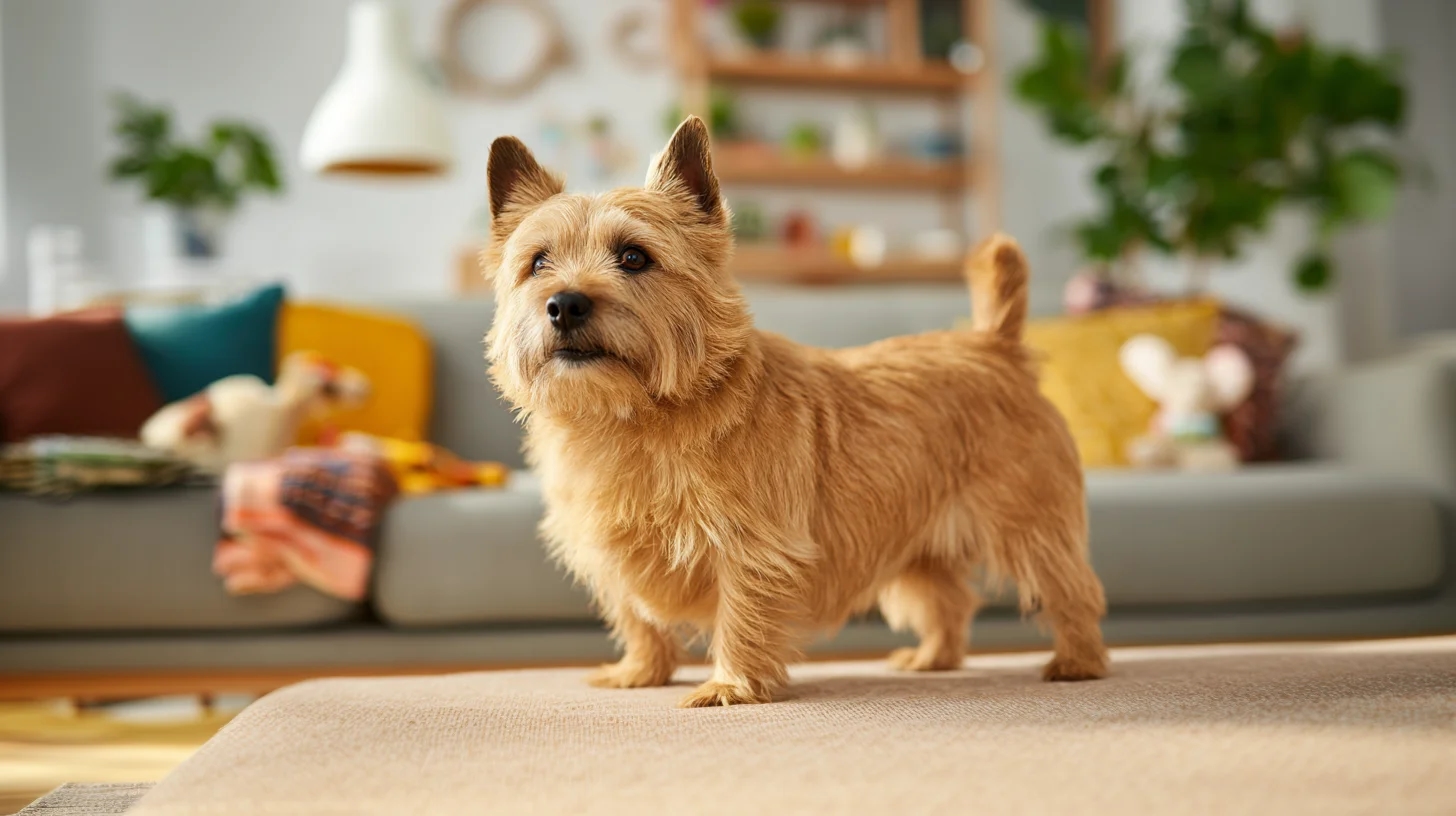
Norwich Terrier
Breed Facts
Height
10 inches
Weight
9-10 pounds
Lifespan
12-15 years
Key Traits
Overview
Spunky, affectionate companions with expressive faces and a big heart in a small frame. These spirited, fearless dogs blend playful energy with deep devotion—perfect for individuals and families seeking a cheerful, adventurous friend who loves close bonds and brings endless joy to everyday life.
Temperament & Personality
The Norwich Terrier is a plucky little breed with a bold, confident personality despite its small stature. Although only about 10 inches tall, these dogs are fearless and energetic – they were originally bred to hunt vermin. Norwich Terriers tend to be very friendly and affectionate toward their family, and they typically bond closely with people and often do well with children or other pets. They're intelligent and eager to please, so they respond well to positive rewards. Overall, you'll find your Norwich Terrier a loyal, outgoing companion that thrives on attention and activity.
Care, Living Environment, & Grooming
Norwich Terriers need daily exercise (a couple of short walks plus playtime) to burn off energy. They adapt well to living in cities or the country, and their small size means they can be happy in an apartment if exercised regularly. However, a fenced yard is ideal so they can run safely, since their high prey drive makes them prone to chasing small animals. They have a weather-resistant double coat (wiry topcoat with a soft undercoat) that sheds minimally. This coat tolerates cold reasonably well, but Norwich Terriers should not be left outside for long in extreme weather.
Norwich Terriers should be fed a high-quality diet for small breeds (about ½–1 cup per day, split into two meals) to meet their energetic metabolism. Keep portion control in mind, as small dogs can gain weight easily. Also, use a harness on walks rather than a collar to protect their neck and trachea (they can be prone to tracheal collapse).
Grooming Schedule
- Weekly: Brush the wiry coat 2–3 times to remove loose hairs and prevent matting, and check ears and teeth
- Monthly: Bathe only when needed (about every 2–3 months) to avoid drying the skin, and trim nails if they aren't naturally worn down
- Every 3–4 months: Consider hand-stripping or professional grooming to maintain coat texture (this pulls out dead hairs and preserves the wiry coat)
- Regularly: Clean ears and trim nails as needed. Brush your Norwich's teeth several times a week to prevent tartar buildup
Training & Socialization
Norwich Terriers are intelligent and generally eager to please, so they learn quickly with positive reinforcement (praise, treats, toys). They may wear a sign saying "will work for treats." However, like many terriers, they can be independently minded and sometimes stubborn. Start obedience training and socialization early, exposing them to various people, places, and animals. Consistent, patient training methods work best for this breed. Crate training and clear rules help with housebreaking. Because of their terrier lineage, Norwich Terriers can be vocal when excited or bored; teaching "quiet" and other cues can help manage excessive barking.
Health Considerations
Norwich Terriers are generally healthy, with a lifespan of about 12–15 years. Nonetheless, you should watch for these breed-related conditions and consult your vet about screening:
- Luxating Patella: A common small-dog knee condition; affected dogs may limp. Manage with weight control and sometimes surgery
- Dental Disease: Prone to periodontal (gum) disease. Regular brushing and dental chews help prevent tartar buildup
- Tracheal Collapse: The windpipe rings can weaken, leading to a honking cough. Use a harness instead of a collar and keep weight in check
- Hip Dysplasia: Rare in Norwich, but worth screening; abnormal hip joints can lead to arthritis
- Eye Issues: Norwich Terriers aren't known for eye disease, but you might test for primary lens luxation (genetic) if concerned
It's wise to ask breeders for health clearances: OFA-certified hip and patella exams, an ophthalmologist's CERF (eye) exam, and thyroid checks, for example. These help reduce the chance your dog inherits problems.
Cost of Ownership
On average, expect to spend around $1,050 per year on a Norwich Terrier (after the first year). Major expenses include: dog food ($250–300/year for this small breed), routine veterinary care (vaccines, check-ups $300), pet insurance or emergency fund ($300), and grooming supplies or professional trims ($150–200). The first year is significantly higher (often $5,000–6,000) due to one-time costs like purchasing or adopting a puppy ($2,000–$4,000), spay/neuter, microchipping, and initial supplies and training classes.
Pros and Cons
Pros
- Loyal, affectionate family pet that bonds closely with owners
- Small, portable size suitable for apartments
- Low-shedding wiry coat (good for mild allergies)
- Generally healthy with a long lifespan
Cons
- Very high energy and prey drive (needs lots of exercise)
- Can be stubborn or willful, requiring consistent training
- Tends to bark more than average terriers
- Needs regular grooming (wire coat maintenance)
- Not a guard dog (friendly to strangers once acquainted)
Fun Facts
- The Norwich Terrier was originally called the "Cantab Terrier" and bred to bolt foxes and hunt rats on farms.
- It's one of the smallest working terriers: at just 10 inches tall and ~12 lbs, it's often described as "a big dog in a small package".
- Norwich Terriers were a secret favorite of Cambridge University students in the 1800s, and later imported to the U.S. after World War I.
- A Norwich Terrier named "Liberace" was adopted by celebrity designer Jonathan Adler in 1999, highlighting the breed's devoted fans.
Frequently Asked Questions
Do Norwich Terriers shed a lot?
No – they have a low-shedding, double coat. You'll see some seasonal shedding, but weekly brushing and occasional hand-stripping keep loose hairs under control. Their wire coat means less dog hair on your floors compared to many breeds.
Are Norwich Terriers good apartment dogs?
Yes, they can adapt to apartment living if you commit to daily exercise. Despite their small size, they have a lot of energy. With 30–60 minutes of vigorous play or walks every day, a Norwich Terrier will happily live in a small home. (Just train the barking and use a harness on walks.)
How much exercise does a Norwich Terrier need?
About 30–60 minutes per day. Short walks and play sessions are essential. They enjoy runs in a safe, fenced yard or interactive games that challenge them physically and mentally. Lack of exercise can lead to boredom and digging or barking. A tired Norwich is a happy Norwich.
Can first-time owners handle a Norwich Terrier?
Yes. Norwich Terriers are generally friendly and not as difficult as some terriers. They respond well to training and socialization, and most people find them to be adaptable family dogs. Just be prepared to meet their exercise and grooming needs. With a consistent, positive approach, even a new owner can thrive with this breed.
References
Personality Profile
Find your perfect puppy pair!
Take our quick personality quiz to find the breeds that match your personality.
Start Quiz NowKey Traits
Temperament
affectionate
Reserved
Cuddly
energy Level
Calm Companion
High-Energy Dynamo
Social Behavior
good With Children
Best with Adults/Older Kids
Kid-Friendly
barking Level
Quiet-Natured
Talkative
Care & Maintenance
shedding Level
Light Shedder
Heavy Shedder
exercise Needs
Short Walks Enough
Needs Daily Workouts
Learning & Cognition
trainability
Independent Thinker
Eager Learner
mental Stimulation Needs
Content Relaxer
Needs Challenges
Breed Facts
Height
10 inches
Weight
9-10 pounds
Lifespan
12-15 years
Key Traits
You Might Also Like


Find Your Perfect Puppy Pair
Take our scientifically-backed personality quiz to discover which dog breeds align with your personality.
Start the Quiz