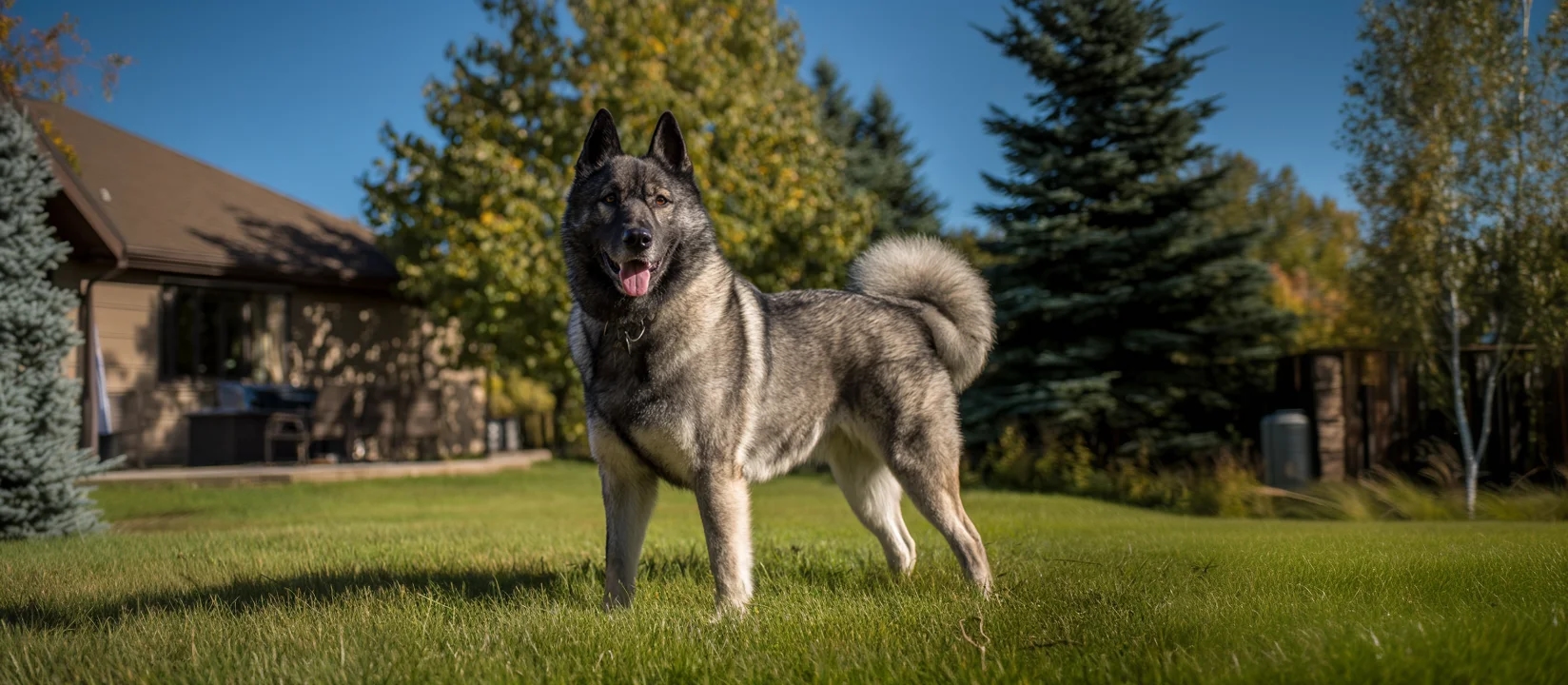
Norwegian Elkhound
Breed Facts
Height
18-21 inches
Weight
45-55 pounds
Lifespan
12-15 years
Key Traits
Overview
Bold, loyal companions with thick, weatherproof coats and a spirited, independent nature. These energetic, affectionate dogs blend fearless hunting instincts with deep devotion—perfect for active families and individuals seeking a courageous, playful friend who thrives on adventure and close companionship.
Temperament & Personality
You'll find the Norwegian Elkhound to be a loyal, confident spitz with a friendly, dignified nature. These athletic dogs are bold, energetic, and intelligent – originally bred as fearless hunters and vigilant companions. They love spending time with their family, enjoying play and cuddles at home, and are known to be "friendly, happy, and love being by the side of their people".
Elkhounds typically do well with children (especially older, rambunctious ones) and often get along with other dogs when properly socialized. However, they have a strong prey drive – your Elkhound may chase small pets like cats or rodents – and they have a loud, alert bark to warn of strangers. A bonus: Elkhounds don't drool much and shed only moderately.
They thrive on companionship and sometimes display a playful, clownish side (you might find yours nudging blankets or toys around). Overall, expect a good-natured, affectionate family dog, with a hint of stubborn independence.
Care, Living Environment, & Grooming
You should plan on giving your Elkhound plenty of exercise each day. They're energetic dogs, so aim for at least an hour of vigorous activity (hiking, jogging, or play). The Norwegian's dense double coat loves cold weather – these dogs excel in snow and chill – but you'll need to keep them cool in summer, as they can overheat easily. A secure, fenced yard is ideal because Elkies enjoy exploring and may wander if unleashed. They can adapt to indoor living or even an apartment with enough playtime, but an active home with space to roam is best.
Grooming your Elkhound is straightforward if done regularly. Brush the coat daily (2–5 minutes) to catch loose hairs and minimize shedding. Expect heavy "blow outs" twice a year when they shed their undercoat; during these seasons, more frequent brushing (or professional de-shedding) helps. Bathe only as needed (a few times a year) since their coat resists dirt.
Typical grooming tasks include:
- Weekly: Brush coat thoroughly, trim nails, and check ears and teeth.
- Monthly: Give a bath if needed, especially in summer; deep-brush or use a deshedding tool in spring/fall; inspect skin for any issues.
Feed a high-quality diet and measure portions carefully. Elkhounds love food and can overeat, so monitor their weight. Provide fresh water always, and avoid sudden diet changes.
Training & Socialization
You'll want to begin training your Elkhound early. Though smart, they can get easily bored with repetitive drills, so keep sessions short, varied and fun. Always use positive reinforcement (treats, praise, or clickers) and offer plenty of rewards when they follow cues. These independent dogs may test boundaries, so consistency and firm but gentle guidance are key. Early socialization – exposing your puppy to different people, pets and environments – is important to raise a confident, well-adjusted dog.
Don't underestimate their strong prey drive: practice solid recall and leash manners. Until fully trained, keep your Elkhound in a secure yard or on leash outside to prevent chasing small animals. Engaging activities like agility, tracking, or advanced tricks are excellent outlets for their energy and intelligence. With patience and creativity, your Elkhound can learn a wide range of commands.
Health Considerations
Norwegian Elkhounds are generally healthy dogs with an average lifespan of about 12–15 years. However, like all breeds they can inherit certain conditions. Common issues include:
- Hip/elbow dysplasia: a hereditary joint condition causing arthritis
- Fanconi syndrome: an inherited kidney disorder that affects renal function
- Progressive retinal atrophy (PRA): a degenerative eye disease
- Patellar luxation: kneecap dislocation
- Hypothyroidism: thyroid hormone deficiency (can cause weight gain and lethargy)
- Skin problems: such as chronic dermatitis or sebaceous cysts
It's wise to buy from a reputable breeder who screens for these issues. Recommended health tests include hip and elbow evaluations, eye exams, thyroid checks, and DNA tests for Fanconi syndrome.
Cost of Ownership
Budget about $1800 per year for your Elkhound. Food is usually the biggest cost (roughly $300–$400 annually for quality kibble and treats). Routine vet care (vaccines, annual exams, preventives) is about $300–$400 yearly. Pet insurance can run ~$500–$600 per year for a medium dog. Grooming supplies and basic care (brushes, nail trims) might be ~$100 per year. The rest covers toys, licenses, and training.
For example, you might spend ~$400 on food, $350 on vet visits, $550 on insurance, and ~$150 on grooming supplies. The remaining ~$350–$450 covers toys, supplies, and classes. Remember: the first year is higher. Plan for spay/neuter (≈$200), extra puppy vaccinations, crate, leash and bed, easily pushing initial costs above $2000.
Pros and Cons
Pros
- Loyal and affectionate with family
- Hardy and cold-weather tolerant (thick double coat)
- Intelligent, playful, and energetic—great for active owners
- Excellent health and long life expectancy
- Alert watchdog (vocal bark warns you of strangers)
Cons
- Very energetic; requires extensive daily exercise
- Strong prey drive; will chase small animals
- Independent and sometimes stubborn in training
- Heavy seasonal shedding
- Tendency to bark frequently and wander if not contained
Fun Facts
- One of the oldest dog breeds: fossil evidence dates back to 4000–5000 B.C. in Scandinavia.
- Prized by Vikings: many were buried with their masters (intended for Valhalla).
- "Norsk Elghund" means "Norwegian Elk Dog" (moose dog) because they helped hunters track moose.
- Officially the national dog of Norway, symbolizing its cultural heritage.
Frequently Asked Questions
Do Norwegian Elkhounds shed a lot?
Yes. Norwegian Elkhounds have a thick double coat and shed moderately all year, with heavy "blow-out" shedding about twice a year. During those periods you'll see fur tufts everywhere. Daily brushing (a few minutes) is recommended to manage shedding.
Are Norwegian Elkhounds good apartment dogs?
Not really. Elkhounds are active and vocal. They can adapt to apartment life if given plenty of exercise and stimulation, but they truly shine in a home with a yard. Without adequate activity, they may become restless or noisy.
How much exercise does a Norwegian Elkhound need?
A lot! Plan on at least an hour of exercise per day. Long walks, hikes, runs, and playtime are essential. Elkhounds also love dog sports like agility and tracking. More exercise will make for a calmer, happier dog.
Can first-time owners handle a Norwegian Elkhound?
Yes, but with preparation. Elkhounds are intelligent but independent and can test boundaries. A first-time owner needs patience and consistency. Obedience classes and early socialization help a lot. With a firm, positive approach and plenty of exercise, many novices can successfully keep an Elkhound.
References
Personality Profile
Find your perfect puppy pair!
Take our quick personality quiz to find the breeds that match your personality.
Start Quiz NowKey Traits
Temperament
affectionate
Reserved
Cuddly
energy Level
Calm Companion
High-Energy Dynamo
Social Behavior
good With Children
Best with Adults/Older Kids
Kid-Friendly
barking Level
Quiet-Natured
Talkative
Care & Maintenance
shedding Level
Light Shedder
Heavy Shedder
exercise Needs
Short Walks Enough
Needs Daily Workouts
Learning & Cognition
trainability
Independent Thinker
Eager Learner
mental Stimulation Needs
Content Relaxer
Needs Challenges
Breed Facts
Height
18-21 inches
Weight
45-55 pounds
Lifespan
12-15 years
Key Traits
You Might Also Like
Find Your Perfect Puppy Pair
Take our scientifically-backed personality quiz to discover which dog breeds align with your personality.
Start the Quiz