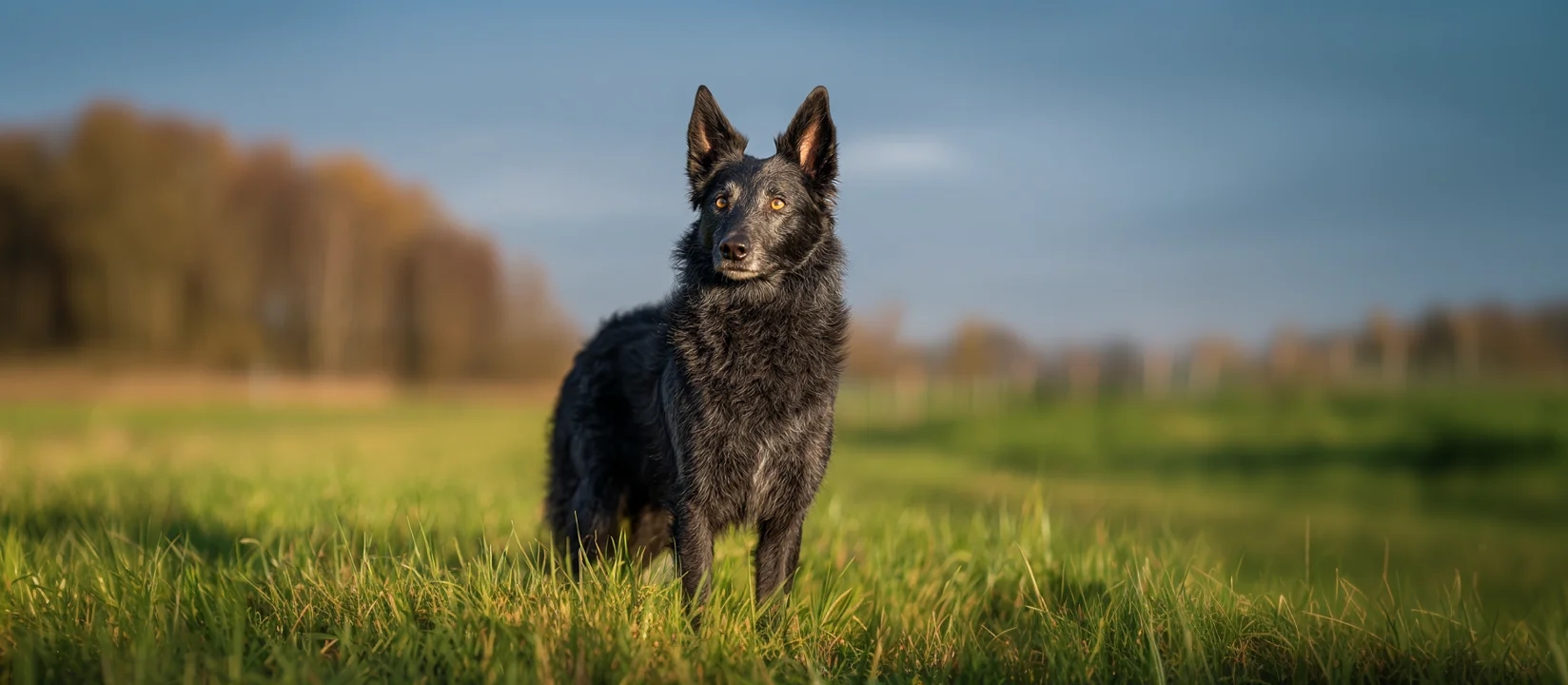
Mudi
Breed Facts
Height
16-20 inches
Weight
30-50 pounds
Lifespan
12-14 years
Key Traits
Overview
Versatile, spirited companions with wavy coats and a sharp, eager-to-please spirit. These intelligent, energetic dogs blend tireless work ethic with deep loyalty—perfect for active, experienced owners seeking a clever, affectionate friend who excels at training, adventure, and forming strong, devoted bonds.
Temperament & Personality
The Mudi (pronounced "moodie") is a rare and remarkable herding dog from the farms of Hungary. You will find your Mudi to be exceptionally intelligent, energetic, and loyal. They are often described as charismatic and tenacious, with a brilliant mind that is always working. This is a true working breed with incredible stamina and a powerful drive. While they are energetic outdoors, a well-exercised Mudi has a wonderful "off switch" and is typically calm and relaxed inside the home.
Mudis are known for forming an intense, devoted bond with their person or family, often described as "one-family dogs". This loyalty makes them excellent watchdogs, as they are sensibly suspicious and aloof with strangers. They get along well with children and other pets they are raised with, but their herding instincts might lead them to gently nudge or "herd" younger family members. Their personality is a fascinating mix of herding dog, terrier, and spitz, making them clever, cheeky, and occasionally independent.
Care, Living Environment, & Grooming
The single most important aspect of caring for a Mudi is meeting their profound need for exercise and mental stimulation. This is not a dog that will be satisfied with a simple walk around the block. You should plan on providing at least one to two hours of vigorous activity and mental work every single day. They make fantastic partners for running, hiking, and swimming, but they truly shine when given a job. The Mudi excels in nearly every dog sport, including agility, herding, flyball, obedience, and Frisbee. Without a proper outlet, a bored Mudi will invent its own work, which often involves digging, excessive barking, or other destructive behaviors.
Despite their high-maintenance activity needs, Mudis are surprisingly low-maintenance in grooming:
- Weekly: A light brushing once or twice a week is usually enough to remove loose hair and keep their coat healthy
- Monthly: Trim their nails to prevent discomfort and injury
- As Needed: The Mudi's "wash-and-wear" coat is dirt-repellent and does not require frequent bathing. Regular tooth brushing is important for their overall health
Mudis are adaptable and can live in an apartment, but only if their extreme exercise needs are met. A home with a securely fenced yard is ideal, but be aware of their extraordinary jumping ability.
Training & Socialization
Training a Mudi is a partnership. They are brilliant and learn with incredible speed, but their intelligence is paired with an independent, problem-solving mind. They will not respond well to harsh corrections or boring, repetitive drills. You'll achieve the best results with positive reinforcement, using fun, game-based training sessions that challenge their intellect.
Because Mudis are naturally vocal, it's essential to start training a "quiet" command from a young age to manage their tendency to bark. Their strong herding instincts also need to be managed and channeled into appropriate activities.
Early, extensive, and ongoing socialization is absolutely critical for this breed. Exposing your Mudi puppy to many different people, places, and situations will help them manage their natural wariness of strangers and grow into a confident, well-adjusted adult. Be prepared for potential "fear periods," which can be intense and require patient handling.
Health Considerations
The Mudi is a robust working breed, generally healthy with a life expectancy of 12 to 14 years. Because the breed is rare and has a smaller gene pool, choosing a reputable breeder who conducts thorough health screenings is paramount. These breeders will be transparent about health issues in their lines and work to produce the healthiest dogs possible.
Common health concerns that have been seen in the breed include:
- Hip and Elbow Dysplasia: An abnormal development of the hip or elbow joints that can lead to arthritis. Reputable breeders will have OFA or PennHIP evaluations for their dogs
- Patellar Luxation: A condition where the kneecap can slip out of place
- Epilepsy: A neurological disorder that can cause seizures. It is a known issue within the breed
- Cataracts: An eye condition that can impair vision. Parents of a puppy should have a recent eye exam from a board-certified veterinary ophthalmologist
Cost of Ownership
As a rare breed, acquiring a Mudi from a reputable breeder is a significant investment, with puppies typically costing between $2,500 and $3,000 or more. The average annual cost of ownership is around $2,200.
This yearly budget includes high-quality food for a very active dog ($400-$800), routine veterinary care and preventatives ($500-$1,000), and pet insurance ($500-$1,000), which is highly recommended. While grooming costs are minimal, you should budget for the potential costs of activities like dog sports classes, which are vital for meeting your Mudi's mental and physical needs.
Pros and Cons
Pros
- Exceptionally intelligent, versatile, and trainable
- Forms an incredibly deep and loyal bond with family
- Low-maintenance "wash-and-wear" coat
- A natural athlete that excels in almost any dog sport
- Generally a robust and healthy breed
Cons
- Extremely high energy; needs a job, not just a walk
- Not recommended for first-time or inactive owners
- Can be very vocal and prone to alert barking
- Naturally suspicious and aloof with strangers
- A rare breed that is expensive and difficult to find
Fun Facts
- The Mudi is a true all-purpose Hungarian farm dog, once used to herd and manage large flocks of up to 500 sheep on its own
- Like many European breeds, the Mudi population was decimated and brought to the brink of extinction during World War II. The breed was saved by the dedicated efforts of Hungarian breeders
- Mudis can be born with tails of all different lengths, from a naturally short bobtail to a full, long tail that curls up when they are alert
Frequently Asked Questions
Do Mudis shed a lot?
Mudis are considered moderate shedders, with the amount varying by individual. They will shed more heavily during seasonal changes. Their coat is very low-maintenance and easy to care for, but they are not a non-shedding breed.
Are Mudis good apartment dogs?
They can adapt to an apartment, but only if their owner is extremely dedicated to meeting their immense exercise needs. This means providing 1-2 hours of intense, off-leash activity and mental work daily, which is very challenging without a yard.
How much exercise does a Mudi need?
A Mudi needs a great deal of exercise. A simple walk is not enough. You must provide at least 1-2 hours of vigorous physical and mental stimulation every day. They thrive when they have a "job," such as competing in agility, herding, or flyball.
Can first-time owners handle a Mudi?
The Mudi is not recommended for first-time dog owners. Their powerful intelligence, boundless energy, and intense working drive require an experienced handler who can provide the structure, training, and activity they need to thrive.
References
Personality Profile
Find your perfect puppy pair!
Take our quick personality quiz to find the breeds that match your personality.
Start Quiz NowKey Traits
Temperament
affectionate
Reserved
Cuddly
energy Level
Calm Companion
High-Energy Dynamo
Social Behavior
good With Children
Best with Adults/Older Kids
Kid-Friendly
barking Level
Quiet-Natured
Talkative
Care & Maintenance
shedding Level
Light Shedder
Heavy Shedder
exercise Needs
Short Walks Enough
Needs Daily Workouts
Learning & Cognition
trainability
Independent Thinker
Eager Learner
mental Stimulation Needs
Content Relaxer
Needs Challenges
Breed Facts
Height
16-20 inches
Weight
30-50 pounds
Lifespan
12-14 years
Key Traits
You Might Also Like

Find Your Perfect Puppy Pair
Take our scientifically-backed personality quiz to discover which dog breeds align with your personality.
Start the Quiz