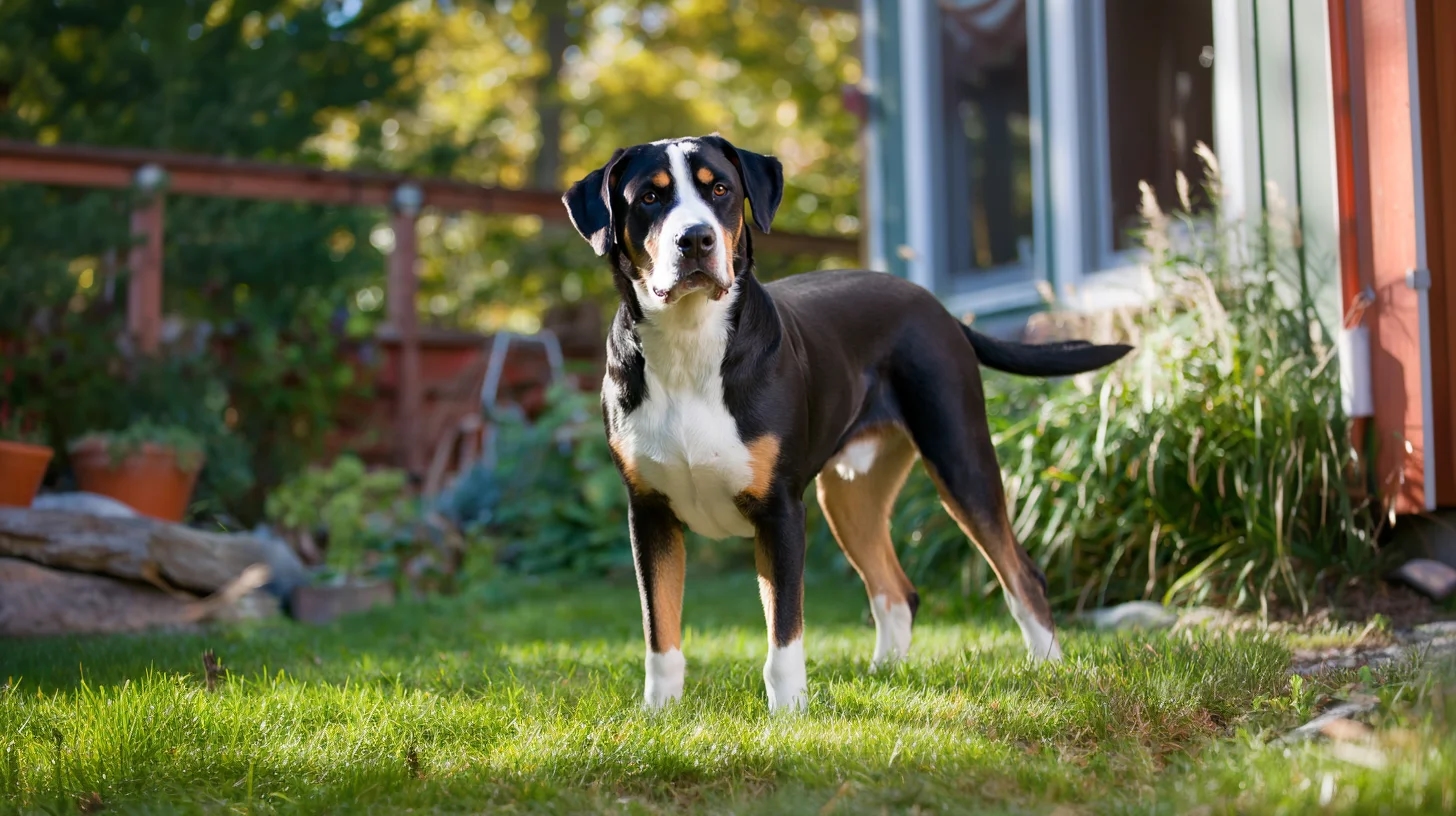
Greater Swiss Mountain Dog
Breed Facts
Height
25.5-28.5 inches (male), 23.5-27 inches (female)
Weight
115-140 pounds (male), 85-110 pounds (female)
Lifespan
8-11 years
Key Traits
Overview
Strong, gentle companions with striking tri-color coats and a dependable, affectionate spirit. These sturdy, loyal dogs blend impressive working strength with calm devotion—perfect for families and individuals seeking a loving, watchful friend who thrives on close bonds and enjoys being part of every adventure.
Temperament & Personality
You’ll find the Greater Swiss Mountain Dog to be a calm, loyal family companion. Known as “Swissies,” these gentle giants are affectionate and patient with people – even children. One dog expert describes Swissies as “gentle and sweet-natured” and “devoted companions who are kindly with children.” They tend to be friendly and playful at home. However, their size and working-dog heritage mean they can also be strong-willed and watchful. Swissies are naturally protective of their home and family, often barking to alert you to strangers. Early socialization and consistent, gentle training will help ensure your Swissy remains confident and well-behaved. Generally easygoing with its family, a Swissy requires a responsible owner who appreciates its loyal nature and occasional stubborn streak.
Care, Living Environment & Grooming
Swissies need regular exercise and mental stimulation. Plan on at least a few brisk walks or play sessions (30–60 minutes) per day. They are happiest with room to roam and enjoy activities like hiking or carting. This breed has a thick double coat: brush your dog at least once a week to remove loose hair. They shed year-round, with heavier shedding twice a year when the undercoat blows. In warm weather, provide air conditioning or shade, as Swissies are prone to overheating. Indoors, a Swissy is generally calm and clean; outdoors they thrive on space (apartment living is usually not ideal).
- Weekly/Monthly: Brush coat; check and clean ears; remove tangles.
- Monthly: Trim nails; bathe as needed; brush teeth.
- Seasonal: Heavy shedding (increase grooming); use pet-safe sunscreen/air conditioning in heat.
Feeding a large, active dog like a Swissy means choosing a high-quality diet for giant breeds. Puppies should eat specialized large-breed puppy food several times a day, and adults should be fed at least twice daily to reduce the risk of bloat. Always ensure fresh water is available, and never feed one huge meal. Watch your Swissy’s weight — obesity can worsen joint issues common in this breed.
Training & Socialization
Swissies are intelligent but can have an independent streak. Early, consistent training is important. Use positive reinforcement (treats, praise, play) and keep sessions short and varied. Swissies respond best to a firm but gentle leader — harsh methods may cause them to shut down. Their guarding instincts mean they can be wary of strangers or other animals, so give them lots of positive experiences (meet-and-greets, puppy classes) early on. Socializing your Swissy puppy — introducing it to different people, pets, and places — will help ensure it grows up confident and friendly. Most Swissies enjoy learning tricks and participating in activities (hiking, drafting, obedience), and are usually eager to please when training is fun and reward-based.
Health Considerations
Greater Swiss Mountain Dogs typically live around 8–11 years. As a large breed, they are predisposed to certain inherited conditions. Common health issues include:
- Hip dysplasia and elbow dysplasia – misalignment of joints leading to arthritis.
- Gastric dilatation-volvulus (bloat) – life-threatening twisting of the stomach.
- Epilepsy – inherited seizure disorder often starting in young adults.
- Eye problems – extra eyelashes (distichiasis) and rolling eyelids (entropion) that can irritate or damage the eyes.
- Urinary incontinence – loss of bladder control, especially in spayed females.
Responsible breeders screen Swissies’ hips and elbows (OFA/PennHIP evaluations) and often perform ophthalmologist exams. Regular vet check-ups are important to catch these issues early.
Cost of Ownership
Owning a Greater Swiss Mountain Dog is a long-term financial commitment. Annual costs are roughly in the $1,800 range. Major expenses include:
- Food: about $600/year for high-quality large-breed diets.
- Veterinary care: roughly $500/year (routine exams, vaccines, meds).
- Insurance/Medical: around $400/year (many owners insure due to hereditary issues).
- Grooming/supplies: about $300/year (brushes, bedding, toys, occasional professional grooming).
First-year costs are much higher. A Swissy puppy from a reputable breeder can cost $3,000–$4,000, and you’ll need supplies (crate, training classes, initial vet visits) that easily add $1,000 or more in the first year. Planning for these expenses ahead of time will help you care for your new dog without surprises.
Pros and Cons
Pros
- Gentle and affectionate with family
- Great with children
- Loyal and protective watchdog
- Calm indoors with moderate activity
- Short, low-maintenance coat (aside from shedding).
Cons
- Very large and powerful (needs space)
- Heavy seasonal shedding
- Strong-willed and stubborn at times
- Sensitive to hot weather
- Prone to certain joint and bloat issues.
Fun Facts
- The Greater Swiss Mountain Dog is considered the oldest of the four Swiss mountain dog breeds.
- They likely descend from mastiff-type dogs that accompanied Roman legions in the 1st century B.C.
- Swiss farmers in the 1800s nicknamed them “Metzgerhunde” (“Butcher’s Dogs”) because of their use on farms.
Frequently Asked Questions
Do Greater Swiss Mountain Dogs shed a lot?
Yes. Swissies have a dense double coat and shed moderately year-round. In spring and fall they “blow” their undercoat and produce a heavy shed. Regular brushing (several times a week) will help manage loose fur and prevent mats.
Are Greater Swiss Mountain Dogs good apartment dogs?
Generally not. These are very large, active dogs that need room to move. They can adapt to indoor life if you commit to daily exercise (long walks, play in a yard). Without enough space and activity, they may become bored or vocal. A fenced yard is ideal.
How much exercise does a Greater Swiss Mountain Dog need?
About 30–60 minutes of activity per day. Swissies enjoy brisk walks, hiking, or carting tasks. They are not hyperactive but do best when given a job or outing daily. Mental exercise (training, toys) also keeps them happy.
Can first-time owners handle a Greater Swiss Mountain Dog?
Not usually. Swissies are strong-willed and need a confident, experienced owner. DogTime notes they are “large dogs, and not well suited for novice owners”. If you’re new to dog ownership, consider whether you’re prepared for consistent training and socialization. With patience and positive methods a dedicated first-timer can succeed, but many recommend this breed for someone with prior large-dog experience.
References
Personality Profile
Find your perfect puppy pair!
Take our quick personality quiz to find the breeds that match your personality.
Start Quiz NowKey Traits
Temperament
affectionate
Reserved
Cuddly
energy Level
Calm Companion
High-Energy Dynamo
Social Behavior
good With Children
Best with Adults/Older Kids
Kid-Friendly
barking Level
Quiet-Natured
Talkative
Care & Maintenance
shedding Level
Light Shedder
Heavy Shedder
exercise Needs
Short Walks Enough
Needs Daily Workouts
Learning & Cognition
trainability
Independent Thinker
Eager Learner
mental Stimulation Needs
Content Relaxer
Needs Challenges
Breed Facts
Height
25.5-28.5 inches (male), 23.5-27 inches (female)
Weight
115-140 pounds (male), 85-110 pounds (female)
Lifespan
8-11 years
Key Traits
You Might Also Like
Find Your Perfect Puppy Pair
Take our scientifically-backed personality quiz to discover which dog breeds align with your personality.
Start the Quiz