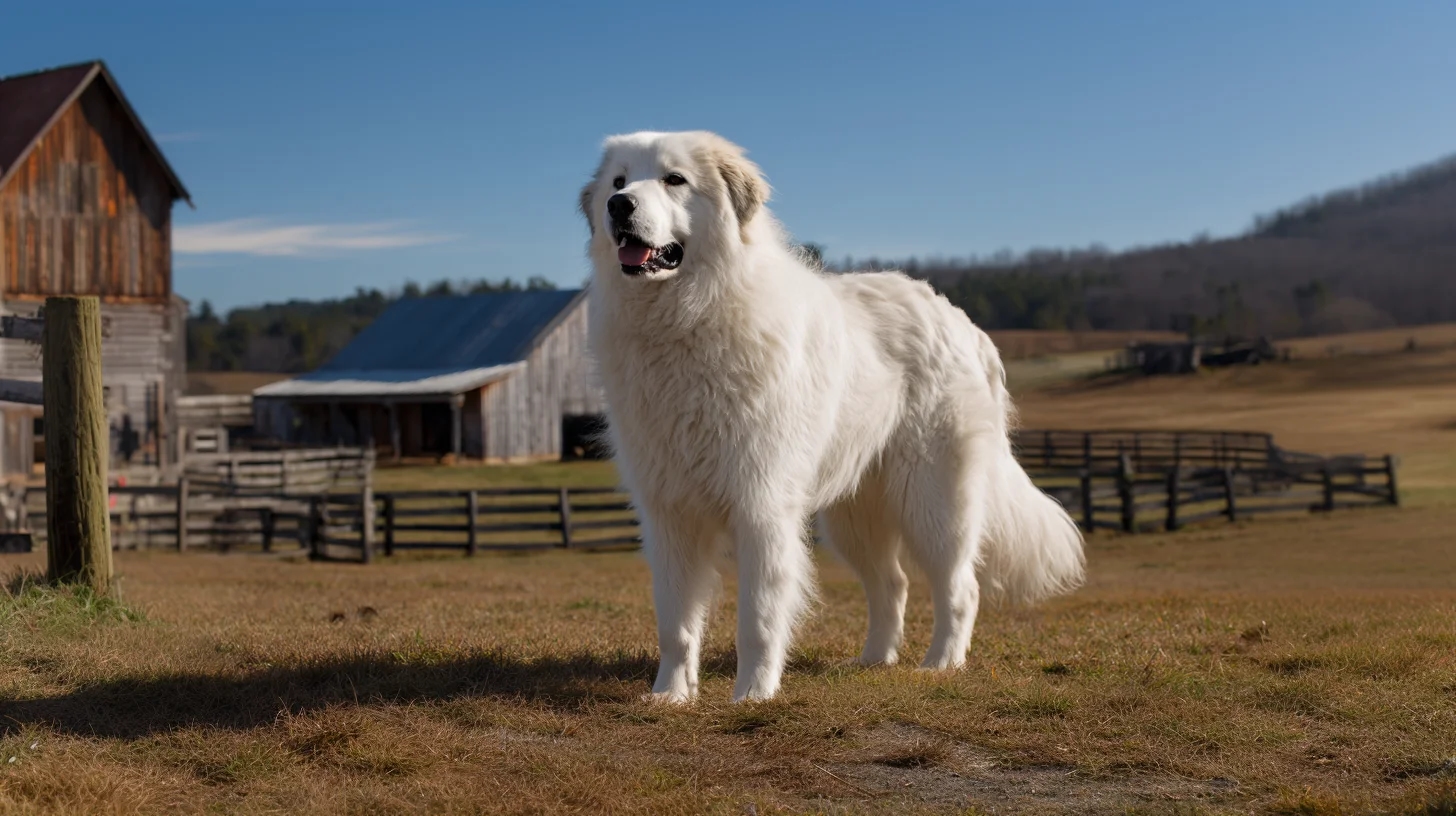
Great Pyrenees
Breed Facts
Height
27-32 inches (male), 25-29 inches (female)
Weight
100+ pounds (male), 85+ pounds (female)
Lifespan
10-12 years
Key Traits
Overview
Majestic, gentle companions with thick, snowy coats and a calm, watchful spirit. These strong, affectionate dogs blend natural protective instincts with deep devotion—perfect for families and individuals seeking a loving, loyal friend who thrives on close bonds, quiet strength, and guarding loved ones with serene confidence.
Temperament & Personality
The character of the Great Pyrenees is a direct reflection of its heritage as a solitary livestock guardian. You will find your Pyr to be a calm, well-mannered, and remarkably patient dog, known for their gentle and affectionate nature with their family. They are famously wonderful with children and other vulnerable members of their "flock," showing a nurturing and protective instinct.
However, the defining trait of the breed is their independence. Bred to make life-or-death decisions on their own in remote mountain pastures, they are strong-willed, intelligent thinkers who do not possess an innate desire to please in the way a retriever might. This is not a flaw to be trained out of them, but a core characteristic to be understood and respected.
While serene with their family, Pyrs are natural guardians. They are territorial and reserved with strangers, and will not hesitate to protect their home and family with a deep, intimidating bark. A notable quirk stemming from this instinct is their tendency to be nocturnal. They are often most alert and vocal after dark, a holdover from centuries of guarding flocks against nighttime predators.
Care, Living Environment & Grooming
Living with a Great Pyrenees means accommodating the needs of a giant breed, from providing adequate space to managing their magnificent, yet high-shedding, coat. Despite their size, their daily care can be surprisingly straightforward.
Pyrs are not a highly active breed. As guardians, they were bred to conserve energy, patrolling their territory calmly and saving bursts of energy for confronting threats. Moderate daily exercise, such as leashed walks, is typically sufficient to keep them physically and mentally healthy. They are not suitable as jogging or long-distance running partners. For their size, they have a relatively slow metabolism and eat less than many expect. It is crucial to avoid overfeeding to prevent obesity, which puts severe stress on their joints.
A Great Pyrenees is a very large dog that requires ample living space and is not well-suited for a small apartment. A home with a large, securely fenced yard is ideal. Their thick, weather-resistant double coat makes them thrive in cold climates, and most Pyrs adore the snow. Conversely, they can overheat in hot, humid weather and must be protected from heatstroke with plenty of shade, water, and limited exercise during the hottest parts of the day.
The Pyr's glorious coat consists of a long, coarse outer layer and a soft, dense, woolly undercoat. This coat is remarkably resistant to dirt and tangles, making it easier to maintain than it appears. However, they shed profusely, especially during seasonal changes. It is critical not to shave a Pyr's coat in summer; it provides insulation from heat as well as cold.
Weekly Tasks:
- Brush your Pyr thoroughly for at least 30 minutes with a pin brush and an undercoat rake to remove loose fur and prevent mats. Focus on areas behind the ears, the "pantaloons" on the hind legs, and the tail.
- Trim their nails regularly. This includes the distinctive double dewclaws on their rear legs, which can curl into the paw and cause pain if neglected.
- Check and clean their ears to prevent infections, which can be common in dogs with floppy ears.
As-Needed Tasks:
- Bathe your Pyr only when absolutely necessary. Their coat is naturally self-cleaning, and frequent bathing strips the protective oils that keep it healthy and weather-resistant.
Training & Socialization
Training a Great Pyrenees is less about teaching commands and more about building a partnership based on trust and confident leadership. Their intelligence is high, but their independent nature means they will often seem indifferent to traditional obedience exercises they deem pointless. Expecting the snappy obedience of a Border Collie will only lead to frustration.
The most important virtue in training a Pyr is patience. They are sensitive dogs that respond poorly to harsh methods; positive reinforcement, consistency, and a sense of humor are your best tools. The goal is not to dominate your dog, but to establish yourself as a trustworthy leader whose guidance they can respect. Short, engaging training sessions are more effective than long, repetitive drills.
Because of their powerful protective instincts, early and ongoing socialization is non-negotiable. From a young age, you must expose your Pyr puppy to a wide variety of people, places, sounds, and situations in a positive, controlled way. This process is not about turning your guardian into a social butterfly; it's about teaching them discernment, so they can confidently distinguish between a welcome guest and a genuine threat. A well-socialized Pyr is a calm, stable, and reliable companion.
Health Considerations
As a giant breed, the Great Pyrenees is predisposed to certain health conditions, many of which are related to their large size and rapid growth rate. They have an average lifespan of 10 to 12 years. The path to a healthy life begins before you even bring your puppy home, by selecting a reputable breeder who conducts rigorous health testing on their breeding dogs.
The Great Pyrenees Club of America (GPCA) participates in the Canine Health Information Center (CHIC) program and recommends breeders screen for several conditions. Your first and most important step as a prospective owner is to ask for and verify these health clearances. Key concerns include:
- Gastric Dilatation-Volvulus (GDV or Bloat): A life-threatening emergency common in deep-chested breeds. The stomach fills with gas and twists, cutting off blood flow. Owners must learn the signs (e.g., distended abdomen, non-productive retching) and discuss preventative measures like a gastropexy surgery with their vet.
- Orthopedic Issues: Hip and elbow dysplasia are common in giant breeds. This abnormal joint development leads to arthritis and pain. Patellar luxation (dislocating kneecaps) can also occur.
- Cancer: Pyrs have a higher risk for certain cancers, most notably osteosarcoma (bone cancer) and hemangiosarcoma (cancer of the blood vessel walls).
- Neurological Conditions: An inherited disease called Neuronal Degeneration (NDG) causes progressive weakness and paralysis in young dogs. A DNA test is available and should be used by breeders to prevent producing affected puppies.
- Eye Disorders: The breed can be prone to conditions like entropion (an inward-rolling eyelid that causes irritation), cataracts, and canine multifocal retinopathy (CMR).
Cost of Ownership
The financial commitment to owning a Great Pyrenees is substantial, with an estimated annual cost of around $2,500, though this can vary significantly. The breed's giant size creates a "giant breed tax" that applies to nearly every aspect of their care, from food to veterinary medicine.
Here is a realistic breakdown of annual expenses:
- Food: This is a major ongoing cost. Expect to spend $1,200 to $1,800 per year on high-quality large-breed dog food to fuel your Pyr.
- Routine Veterinary Care: Budget $900 to $1,200 or more for annual checkups, vaccines, and parasite preventatives. Costs for medications, anesthesia, and procedures are all calculated by weight, making them significantly higher for a giant breed.
- Grooming: While you can groom at home, professional grooming for a giant, double-coated dog can cost $100 to $150 per session. Even for DIY grooming, you'll need to invest in sturdy rakes and brushes.
- Supplies & Insurance: Everything must be bigger and more durable, from crates and beds to toys, increasing costs. Pet insurance is highly recommended to mitigate the financial risk of emergencies like bloat or orthopedic surgery, which can cost many thousands of dollars.
First-year costs are particularly high, including the breeder's fee (typically $1,200 to $2,200), initial setup costs for giant-sized supplies ($500+), and puppy vaccinations.
Pros and Cons
Pros
- Majestic and beautiful appearance.
- Calm, patient, and exceptionally gentle with their family.
- A devoted and fearless guardian of the home.
- Intelligent and capable of independent thought.
- Requires only moderate exercise for their size.
Cons
- Substantial financial commitment due to their giant size.
- Independent nature can make training a significant challenge.
- Sheds profusely and requires regular, thorough brushing.
- Prone to loud, frequent barking, especially at night.
- Requires a large home with a very secure fence.
Fun Facts
- The Great Pyrenees was so esteemed by French nobility that in 1675, the court of King Louis XIV named it the "Royal Dog of France".
- This is an ancient breed. Fossils of dogs believed to be their ancestors have been found in Bronze Age deposits dating back as far as 1800 B.C.
- A hallmark of the breed is the presence of double dewclaws on their hind legs. This unique feature is thought to have provided better traction and stability on snowy, mountainous terrain.
Frequently Asked Questions
Do Great Pyrenees shed a lot?
Yes, they are very heavy shedders. Their thick undercoat sheds year-round, with a massive "blowing" of the coat during seasonal changes. You should be prepared for a house full of white fur and commit to weekly brushing to manage it.
Are Great Pyrenees good apartment dogs?
No, the Great Pyrenees is not recommended for apartment living. They are a giant breed that needs significant indoor and outdoor space. A large, securely fenced yard is considered a necessity for this territorial and watchful breed.
How much exercise does a Great Pyrenees need?
Despite their size, they have moderate exercise needs. Daily leashed walks and the opportunity to patrol a securely fenced yard are usually sufficient. They were bred to conserve energy and are not suited for strenuous activities like long-distance running.
Can first-time owners handle a Great Pyrenees?
A dedicated and well-researched first-time owner can succeed, but it is a significant challenge. You must be prepared for their independent nature, their guardian instincts (barking), their immense size, the high cost of ownership, and the grooming commitment.
References
Personality Profile
Find your perfect puppy pair!
Take our quick personality quiz to find the breeds that match your personality.
Start Quiz NowKey Traits
Temperament
affectionate
Reserved
Cuddly
energy Level
Calm Companion
High-Energy Dynamo
Social Behavior
good With Children
Best with Adults/Older Kids
Kid-Friendly
barking Level
Quiet-Natured
Talkative
Care & Maintenance
shedding Level
Light Shedder
Heavy Shedder
exercise Needs
Short Walks Enough
Needs Daily Workouts
Learning & Cognition
trainability
Independent Thinker
Eager Learner
mental Stimulation Needs
Content Relaxer
Needs Challenges
Breed Facts
Height
27-32 inches (male), 25-29 inches (female)
Weight
100+ pounds (male), 85+ pounds (female)
Lifespan
10-12 years
Key Traits
You Might Also Like
Find Your Perfect Puppy Pair
Take our scientifically-backed personality quiz to discover which dog breeds align with your personality.
Start the Quiz