Gordon Setter
Breed Facts
Height
24-27 inches (male), 22-25 inches (female)
Weight
55-80 pounds
Lifespan
12-13 years
Key Traits
Overview
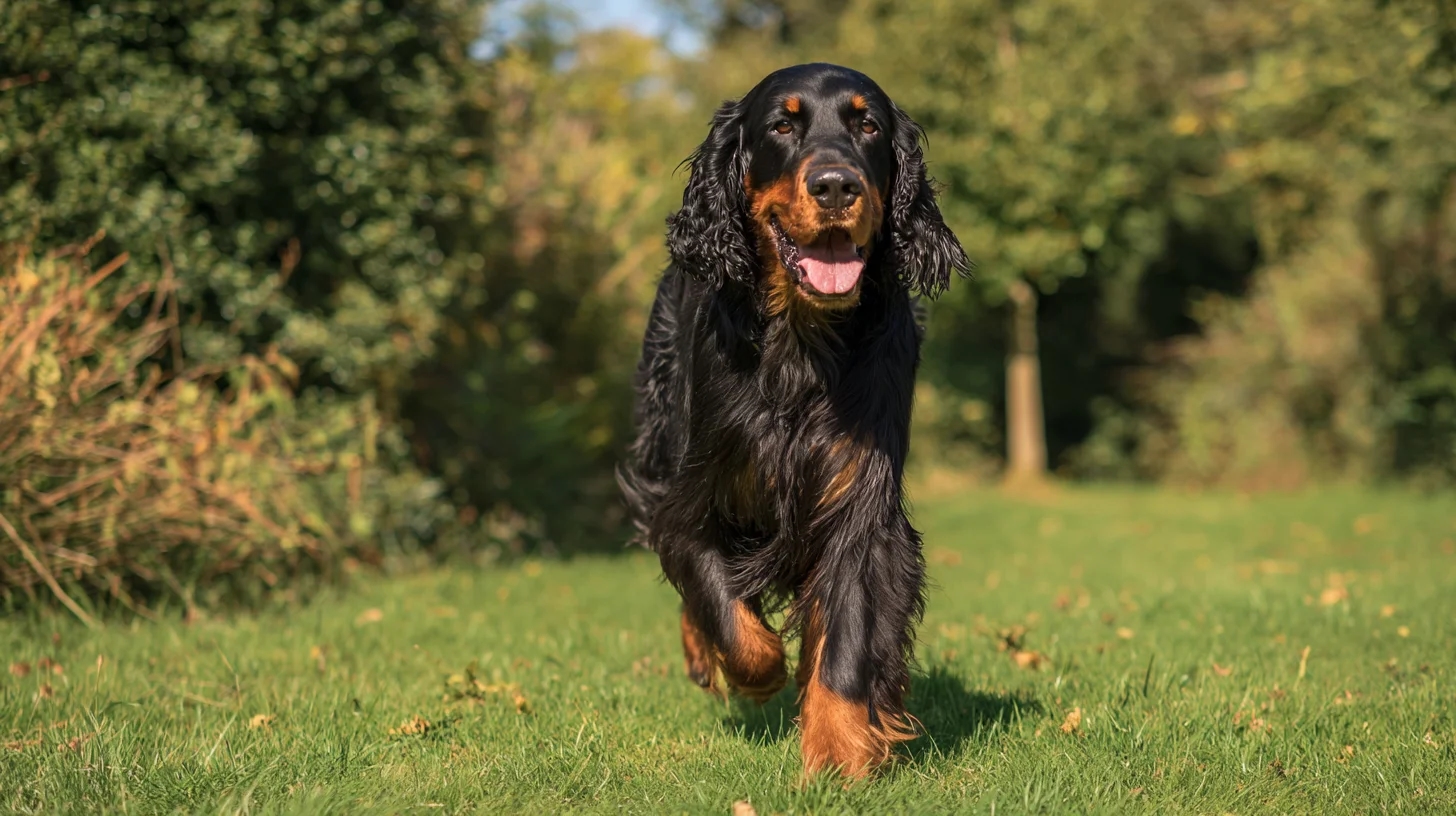
Elegant, devoted companions with striking black-and-tan coats and a steady, affectionate spirit. These intelligent, loyal dogs blend determined hunting drive with gentle devotion—perfect for active families and individuals seeking a graceful, loving friend who thrives on adventure, close bonds, and purposeful activity.
Temperament & Personality
Gordon Setters are gentle giants with a warm, affectionate nature. They are loyal and devoted to their families, often referred to as excellent "nanny dogs" for children. Bred to work closely with hunters, Gordons are confident, alert, and smart. Your Gordon will love being with you on adventures—fetching, hiking, running—and will eagerly reward you with affection and loyalty after a day of activity.
At home they tend to be calm and even-tempered; they are not typically aggressive and usually get along well with strangers once introduced. However, they can be strong-willed—persistence and patience are needed during training. Overall, a Gordon Setter is a happy, energetic companion that blossoms with plenty of exercise and family interaction.
Care, Living Environment, & Grooming
Gordon Setters are large (up to 27 inches, 55–80 lbs) and athletic. They need vigorous daily exercise—think long walks, jogs, fetch, or even field games—ideally at least 1–2 hours each day. A house with a fenced yard is best for this breed; they love to run and explore.
They can tolerate cold weather reasonably well due to their dense coat, but they do not handle heat or humidity as easily. Never leave a Gordon outdoors in extreme weather for long, and always provide shade and water in summer. These dogs have a strong prey drive, so keep them on leash or in a secure area; they may chase smaller animals (cats, squirrels) if given the chance.
Gordon Setters have a beautiful long, silky double coat (solid black with rich tan markings). Brush their coat weekly to prevent tangles in the feathered legs, chest, and tail. A metal comb helps work through the longer hairs. Bathing is needed only a few times a year (too-frequent baths can strip natural oils). Their grooming needs include:
- Weekly: Brush and comb the coat thoroughly, focusing on "feathered" areas on legs, chest, and tail
- Monthly: Trim any excess hair around the feet, ears, and sanitary areas; bathe sparingly if dirty
- Regularly: Check and clean the long, droopy ears to prevent infections, and trim nails (about once a month)
Feed a high-quality adult dog food formulated for large breeds. Gordon Setters are deep-chested and have a risk of bloat (gastric torsion), so feed smaller meals (2–3 a day) and avoid vigorous exercise for an hour before and after eating. Always have fresh water available.
Training & Socialization
Gordons are intelligent and eager to bond with you, but they can also be independent and occasionally stubborn. Early training and socialization are essential. Use positive reinforcement (praise, toys, treats) to train basic obedience. Establish yourself as a confident, fair leader from the start—consistency is key.
Recall training is crucial given their hunting instincts. Exposure to many people, places, and situations during puppyhood helps prevent shyness. With patience and regular practice (keep training sessions fun and brief), a Gordon Setter learns commands well. Because of their sensitive nature, avoid harsh discipline—these dogs respond much better to gentle guidance and consistent routines.
Health Considerations
Gordons are generally healthy, with a lifespan of about 12–13 years. Notable inherited conditions include:
- Hip & Elbow Dysplasia: Genetic joint disorders that can cause pain and lameness. Keep your dog lean and ask breeders for OFA hip/elbow certifications.
- Gastric Dilatation-Volvulus (Bloat): A life-threatening twist of the stomach in deep-chested dogs. Recognize symptoms (distended abdomen, retching) and feed smaller meals to help prevent it. Some owners consider a preventative gastropexy procedure.
- Progressive Retinal Atrophy (PRA): Hereditary eye disease leading to blindness. A DNA test is available.
- Hypothyroidism: Low thyroid hormone causes weight gain, lethargy, and coat issues. Manageable with medication.
- Cerebellar Abiotrophy: Neurological condition causing loss of coordination. A genetic test exists for this ataxia.
- Cancer: Like many large breeds, the Gordon may be prone to certain cancers (e.g. hemangiosarcoma, lymphoma). Regular vet exams are important.
- Ear Infections: Long floppy ears can trap moisture; check and clean ears weekly.
Regular health screenings (hip/elbow X-rays, eye exam, thyroid test) are wise. Ask your breeder about health clearances.
Cost of Ownership
Gordon Setters are moderately expensive to keep, roughly $1,800 per year. The biggest costs are food (large portions of kibble can cost $600+), routine vet care ($400), and pet insurance or emergency savings (~$400). Grooming costs are relatively low (you can do most brushing at home), but professional grooming every few months might be ~$100–200 annually.
The first year is much more expensive—budget around $4,000–5,000—due to the puppy price ($1,000–$2,000), initial vaccines, spay/neuter, microchip, training classes, and supplies. Significantly, Gordon Setters often need insurance or a medical fund because of their bloat risk and occasional surgical needs (hip surgery or cancer treatments can be costly).
Pros and Cons
Pros
- Affectionate and loyal to family (often called "nanny dogs" with kids)
- Intelligent and trainable
- Athletic and energetic (excellent jogging or hiking partner)
- Calm and gentle indoors, with a sweet nature
- Striking black-and-tan appearance
Cons
- Very high energy—needs extensive exercise or can become bored/destructive
- Strong prey drive (will chase small animals)
- Large size means more food and space required
- Long coat needs weekly brushing
- Not recommended for apartment living or first-time dog owners (can be stubborn, needs experienced handling)
Fun Facts
- Named for the fourth Duke of Gordon (Scotland), who helped develop the breed in the 18th–19th centuries.
- Among the first dogs registered by the AKC: originally called the "Black and Tan Setter", recognized in 1878.
- Gordons are famed for their "perpetual puppy" nature: they mature very slowly and may not settle down until 4–5 years old.
- In the 1840s, U.S. Secretary of State Daniel Webster (with friend George Blunt) imported the first Gordon Setters to America.
Frequently Asked Questions
Do Gordon Setters shed a lot?
Yes, they have a moderate shedding level. Their long double coat will blow out lightly with the seasons, so regular brushing is important. You'll find more hair on your floor than with non-shedding breeds, but routine grooming keeps it under control.
Are Gordon Setters good apartment dogs?
No, not really. Gordons need room to run and very active owners. They can adapt if you give them the right exercise, but a home with a fenced yard is ideal for this breed. These dogs thrive on outdoor activities and won't be content confined in a small space without daily long walks or play sessions.
How much exercise does a Gordon Setter need?
A lot—at least 1–2 hours per day of vigorous activity. They were bred for hunting, so Gordons love long walks, jogging, fetch, or hiking. Without enough exercise, they can become bored and destructive. Puzzle toys and training can help if weather prevents outdoor play. In short, plan on multiple outings each day to keep a Gordon happy and healthy.
Can first-time owners handle a Gordon Setter?
Probably not ideally. Gordon Setters are wonderful companions, but their size, high energy and independent streak can challenge new owners. They are best suited to someone who has had a dog before or is willing to invest time in training and exercise. An experienced owner will do best setting boundaries early, since Gordons respond to consistent, patient leadership.
References
Personality Profile
Find your perfect puppy pair!
Take our quick personality quiz to find the breeds that match your personality.
Start Quiz NowKey Traits
Temperament
affectionate
Reserved
Cuddly
energy Level
Calm Companion
High-Energy Dynamo
Social Behavior
good With Children
Best with Adults/Older Kids
Kid-Friendly
barking Level
Quiet-Natured
Talkative
Care & Maintenance
shedding Level
Light Shedder
Heavy Shedder
exercise Needs
Short Walks Enough
Needs Daily Workouts
Learning & Cognition
trainability
Independent Thinker
Eager Learner
mental Stimulation Needs
Content Relaxer
Needs Challenges
Breed Facts
Height
24-27 inches (male), 22-25 inches (female)
Weight
55-80 pounds
Lifespan
12-13 years
Key Traits
You Might Also Like

Find Your Perfect Puppy Pair
Take our scientifically-backed personality quiz to discover which dog breeds align with your personality.
Start the Quiz