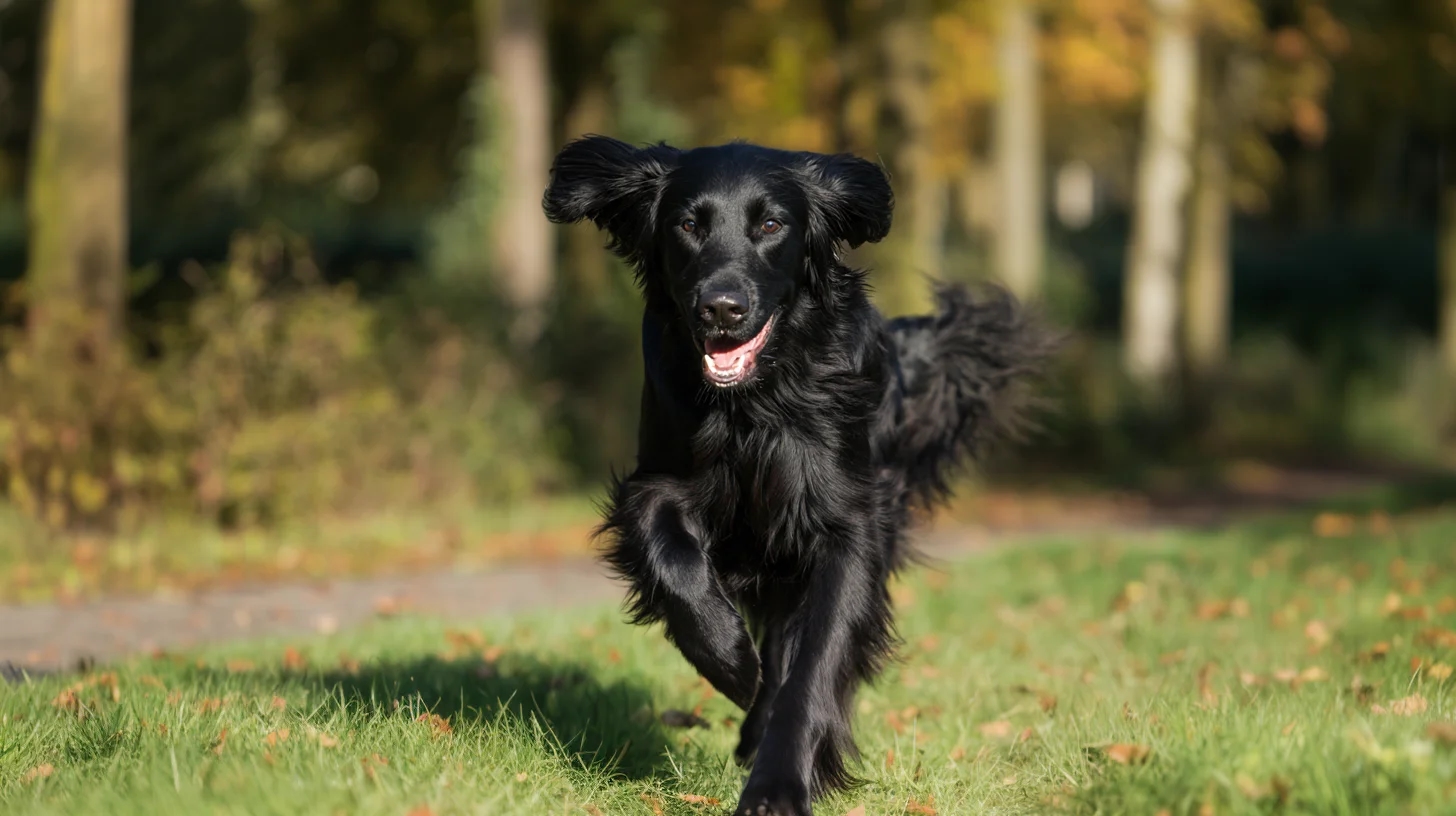
Flat-Coated Retriever
Breed Facts
Height
22-24 inches
Weight
55-80 pounds
Lifespan
10-12 years
Key Traits
Overview
Cheerful, enthusiastic companions with glossy coats and a perpetual puppy-like spirit. These friendly, energetic dogs blend joyful exuberance with deep devotion—perfect for active families and individuals seeking a playful, affectionate friend who thrives on adventure, fun, and close human connection.
Temperament & Personality
Your Flat-Coated Retriever will greet you with a grinning wag and a playful bounce. Often called the Peter Pan of dogs, Flatties retain a puppy-like, exuberant spirit throughout their lives. They are friendly, outgoing, and eager to please. In fact, most Flat-Coats get along well with everyone – family, children, and even other pets (after proper introductions). They love to be part of the action, whether it's playing fetch, going for a run, or snuggling on the couch. While they are generally confident, keep in mind that some may be too exuberant for very young children (they can be boisterous and mouthy due to their retriever drive). Overall, expect a cheerful, goofy companion who craves attention and adventure.
Care, Living Environment & Grooming
Flat-Coats have a medium-length, weather-resistant coat. They shed moderately, so plan to brush 2–3 times per week (more during seasonal shedding) to keep the fur free of tangles. Weekly brushing will cut down on loose hair, and a monthly bath (or as needed) keeps their coat shiny. Their long ears benefit from a gentle ear-cleaning every week or two to prevent infections. Trim nails and check teeth regularly as you would for any dog.
Below is a simple grooming routine example:
- Weekly: Brush coat thoroughly, wipe or trim around eyes and ears, and check paws.
- Monthly: Bathe if dirty and give a 'spa day' (bath plus nail trim) every month or two.
- Occasionally: Clean ears after swimming or heavy play, and have a professional groom (optional) for a tidy trim.
Flat-Coats are tough and adaptable: their double coat tolerates rain, cold, and water (they love swimming). However, they should not be left outside all day; they are people-oriented dogs that thrive on family interaction. Because of their high energy, they are not ideal for apartment living without ample exercise. They need a yard or frequent outdoor activity. Even in a house, you'll need to dedicate at least 1–2 hours per day to exercise. Activities like running, hiking, fetch, and swimming keep them happy. Without adequate exercise, Flat-Coats may dig or chew out of boredom.
Feed your Flat-Coat high-quality food twice daily to prevent bloating (they are deep-chested). Because bloat is a risk in this breed, avoid elevated bowls and don't exercise them vigorously right after meals. With proper care, your Flat-Coat will sport a glossy coat and a healthy weight.
Training & Socialization
Flat-Coats are highly trainable and thrive on positive interaction. They are intelligent and generally eager to learn new commands. Use fun, reward-based training (treats, praise, clickers) – this sensitive breed does not respond well to harsh methods. Keep training sessions short and engaging to channel their playful nature. Flat-Coats particularly enjoy activities that tap their retrieving instinct: games of fetch, obedience, agility, flyball, or scent work will satisfy their drive.
Early socialization is important: introduce your puppy to a variety of people, places, dogs, and experiences so it grows up confident. Well-socialized Flat-Coats are outgoing; those that miss these experiences can become shy or develop fear-based behaviors. Also, teach a strong recall and off-leash reliability early on – these dogs love to roam and explore, so reliable obedience is key for safety. In summary, a fun-loving, consistent training regimen will make your Flat-Coat a well-mannered companion.
Health Considerations
Flat-Coated Retrievers typically live about 10–12 years. Unfortunately, they have several breed-specific health risks. Most notably, cancer is a major concern: the breed is prone to aggressive histiocytic cancers, with roughly half of all Flat-Coats dying from cancer at a young age. Other common issues include:
- Cancer (Histiocytic Sarcoma, etc.): Often strikes in middle age. Regular veterinary check-ups and early detection are vital.
- Hip Dysplasia: Common in large retrievers. Check that parents have OFA/PennHIP certification.
- Eye Disorders: Inherited glaucoma is seen around age 5–6. Annual eye exams (CERF) can catch cataracts or glaucoma early.
- Patellar Luxation: Kneecap instability can occur, often requiring surgery or management.
- Gastric Torsion (Bloat): Deep-chested dogs like this can twist their stomach. Prevent with smaller meals and consider a gastropexy.
Responsible breeding is crucial. Reputable breeders screen breeding dogs for hips, eyes, and heart. Since cancer is so prevalent, some owners pursue genetic counseling or participate in research programs. Regular vet visits and maintaining a lean, fit body are also important. In general, buy from a breeder who tests hips, eyes and offers health guarantees. With attentive care and screening, many Flat-Coats live out their lives happily.
Cost of Ownership
Owning a Flat-Coated Retriever costs roughly $2,200 per year on average. This includes:
- Food: ~$800/year for high-quality, protein-rich diet to fuel their activity. These active dogs can eat 3–4 cups/day.
- Vet Care: ~$500/year for routine care (vaccines, exams, preventatives). Budget more if your dog faces any health issues (hip checks, eye tests, etc.).
- Grooming: ~$300/year. Flat-Coats aren't as high-maintenance as some breeds, but professional grooming (bath, nail trim, brush-out) every few months is helpful. Regular at-home brushing saves on grooming costs.
- Insurance: ~$400/year (about $30–$40/month) for basic coverage. Given the breed's cancer risk, many owners find insurance valuable.
- Training/Supplies: Puppies and active dogs benefit from training classes ($200–$500/year) and quality gear (beds, toys, $200+ initial).
First-year costs are higher: expect to pay for the puppy itself ($1,500–$3,000 from a good breeder), plus spay/neuter, microchip, crate, and initial vet shots. Planning for these adds another $1,000–$1,500 in year one. Overall, Flat-Coats are moderately costly to keep due to their energy needs and health screening, so budget accordingly.
Pros and Cons
Pros
- Extremely friendly and affectionate
- Playful, upbeat personality
- Good with families and children
- Smart and trainable
- Versatile (excellent at dog sports)
- Moderate grooming (no heavy mats)
Cons
- Very high exercise and attention needs
- Can be too exuberant (mouthy) for small children
- Prone to destructive chewing if bored
- Significant cancer risk with shorter average lifespan
- Not a good watchdog (too friendly)
Fun Facts
- Nicknamed the "gamekeeper's dog" and "smooth-coated retriever" for their hunting roots. They excelled at retrieving on land and water, earning these monikers among English hunters.
- In the 1800s, Flat-Coats were the most popular retriever on British estates. Their numbers later declined as Labradors and Goldens became fashionable, making Flat-Coats relatively rare today.
- They are often called the "Peter Pan" of retrievers. This is because Flat-Coats remain goofy and puppyish even into middle age, outlasting the youthfulness of many other breeds.
Frequently Asked Questions
Do Flat-Coated Retrievers shed a lot?
Not excessively. Flat-Coats shed moderately year-round. Regular brushing will help manage loose hair and keep their coat looking its best. They don't have the heavy undercoat of some breeds, so shedding is noticeable but usually manageable with grooming.
Are Flat-Coated Retrievers good apartment dogs?
Not really. They are high-energy sporting dogs. A home with a yard is ideal. In an apartment, you must commit to multiple long walks or runs each day to meet their exercise needs. Without this, they can become anxious or destructive. If you live in a condo, only consider a Flat-Coat if you can dedicate substantial time to daily outdoor activity.
How much exercise does a Flat-Coated Retriever need?
A lot! Plan for at least 90 minutes of vigorous exercise per day. Great activities include running, swimming, hiking, fetch and agility. Two 30–45 minute walks plus playtime are the bare minimum. A tired Flat-Coat is a happy Flat-Coat – without enough exercise, they often dig, chew, or find their own entertainment.
Can first-time owners handle a Flat-Coated Retriever?
Yes, but be prepared. Flat-Coats are eager to please and love people, making them generally good family dogs. However, their boundless energy and zest mean they need an owner who is active and consistent with training. First-time owners can succeed with this breed if they commit to exercise, training classes, and socialization early on. Without proper guidance, a Flat-Coat's exuberance can overwhelm an inexperienced owner.
References
Personality Profile
Find your perfect puppy pair!
Take our quick personality quiz to find the breeds that match your personality.
Start Quiz NowKey Traits
Temperament
affectionate
Reserved
Cuddly
energy Level
Calm Companion
High-Energy Dynamo
Social Behavior
good With Children
Best with Adults/Older Kids
Kid-Friendly
barking Level
Quiet-Natured
Talkative
Care & Maintenance
shedding Level
Light Shedder
Heavy Shedder
exercise Needs
Short Walks Enough
Needs Daily Workouts
Learning & Cognition
trainability
Independent Thinker
Eager Learner
mental Stimulation Needs
Content Relaxer
Needs Challenges
Breed Facts
Height
22-24 inches
Weight
55-80 pounds
Lifespan
10-12 years
Key Traits
You Might Also Like
Find Your Perfect Puppy Pair
Take our scientifically-backed personality quiz to discover which dog breeds align with your personality.
Start the Quiz