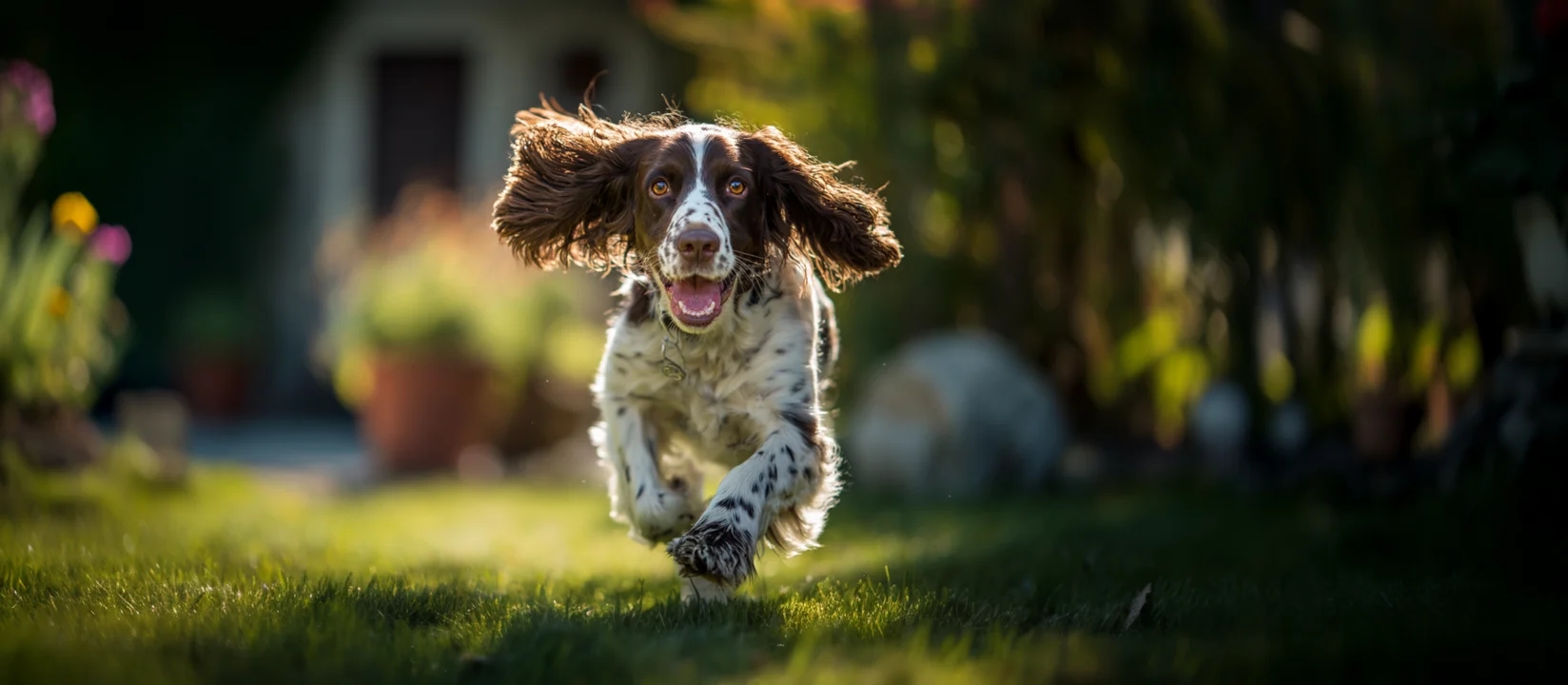
English Springer Spaniel
Breed Facts
Height
19-20 inches
Weight
40-50 pounds
Lifespan
12-14 years
Key Traits
Overview
Energetic, affectionate sporting dogs with expressive eyes and a joyful spirit. These enthusiastic, intelligent companions blend boundless energy with a loving, eager-to-please nature—perfect for active families and individuals seeking a friendly, versatile friend always ready for adventure and close companionship.
Temperament & Personality
You’ll find the English Springer Spaniel to be a friendly, outgoing companion. They’re often described as affectionate, loyal, and gentle, making wonderful family pets. Springers generally get along well with children and enjoy being part of family activities. They are energetic and playful, with a hunting background that makes them curious and alert. These dogs are also intelligent and eager to please, so they learn new commands quickly when training is patient and positive. One thing to note is that Springers crave human companionship; they will happily follow you around and expect attention from everyone. Because they are sensitive to your mood, a gentle approach works best.
- Affectionate and People-Loving: English Springers thrive on human interaction and usually welcome strangers warmly.
- Energetic and Playful: They have boundless enthusiasm for playtime and exercise. Expect them to love games of fetch, running in a yard, or even swimming.
- Smart and Trainable: These spaniels are clever and quick to pick up new skills. Use praise and treats to motivate them, but keep training sessions varied so they don’t get bored.
- Sensitive Disposition: Because of their gentle nature, harsh corrections can upset them. Positive reinforcement works far better.
- Hunting Instinct: Bred to flush out game, they have a strong prey drive. They may eagerly chase small animals if given a chance, so always supervise them outdoors.
Care, Living Environment & Grooming
Springers are active dogs that do best in homes where they can get plenty of exercise. You should plan for at least 30–60 minutes of brisk activity each day (some experts recommend up to 2 hours for this high-energy breed). Daily walks, off-leash play in a yard, and dog sports like agility are great outlets. A securely fenced yard is ideal to keep them safe, as they may try to chase interesting scents. While they can adapt to apartment living if exercised well, a house with a yard is usually best.
Grooming a Springer requires regular attention to keep their coat healthy. They have a medium-length, water-resistant double coat that sheds moderately, especially during seasonal “blow-outs” in spring and fall. Brush your Springer at least once a week to remove loose hair and prevent mats. You’ll likely need more frequent brushing during heavy-shedding seasons. Baths can be done occasionally (for example, once every few months) or when your dog is dirty. In addition, check their ears weekly: Springers have long, floppy ears that trap moisture and debris, so regular cleaning is important to prevent ear infections. Don’t forget basic care like trimming nails, brushing teeth, and keeping their coat trimmed around the ears and paws as needed.
Training & Socialization
Training an English Springer Spaniel is usually a rewarding experience because they are eager to please and intelligent. Begin early puppy training with positive reinforcement: use treats, toys, and praise to reward good behavior. Keep training sessions short and engaging (around 5–10 minutes) since Springers can become bored with long, repetitive drills. Consistency is key – use firm but kind leadership. These dogs excel at obedience, tricks, and dog sports once they learn the basics.
Early socialization is also important. Introduce your Springer to many people (men, women, children), other dogs, and various environments while they’re young. This helps them grow into a confident, well-rounded dog. Springers generally are friendly with other pets, but remember their prey drive: supervise them with cats or small pets until they learn to ignore them. Because Springers thrive on human company, crate training can also help them feel secure when you’re not home. Overall, a well-socialized and well-trained Springer will be a joyful, well-mannered member of your family.
Health Considerations
English Springer Spaniels are generally healthy dogs with a typical lifespan of about 12–14 years. However, like all breeds, they have some predispositions to certain health issues. It’s wise to be aware of these and work closely with your vet. Common concerns for this breed include:
- Hip and Elbow Dysplasia: These are inherited joint conditions where the hip or elbow joints don’t form properly, leading to arthritis over time. Keep your Springer at a healthy weight and provide moderate, regular exercise to protect their joints. Consider hip/elbow screening if you get a puppy from a breeder.
- Ear Infections: As noted above, their long ears can collect moisture and wax. Prevent infections by cleaning and drying their ears after baths or swimming.
- Eye Conditions (PRA): Progressive Retinal Atrophy (PRA) is a group of inherited eye diseases that can lead to blindness. Onset often occurs between 2–6 years old in this breed, though it’s relatively rare. Watch for any signs of vision loss or eye cloudiness and have regular veterinary eye checks.
- Seizures: A small percentage of Springers may suffer from hereditary epilepsy. Seizures often begin before age 5 but can usually be managed with medication.
- Other: Springers can also be prone to allergies or skin issues, and obesity can exacerbate joint problems. Providing a balanced diet and keeping them fit are excellent preventive measures.
Regular veterinary check-ups, a high-quality diet, and preventive care (vaccines, parasite control, dental cleanings) are the best way to keep your Springer healthy. Reputable breeders often screen their dogs for many of these conditions, which is something to consider if you are purchasing a puppy.
Cost of Ownership
Owning an English Springer Spaniel involves several expenses. In the U.S., initial costs (bringing the puppy home) can vary widely. Adoption fees from a rescue or shelter may run around $50–$200, whereas purchasing from a reputable breeder typically costs between about $600 and $2,000. The price depends on the breeder’s reputation, location, and the puppy’s lineage. You’ll also need basic supplies (bed, crate, leash, collar, toys, grooming tools), which can add a few hundred dollars up front.
On an ongoing basis, plan for roughly $100–$200 per month on care. Key monthly expenses include:
- Food: High-quality dog food suitable for an active medium-sized breed is about $40–$100 per month, depending on brand and your dog’s appetite.
- Veterinary Care: Routine vet visits (annual exams, shots, heartworm/flea prevention) might average $50–$100 per visit. Plan for at least 1–2 vet visits a year. Emergency visits or treating health conditions can add more.
- Grooming: With home grooming you mainly invest in brushes and shampoo. If you choose professional grooming, a full-service appointment might cost around $40 per visit. Most Springer owners groom at home.
- Pet Insurance (optional): Insurance premiums for a medium-sized dog can be roughly $30–$60 per month, depending on coverage. This can help manage unexpected medical costs.
- Other: Training classes, dog walking, boarding or pet sitting, and replacing worn-out toys or gear can add miscellaneous costs.
Overall, while Springers are not the most expensive breed to maintain, they are certainly not free. Budgeting ahead and considering pet insurance can help keep their care from stretching your finances. The companionship of a Springer Spaniel, however, is priceless to many owners.
Pros and Cons
Pros
- Gentle and Affectionate: English Springer Spaniels are loving, family-friendly dogs. They are loyal, affectionate, and usually get along well with children and other pets.
- Highly Trainable: Their intelligence and eagerness to please make them highly trainable, especially with positive methods.
- Energetic Exercise Buddies: Springers have a playful, happy-go-lucky nature and make energetic exercise buddies.
- Easy Grooming: In terms of grooming, their coat is relatively easy to maintain with weekly brushing, and they typically enjoy water activities (their coats resist moisture).
Cons
- High Energy Needs: This breed has high energy and exercise needs. Without daily walks, play, and mental stimulation, a Springer can become bored, which may lead to destructive chewing or nuisance barking.
- Prone to Separation Anxiety: They dislike being left alone and can suffer from separation anxiety if often isolated, so they are better suited to owners who are home much of the day or can provide doggy companionship.
- Health Predispositions: Some Springers are prone to certain health issues (notably hip/elbow dysplasia and ear infections).
- Seasonal Shedding: Also, while their shedding is not excessive year-round, they do have seasonal blow-outs requiring more frequent brushing.
- Time and Care Commitment: In short, the Springer’s loving nature comes with a commitment of time, space, and care.
Fun Facts
- Named for their hunting style: The term “springer” comes from the dog’s original job of springing or flushing game into flight. English Springer Spaniels were bred to chase (flush) birds out of underbrush so hunters could shoot them.
- They share roots with the Cocker Spaniel: Until about 1900, Springers and Cockers were the same breed. Littermates were separated by size — the larger dogs were called Springers (for springing game) and the smaller dogs Cockers (for hunting woodcock).
- Ancient appearance: Dogs that look very much like Springers appear in 16th-century paintings, long before the breed’s name existed. This shows how long spaniel-like dogs have been around.
- Two varieties: There are “bench” (show) and “field” (hunting) lines of Springers. Field Springers have lighter coats and often docked tails for running through brush, while bench Springers (seen in conformation shows) have heavier feathering on their ears and legs.
- Sporting all-stars: Springers excel in dog sports like agility, rally, and field trials. Tilda Swinton’s Springer even won the Palm Dog award at Cannes (yes, a dog award!) – a testament to the breed’s charisma. (In other words, they can be show-offs in a lovable way!)
Frequently Asked Questions
Are English Springer Spaniels good with children and families?
Absolutely. Springers are known to be attentive and affectionate, making them wonderful family dogs. They tend to get along well with kids and thrive on being part of household activities. With proper socialization, they usually welcome children and enjoy playtime together.
Do English Springer Spaniels bark a lot?
Not typically. Springers can be quite vocal at times (for example, when greeting you), but they are not generally excessive barkers. If your Springer is barking frequently, it’s often a signal that they’re bored or have unmet exercise needs. Keeping them busy with walks and toys usually keeps barking in check.
Do English Springer Spaniels shed a lot?
They are double-coated, so they do shed, especially during seasonal coat changes. Expect moderate shedding year-round with heavier shedding in spring and fall when they blow their undercoat. Routine brushing (at least weekly) will help manage the loose hair and keep their coat healthy.
How much exercise does an English Springer Spaniel need?
A lot! Springers were bred for stamina in the field. Plan on at least 30–60 minutes of vigorous exercise daily (often more). This can include brisk walks, runs, play fetch, or dog sports. Regular exercise keeps them physically fit and mentally happy; without it, they can become bored or restless.
References
Personality Profile
Find your perfect puppy pair!
Take our quick personality quiz to find the breeds that match your personality.
Start Quiz NowKey Traits
Temperament
affectionate
Reserved
Cuddly
energy Level
Calm Companion
High-Energy Dynamo
Social Behavior
good With Children
Best with Adults/Older Kids
Kid-Friendly
barking Level
Quiet-Natured
Talkative
Care & Maintenance
shedding Level
Light Shedder
Heavy Shedder
exercise Needs
Short Walks Enough
Needs Daily Workouts
Learning & Cognition
trainability
Independent Thinker
Eager Learner
mental Stimulation Needs
Content Relaxer
Needs Challenges
Breed Facts
Height
19-20 inches
Weight
40-50 pounds
Lifespan
12-14 years
Key Traits
You Might Also Like
Find Your Perfect Puppy Pair
Take our scientifically-backed personality quiz to discover which dog breeds align with your personality.
Start the Quiz