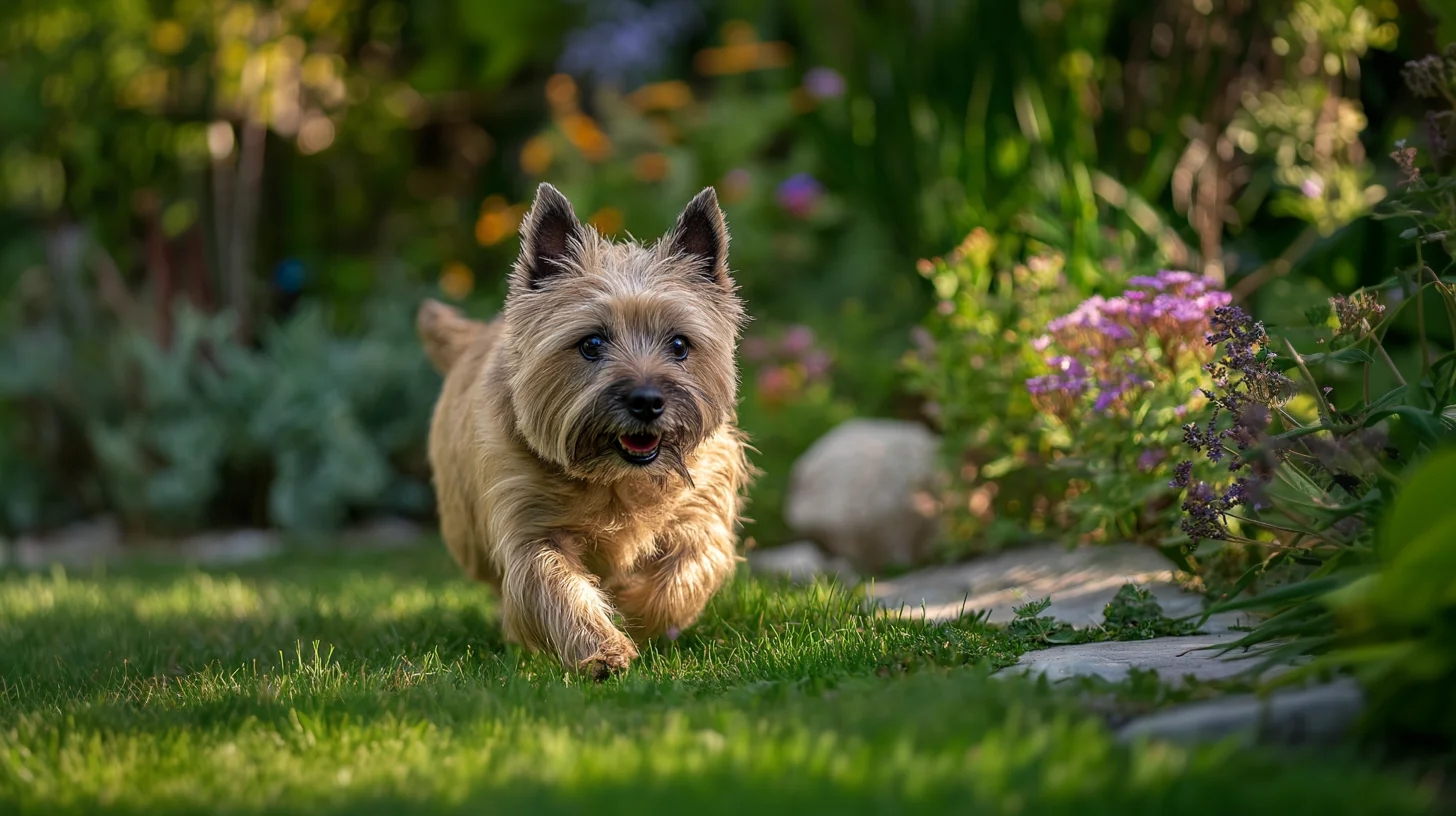
Cairn Terrier
Breed Facts
Height
9.5-10 inches (male), 9-9.5 inches (female)
Weight
13-14 pounds
Lifespan
13-15 years
Key Traits
Overview
Spunky, cheerful companions with shaggy coats and an inquisitive spirit. These hardy, lively dogs blend fearless curiosity with affectionate loyalty—perfect for individuals and families seeking a playful, adventurous friend who brings endless charm and loves to be part of every moment.
Temperament & Personality
Cairn Terriers are happy, confident little “earthdogs” with a bold, friendly nature. They are curious and alert – always ready to investigate a sound or movement – and they love to explore and dig. Cairns form strong bonds with family and enjoy attention, but they also have an independent streak and can be stubborn. Generally, they are affectionate with household members and playful with children. Many Cairns tolerate household chaos well and are surprisingly gentle with kids, though rough play should be supervised due to their small size. True to their terrier heritage, Cairns may bark or become restless if bored, so they do best with an involved owner who provides activities. Early socialization and positive training help ensure they are friendly and well-mannered with other pets and strangers.
Care, Living Environment & Grooming
Cairn Terriers have a weather-resistant double coat that is insulating, water-shedding and dirt-repellent. They come in all colors except white and shed very little. Regular grooming is essential: brush them at home about 2 times a week to remove dead hairs and prevent mats. Many owners hand-strip the coat (plucking out dead hairs) every few months to maintain the traditional texture; if not showing, clipping is also an option, though it softens the coat and may require more baths. Bathe only as needed (their coat naturally repels dirt).
- Weekly: Brush thoroughly with a pin or slicker brush (or use hand-stripping tools) to free tangles. Check eyes and trim stray hair to keep vision clear.
- Monthly: Trim nails; clean ears to prevent infections. Brush teeth several times a week to maintain dental health.
- Every few months: Professional grooming or hand-stripping to remove dead coat and keep skin healthy.
Cairns adapt to many environments: their small size means they can thrive in apartments or country homes. However, they are not suited to living outdoors; they need to be near the family and are happiest inside a home with secure, fenced areas for safe digging and play. They tolerate cold and wet weather well due to their coat, but they need warm shelter if temperatures drop. Provide plenty of toys and dig-friendly spaces (like a sandbox) to satisfy their natural instinct to burrow.
Training & Socialization
Cairn Terriers are highly intelligent and food-motivated, which makes them quick learners with the right approach. They respond best to positive-reinforcement training (treats, praise, clickers) and short, varied sessions. Consistency is key – they can be stubborn if unsure of leadership, so establish yourself as a calm, confident pack leader. Early socialization is important to curb any shyness or rough play with strangers. Cairns have a strong prey drive from their vermin-hunting heritage, so train recall carefully and keep them leashed or in a secure yard when off leash. They are known to vocalize (bark or “scream” in excitement), so teaching a quiet command can be helpful. Overall, most Cairns enjoy learning new tricks and sports (agility, nosework), but beware boredom – provide plenty of mental stimulation to prevent destructive digging.
Health Considerations
Cairn Terriers are generally healthy and long-lived, averaging about 13–16 years. Like all purebreds, they have a few genetic conditions to watch for, and routine screenings are recommended. Common issues include:
- Eye Problems: Cairns may develop cataracts or progressive retinal atrophy (PRA), both of which can lead to vision loss. Regular ophthalmologist exams (OFA or CERF) can catch these early.
- Hypothyroidism: An underactive thyroid is relatively common, leading to weight gain, lethargy, skin/coat changes or cold intolerance. A simple blood test can diagnose it, and daily medication manages the condition.
- Portosystemic Shunt: This liver blood-flow defect can occur, especially in puppies, causing symptoms like stunted growth, poor appetite or neurological signs. Breeders often X-ray or ultrasound breeding dogs to avoid this.
- Patellar Luxation: The kneecap may slip out of place in some Cairns, causing intermittent limping or “bunny hopping”. Mild cases may resolve on their own; severe cases might require surgery.
- Other: Less commonly, Cairns can have Legg-Calvé-Perthes (hip joint disease), Craniomandibular osteopathy (jaw bone growth), and DNA-tested disorders like Globoid Cell Leukodystrophy (GCL).
Prospective owners should choose breeders who perform recommended health tests (ocular exams, thyroid, and DNA tests) and provide health clearances. Regular vet checkups and a balanced diet help maintain health. Early detection of issues (through screening exams) is key to a long, happy life for your Cairn.
Cost of Ownership
Owning a Cairn Terrier costs roughly $1,500 per year on average. Major expenses include about $250–$400/year for high-quality small-breed dog food (they’re small but energetic), $300–$500/year for routine veterinary care (annual exams, vaccines, dental care), and roughly $200–$400/year for pet insurance or emergency medical care. Grooming costs are relatively low: professional grooming or hand-stripping 3–4 times a year at about $35–$70 per session yields around $200 annually. You’ll also spend $100–$200 a year on basic supplies (toys, treats, preventive meds). Like any puppy, expect higher first-year costs (vet fees for puppy shots, spay/neuter, crate, etc.) which level out when the dog is grown.
Pros and Cons
Pros
- Alert, confident and bold personality – great little watchdog
- Highly adaptable – does well in apartments or houses
- Affectionate and playful with family; good with children (supervised)
- Compact size with low-shedding, weather-resistant coat
- Intelligent and trainable when motivated with rewards
Cons
- Terrier-driven – strong prey instinct (will chase small animals)
- Can be stubborn; requires consistent, positive training
- Needs daily exercise and mental stimulation (or will dig/bark)
- Not tolerant of being left alone or outside all day
- Occasional health screening needed (eyes, knees, etc.) to catch issues early
Fun Facts
- Bold Heritage: Cairn Terriers were bred to dig out foxes and other pests from Scottish rock piles – they still love to burrow and are fearless diggers.
- Wizard of Oz’s Toto: The Cairn Terrier is best-known as Toto from The Wizard of Oz. The breed’s love of adventure and plucky spirit made it a star on screen!
- Long-Lived: Cairns often stay active and puppyish well into their teens. It’s not unusual for a healthy Cairn to live into its mid-teens (13–16 years).
Frequently Asked Questions
Do Cairn Terriers shed a lot?
No – Cairns have a wiry, double coat that sheds very little. Regular brushing (once or twice a week) removes loose hairs and prevents matting. Most owners do fine with monthly hand-stripping or professional grooming (which pulls out dead hairs) and only occasional baths. The coat’s natural texture keeps dirt from sticking, so frequent baths are unnecessary.
Are Cairn Terriers good apartment dogs?
Yes. Cairn Terriers are small, adaptable dogs that can live comfortably in apartments as long as you meet their exercise needs. They enjoy indoor family life and can do well in a city home if taken on daily walks and play sessions. However, they do like to dig and explore, so if you have a yard, secure it with a fence to give them a safe digging area. Remember: they are not suited to being kept outside alone.
How much exercise does a Cairn Terrier need?
Moderate exercise daily. Plan for about 30–60 minutes of activity each day – this can be a couple of walks, playtime in the yard, or dog-play sessions. Cairns love to run and dig, and they’re curious explorers; without enough stimulation they may become bored and destructive (digging holes or barking). Providing toys, training games, and walks in different environments helps keep them happy and well-exercised.
Can first-time owners handle a Cairn Terrier?
Yes, with preparation. Cairns are friendly and eager to please, but also have a terrier’s mind of their own. They need consistent, positive training and plenty of attention. For a first-time owner, this means being patient, using reward-based methods, and providing firm leadership. Cairns tolerate various lifestyles (urban or country) but must not be left out in a yard all day. In short, they are suitable for many owners but do best when their intelligence and energy are matched with a committed owner.
References
Personality Profile
Find your perfect puppy pair!
Take our quick personality quiz to find the breeds that match your personality.
Start Quiz NowKey Traits
Temperament
affectionate
Reserved
Cuddly
energy Level
Calm Companion
High-Energy Dynamo
Social Behavior
good With Children
Best with Adults/Older Kids
Kid-Friendly
barking Level
Quiet-Natured
Talkative
Care & Maintenance
shedding Level
Light Shedder
Heavy Shedder
exercise Needs
Short Walks Enough
Needs Daily Workouts
Learning & Cognition
trainability
Independent Thinker
Eager Learner
mental Stimulation Needs
Content Relaxer
Needs Challenges
Breed Facts
Height
9.5-10 inches (male), 9-9.5 inches (female)
Weight
13-14 pounds
Lifespan
13-15 years
Key Traits
You Might Also Like
Find Your Perfect Puppy Pair
Take our scientifically-backed personality quiz to discover which dog breeds align with your personality.
Start the Quiz