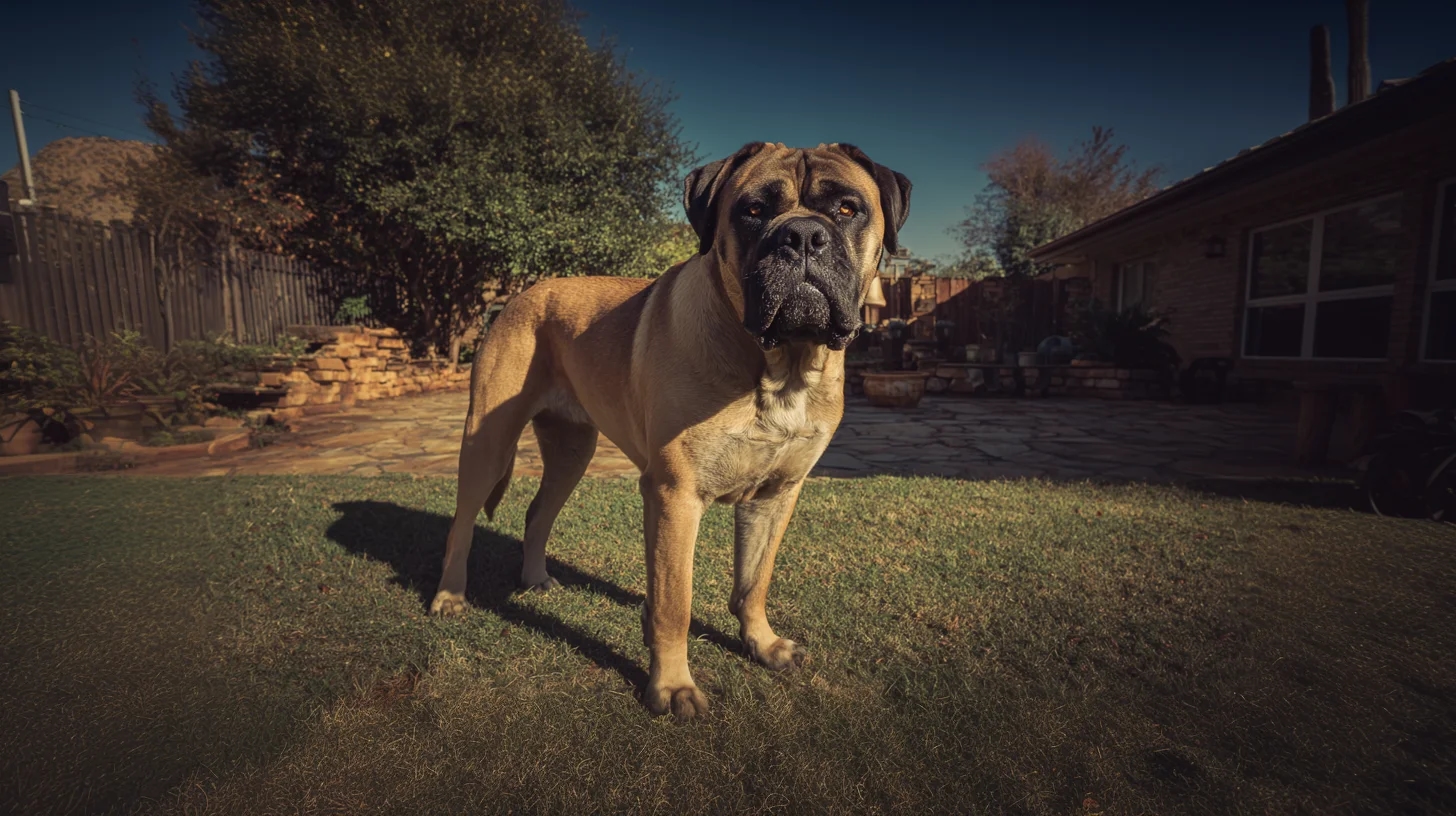
Bullmastiff
Breed Facts
Height
25-27 inches (male), 24-26 inches (female)
Weight
110-130 pounds (male), 100-120 pounds (female)
Lifespan
7-9 years
Key Traits
Overview
Strong, steadfast guardians with an imposing build and a gentle, loyal heart. These brave, affectionate dogs blend natural protective instincts with a calm, loving nature—perfect for experienced owners and families seeking a devoted, watchful companion who forms deep bonds and offers quiet strength.
Temperament & Personality
Bullmastiffs are often described as gentle giants with their families. In the home, your Bullmastiff will likely be calm, affectionate, and deeply loyal. They form strong bonds and enjoy being near their people—don’t be surprised if your 120-pound dog thinks he’s a lap dog when it comes to cuddling on the couch! This breed is notably good with well-behaved children, thanks to a patient and loving nature. Of course, their sheer size means playtime with small kids should be supervised to prevent accidental knockdowns. With strangers, Bullmastiffs tend to be reserved and watchful. They were bred as silent guard dogs, so they have an innate suspicion of unfamiliar people entering their territory. Don’t expect a Bullmastiff to greet visitors like a Golden Retriever would—instead, they may stand quietly between you and the newcomer until they sense everything is okay.
Despite their formidable presence, Bullmastiffs are not an overly aggressive breed by nature. They are confident and brave if a threat arises, but in everyday life they’re more likely to be docile, mellow companions. In fact, adult Bullmastiffs are generally quite lazy indoors, happy to lounge for hours. They bark infrequently (another trait of a stealthy guardian), so when your Bullmastiff does bark, you’ll pay attention. Early socialization is crucial to help them distinguish friend from foe. A well-socialized Bullmastiff can learn to welcome friendly guests appropriately, though they may always remain a bit cautious. With other animals, some Bullmastiffs can be less tolerant—they often do best as either an only dog or with the opposite sex if you have two. Early introductions to other pets and firm boundaries can help; however, their natural inclination is to dominate if challenged by another dog. Overall, the Bullmastiff’s personality is devoted and protective with family, and impressively fearless if they perceive a threat, yet otherwise easygoing and sweet-tempered at home.
Care, Living Environment, & Grooming
Caring for a Bullmastiff involves accommodating a very large dog with moderate exercise needs and particular sensitivities. Bullmastiffs typically weigh 100–130 pounds and stand around 25–27 inches tall. Despite their size, they do not require a huge amount of exercise. Most Bullmastiffs are content with one or two moderate walks daily (totaling about 30–45 minutes) and some playtime. They are not built for endurance or intense activity—in fact, too much running or jumping, especially when young, can stress their joints. A fenced yard is nice for supervised sniffing and short play sessions, but a Bullmastiff can live in an apartment or smaller home if you commit to regular walks. Just make sure there’s enough space inside for them to comfortably move around and lie down (clearing coffee tables with a swish of that big tail is a real concern!).
Be mindful of climate with this breed. Bullmastiffs do not tolerate heat well—their short muzzle and heavy build make them prone to overheating. In hot weather, exercise only in the cool early morning or evening, and always provide access to shade and water. Likewise, limit strenuous activity; they’d rather plop in a cool spot than hike for miles on a summer day. In cold weather, their short coat offers only modest protection, so they may appreciate a dog jacket for long walks in frigid temperatures. Generally, Bullmastiffs should be housed indoors as beloved family members; they aren’t meant to live outside full-time.
Grooming a Bullmastiff is relatively easy. Their coat is short and dense, usually fawn, red, or brindle in color with a black mask on the face. They shed moderately year-round but not in large “blow outs.” Weekly brushing with a rubber curry brush or bristle brush will remove loose hairs and keep their coat shiny. Bullmastiffs do drool, especially the males with larger jowls—keep a cloth handy to wipe drool after they eat or drink, and expect the occasional drool flung on your pants or walls (part of the charm for bully breed lovers!). Other grooming tasks are routine: check and clean their ears weekly (their folded ears can trap moisture), trim the nails monthly (large dogs often need regular nail care since they bear so much weight on their feet), and brush the teeth if possible. Baths are only needed occasionally, perhaps every couple of months or when they get into something dirty, as Bullmastiffs don’t have a strong doggy odor.
Feeding a Bullmastiff requires quality nutrition and attention to mealtime habits. Due to the risk of bloat (gastric torsion) in deep-chested breeds, it’s recommended to feed two smaller meals a day rather than one huge meal. Avoid vigorous exercise right before or after meals. An adult Bullmastiff will eat a substantial amount—budget accordingly for a high-quality large-breed dog food (and plenty of drool-friendly water bowls). By staying attuned to your big friend’s needs—ample space, moderate exercise, and basic grooming—you’ll help your Bullmastiff live comfortably and happily as your devoted house guardian.
Training & Socialization
Training a Bullmastiff is essential given their size and strength, and it’s a task best approached with firmness and kindness. These dogs are intelligent, but also independent thinkers. They were bred to work on their own (patrolling estates) and can be stubborn about following orders if they don’t see the point. The key is to start early training and socialization while your Bullmastiff is a manageable puppy. Enroll in puppy obedience classes to expose them to other dogs and new people in a controlled environment—this helps curb any overly suspicious or dominant tendencies. A Bullmastiff responds best to positive reinforcement techniques. Harsh discipline can backfire, potentially making them fearful or even defiant. Instead, use praise, treats, and affection to reward good behavior. For example, when your Bullmastiff puppy sits on command or walks nicely without pulling, make sure you give enthusiastic praise or a tasty treat. They do want to please you; they just need to understand what you want.
Consistency is very important because a Bullmastiff will test boundaries as he matures. Set house rules (like whether they’re allowed on furniture) and enforce them consistently so your dog doesn’t get mixed signals. Leash training is critical from the start—a full-grown Bullmastiff can easily overpower an owner who hasn’t taught them not to pull. Thankfully, most Bullmastiffs are not hyperactive leash-lungers, but you’ll want a solid “heel” command and to use a sturdy leash and collar (or head halter) for control. Also, practice basic commands like sit, down, stay, come daily so that your dog reliably obeys despite distractions. Due to their guarding instincts, training a Bullmastiff to release objects or to calmly meet visitors is important. You might use a command like “enough” or “leave it” to let them know when a situation is under control. Early socialization pays off here: a Bullmastiff that has positive experiences with different people, dogs, and environments is far less likely to react poorly out of uncertainty or fear.
While Bullmastiffs aren’t the easiest breed for agility or complicated tricks (they’d rather not jump through hoops—literally), they can excel in obedience and even working roles like therapy or tracking with the right training. Keep sessions relatively short and interesting; these dogs can get bored with excessive repetition. Patience and calm authority are your allies. Because of their physical prowess, some owners seek professional training help—this can be a great idea for first-timers. In the end, a well-trained Bullmastiff is a wonderful companion: imposing when you need them to be, but thoroughly under control and good-mannered in everyday life.
Health Considerations
Bullmastiffs are robust dogs but, as a large breed, they have a few notable health concerns and a shorter average lifespan than smaller dogs. The typical Bullmastiff lives around 7–9 years. To maximize your time with your gentle giant, it’s important to be aware of preventive health measures and common issues. Reputable breeders screen for various genetic problems. Some common health considerations in Bullmastiffs are:
- Hip and Elbow Dysplasia: Like many big breeds, Bullmastiffs can suffer from dysplasia, where the hip or elbow joints form improperly and lead to arthritis. Keeping your dog at a healthy weight and providing joint supplements as recommended can help; severe cases might require surgery.
- Bloat (GDV): Bullmastiffs have deep chests which puts them at risk for gastric dilatation-volvulus, or bloat. This is a life-threatening condition where the stomach twists. Owners should be mindful to not exercise the dog right after large meals and consider a preventive gastropexy surgery when the dog is young, especially if advised by a vet.
- Heart Conditions: Genetic heart issues like dilated cardiomyopathy (DCM) (an enlarged, weak heart) and subaortic stenosis (SAS) (a narrowing of the aortic valve) are seen in the breed. Regular veterinary check-ups, and heart ultrasounds if recommended, can catch these. Some affected dogs may require lifelong medication to support heart function.
- Eye Disorders: Bullmastiffs can develop eye problems. A common one is entropion, where the eyelids roll inward and irritate the eye—this often needs surgical correction. Another is progressive retinal atrophy (PRA), a degenerative disease that causes vision loss over time. Responsible breeders perform eye exams or genetic tests to avoid passing on these conditions.
- Cancer: Unfortunately, large breeds like the Bullmastiff can be prone to cancers such as lymphoma or mast cell tumors. Not every Bullmastiff will get cancer, but it’s something to be watchful for as they enter middle age. Lumps, bumps, or unusual symptoms should prompt a vet visit.
In addition, Bullmastiffs sometimes face hypothyroidism (low thyroid function) or skin allergies, but these are manageable with medication or diet changes if they occur. To give your Bullmastiff the best chance at a healthy life, maintain regular veterinary care including yearly blood work for older dogs, keep them at lean body condition, and provide joint support as they age. This breed’s health care can be costly (due to their size, even routine medications are dosed higher), so pet insurance might be worth considering. With attentive care, your Bullmastiff will be the picture of strength and stability—and likely won’t have many health issues in the first several years. Just be prepared in their senior years for potential mobility support or other interventions as needed.
Cost of Ownership
Owning a Bullmastiff will have higher ongoing costs than smaller breeds, primarily because everything is “supersized”—from food to medications. On average, expect to spend around $2,000 per year to care for a Bullmastiff. Food is one of the biggest expenses: a large Bullmastiff can eat 6–8 cups of quality kibble per day, which might amount to roughly $600–$800 annually on food alone. Veterinary care is another significant cost; routine check-ups, vaccines, and monthly preventatives (flea/tick and heartworm) could be about $400–$500 per year. Pet insurance for a giant breed is often $40–$60 a month (around $600 yearly), but it can be worthwhile given the potential for expensive health issues. Grooming needs for Bullmastiffs are minimal in terms of cost—you can handle most grooming at home, so you might spend only $100 or less per year on basics like brushes, shampoos, or the occasional nail trim appointment. General supplies and miscellaneous items (toys, bedding, higher-capacity poop bags, etc.) might add another few hundred dollars each year.
First-year costs for a Bullmastiff are higher. If you purchase a purebred puppy from a breeder, that alone may cost $1,500–$2,500. Then add initial vet expenses for spay/neuter surgery, initial vaccines and microchipping, which can total $300–$600. You’ll also need a large crate, heavy-duty leash and collar, food bowls, and possibly professional training classes—easily another $500+ in one-time purchases. It’s not surprising for the first-year cost of a Bullmastiff to exceed $3,000 when you add everything up. Over the lifetime of this breed (which is about 8 years on average), the total cost can approach or exceed $15,000. Prospective owners should budget accordingly and be prepared for the possibility of higher vet bills in the later years. In return, you’ll have a devoted guardian and friend—an investment that many owners find priceless.
Pros and Cons
Pros
- Deeply loyal and protective of their family; naturally great guard dog
- Generally calm, laid-back, and quiet around the house (not a high-barking breed)
- Affectionate and gentle with children and family members
- Low grooming needs (short coat, moderate shedding, easy upkeep)
- Don’t require excessive exercise—happy with a couple of daily walks
Cons
- Very large size requires ample space and can be physically challenging to manage
- Prone to drooling and snoring, which some owners might find messy or noisy
- Shorter lifespan (often 7–9 years) and predisposition to certain health issues
- Stubborn streak can make training a challenge; not recommended for timid owners
- Can be wary of strangers and other dogs—needs thorough socialization to be well-mannered
Fun Facts
- The Bullmastiff earned the nickname “Gamekeeper’s Night Dog.” In 19th-century England, gamekeepers developed the breed (reportedly 60% Mastiff and 40% Bulldog) to quietly track and pin down poachers on estates. They worked at night, relying on stealth and strength rather than barking.
- A Bullmastiff named Butkus appeared alongside Sylvester Stallone in the original Rocky movies. Stallone actually owned Butkus in real life before he became famous—he loved his dog so much he wrote him into the film!
- Despite their size and guard-dog reputation, Bullmastiffs have been used in therapy dog roles. Their calm, gentle demeanor with people they trust can make them soothing companions in hospitals or nursing homes (after all, a big warm Bullmastiff lean can feel like a comforting hug).
Frequently Asked Questions
Do Bullmastiffs shed a lot?
Bullmastiffs have a short coat and shed at a moderate rate. You won’t get tumbleweeds of fur, but you will notice some hairs on the floor or furniture, especially during seasonal coat changes. A quick weekly brushing will help catch loose hair and minimize shedding around the house.
Are Bullmastiffs good apartment dogs?
Surprisingly, a Bullmastiff can live in an apartment, provided you give them daily exercise and the space is sufficient for a giant dog. They are generally calm indoors and don’t need a huge yard. However, consider the practical aspects: you’ll have a 100+ pound dog in your living room, and you’ll need to take them out for potty breaks and walks reliably. Also, thin walls may not contain their deep bark or snoring. With commitment and planning (and maybe ground-floor living), Bullmastiffs can adapt to apartment life.
How much exercise does a Bullmastiff need?
Bullmastiffs have moderate exercise needs. Typically, two 20-minute walks each day will keep an adult Bullmastiff happy. They are not a high-energy breed—in fact, they tend to be somewhat lazy and won’t usually pester you for more activity once they’ve had their walks. Be careful not to over-exercise young Bullmastiffs; too much running can strain their developing joints. As adults, regular light exercise is perfect to maintain a healthy weight and muscle tone.
Can first-time owners handle a Bullmastiff?
Bullmastiffs are loving dogs, but they can be a handful for first-time owners due to their sheer size and strong will. If you’re a first-timer, you’ll need to be absolutely committed to training and socializing your Bullmastiff from day one. Professional obedience classes are highly recommended. It’s important to establish yourself as a confident, calm leader—this breed does best with owners who are consistent and not easily intimidated. Also keep in mind the costs (food, vet bills) and logistics (a Bullmastiff in a small car, for example) that come with a giant breed. With dedication, a first-time owner can successfully raise a Bullmastiff, but be prepared to learn a lot and possibly seek help from experienced trainers along the way.
References
Personality Profile
Find your perfect puppy pair!
Take our quick personality quiz to find the breeds that match your personality.
Start Quiz NowKey Traits
Temperament
affectionate
Reserved
Cuddly
energy Level
Calm Companion
High-Energy Dynamo
Social Behavior
good With Children
Best with Adults/Older Kids
Kid-Friendly
barking Level
Quiet-Natured
Talkative
Care & Maintenance
shedding Level
Light Shedder
Heavy Shedder
exercise Needs
Short Walks Enough
Needs Daily Workouts
Learning & Cognition
trainability
Independent Thinker
Eager Learner
mental Stimulation Needs
Content Relaxer
Needs Challenges
Breed Facts
Height
25-27 inches (male), 24-26 inches (female)
Weight
110-130 pounds (male), 100-120 pounds (female)
Lifespan
7-9 years
Key Traits
You Might Also Like
Find Your Perfect Puppy Pair
Take our scientifically-backed personality quiz to discover which dog breeds align with your personality.
Start the Quiz