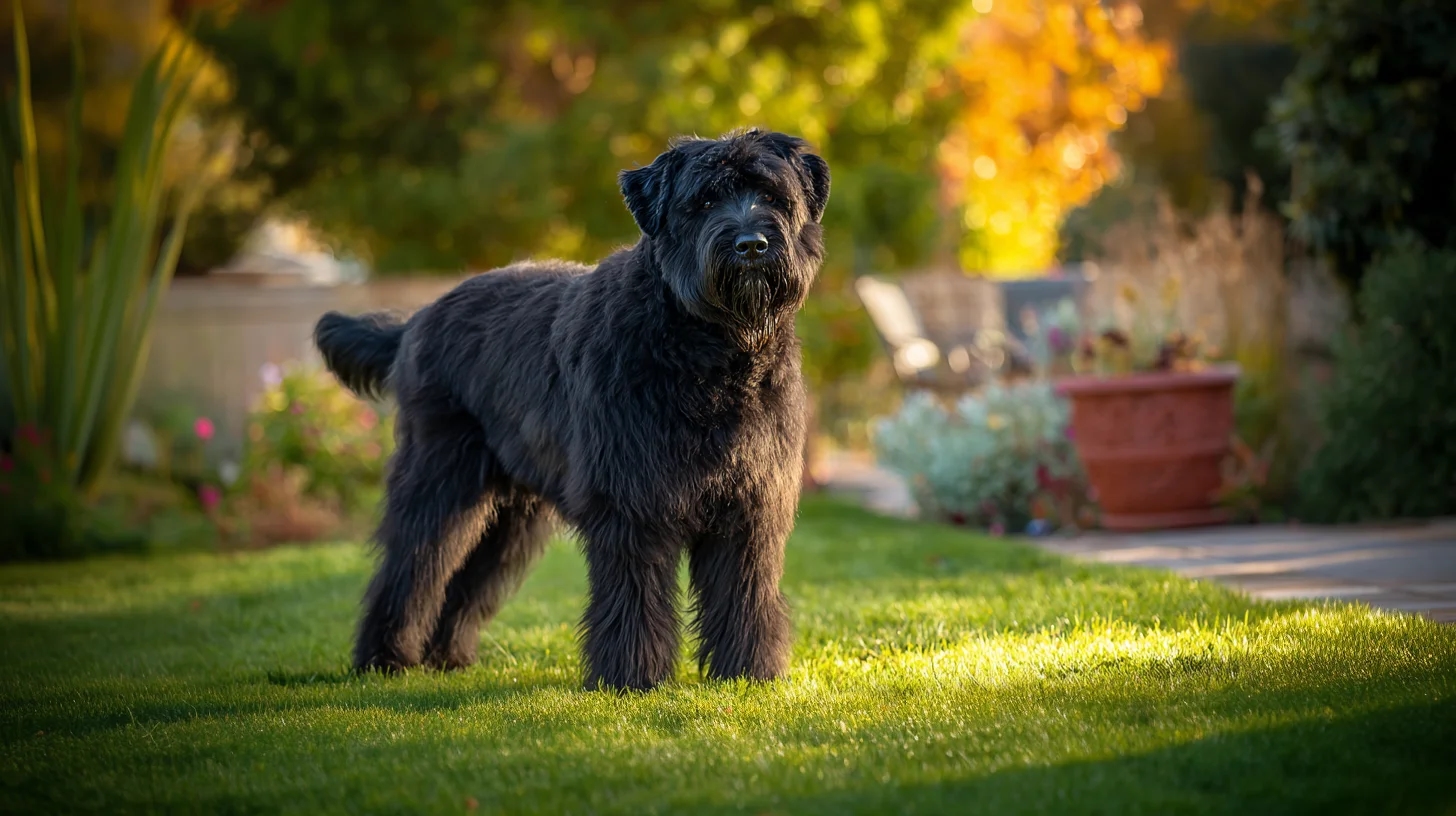
Bouviers des Flandres
Breed Facts
Height
22-26 inches
Weight
70-110 pounds
Lifespan
10-12 years
Key Traits
Overview
Strong, steadfast companions with rugged coats and a calm, intelligent spirit. These versatile, loyal dogs blend impressive working ability with deep devotion—perfect for experienced owners and families seeking a courageous, affectionate friend who thrives on purpose, close bonds, and being an active part of family life.
Temperament & Personality
You'll find a Bouvier affectionate and loyal to its family. This breed is famously gentle and patient with children, often described as kind-hearted and playful. However, Bouviers are also strong-willed and intelligent – early training should be consistent and firm (with rewards) to guide their independence. A well-socialized Bouvier is confident and loving, but its herding instinct makes it naturally watchful. It tends to bond deeply with you and your household, and may be reserved (or protective) around strangers and unfamiliar dogs. These dogs have high energy: without plenty of activity they can get bored and destructive, so plan for daily exercise. In short, Bouviers are friendly, adaptable family dogs that crave companionship, but they require a calm pack leader to handle their protective, sometimes stubborn nature.
Care, Living Environment, & Grooming
Bouviers have a thick, double coat built for outdoor work. It sheds only moderately, but it mats easily without regular brushing. Expect to brush your Bouvier 1–2 times per week to remove loose hair and prevent tangles. Bathe your dog only as needed (their coat is weather-resistant), but clean the beard and face often as food can stick in the long facial hair. Trim nails and check ears weekly to avoid infections. Below is a sample grooming schedule:
- Weekly: Brush coat thoroughly (especially after outdoor play), clean the beard/face, and inspect ears and eyes for debris.
- Monthly: Give a bath if dirty, trim coat edges if you keep it groomed, and clip nails.
- Occasionally: If you maintain the traditional clipped look, plan professional grooming every 6–8 weeks (about $75–$100).
Bouviers thrive in cooler climates thanks to their weather-resistant coat, but take care to keep them cool in hot weather (provide shade and water). They need a lot of space to run and play. A fenced yard is ideal. These dogs can adapt to home life, but a small apartment is challenging unless you commit to at least 2 hours of exercise per day. Give your Bouvier a mix of walks, games (fetch or herding exercises), and mental puzzles to burn off energy. Also split meals (2–3 times per day) to reduce bloat risk.
Training & Socialization
Bouviers are smart and eager to please, but they can be independent thinkers. You should start training early and keep it positive. These dogs respond best to gentle, reward-based methods (treats, praise, clicker). Harsh or heavy-handed techniques will backfire, since Bouviers are sensitive to how you lead them. Basic obedience classes and crate training from puppyhood will help your Bouvier learn manners. Because of their herding background, they have some prey-drive: introduce your puppy to people, children, and other animals early so they learn good manners. Socialization is crucial – Bouviers that have met many new friends in puppyhood tend to be confident adults. Engage them in fun activities (retrieving games, agility, tracking) to channel their intelligence. In short, be consistent and patient: Bouviers are trainable but will test your leadership if bored.
Health Considerations
Bouviers des Flandres generally live about 10–12 years. They are sturdy dogs but are prone to certain inherited conditions. Common health issues include:
- Hip/Elbow Dysplasia – Malformation of the hip or elbow joints causing arthritis. Genetic in origin; obtain OFA or PennHIP clearances from breeders.
- Cataracts & Glaucoma – The breed can develop clouded lenses or eye pressure early in life. Annual eye exams by a veterinary ophthalmologist (CERF/CAER screening) are recommended.
- Degenerative Myopathy – A rare, fatal muscle-wasting disease unique to Bouviers. No cure exists; dogs with this in their lineage should not be bred.
- Gastric Torsion (Bloat) – Deep-chested dogs like Bouviers can suffer a stomach twist after a big meal. To reduce risk, feed multiple small meals and consider a prophylactic gastropexy at spay/neuter time.
- Hypothyroidism – Underactive thyroid gland leading to weight gain and skin issues. Can be managed with daily medication once diagnosed.
Responsible breeders should screen adult dogs for hips, elbows, thyroid, and eye diseases. Because Bouviers can inherit eye and joint problems, check that parent dogs have certifications (e.g. OFA hips/elbows, PennHIP, CERF eyes). In summary, choose a health-tested puppy and maintain yearly vet check-ups; proactive care will help your Bouvier live a full, healthy life.
Cost of Ownership
On average a Bouvier des Flandres costs roughly $2,400 per year to maintain. Here's a rough breakdown (annual):
- Food: ~$700 for high-quality large-breed dog food (active dogs eat more).
- Vet Care: ~$300 for routine wellness visits, vaccinations, and flea/tick prevention.
- Grooming: ~$800 for regular haircuts (every 6–8 weeks at $75–$100 each) and occasional professional trims. Bouviers have thick coats that require expert grooming.
- Insurance: ~$600 (about $50 per month) for comprehensive pet insurance, recommended given the breed's cancer risk.
The first year will be significantly higher due to one-time costs: puppy/veterinary exams, spay/neuter, microchip, crate, leash, etc., which can add $500–$1,000. Budgeting for training classes ($100–$200) is also wise. Overall, Bouviers demand moderate upkeep, and reliable financial planning will ensure you're prepared for both everyday costs and unexpected care.
Pros and Cons
Pros
- Loyal and protective of family
- Good with children
- Highly trainable and intelligent
- "Hypoallergenic" low-shed coat
- Versatile (dog sports, therapy, herding)
Cons
- Very high exercise needs
- Heavy grooming requirements
- Not ideal for inexperienced owners
- Can be stubborn or dominant
- Prone to some serious health issues (health screenings needed)
Fun Facts
- Named in French for their job: "cow-herders of Flanders." Bouviers were bred to work on Belgian farms, so the name literally means "cow herder." They even earned nicknames like "Dirty Beard" (due to their shaggy face) among Flemish farmers.
- This breed nearly disappeared during World War I. Dedicated breeders revived it afterward, leading to its AKC recognition in 1929.
- President Ronald Reagan owned a famous Bouvier named Lucky. In fact, Lucky the Bouvier was a cherished White House pet in the 1980s.
Frequently Asked Questions
Do Bouviers des Flandres shed a lot?
Not really. They have a rough, double coat that sheds moderately. With weekly brushing you can keep loose hairs under control. Despite its thickness, the Bouvier's coat actually sheds less than many dogs – but grooming is still a daily commitment.
Are Bouviers des Flandres good apartment dogs?
Generally no. Bouviers are large, energetic working dogs. They do best with a yard and plenty of outdoor exercise. An apartment can work only if you are very diligent with daily walks and play sessions. Otherwise, they will feel cramped and may become restless.
How much exercise does a Bouvier des Flandres need?
A lot! Plan on at least 1–2 hours of activity each day. This can be broken into long walks, jogs, playtime in a yard, and mentally stimulating training games. Without this, Bouviers quickly get bored and can develop unwanted behaviors.
Can first-time owners handle a Bouvier des Flandres?
Possibly, if you're committed. Bouviers are loyal and eager to please, but their size, strength, and intelligence demand an owner who can consistently train and exercise them. If you're willing to learn breed-specific handling and invest in training, a first-time owner can succeed with this breed. However, inexperienced owners should be prepared: these dogs can test your leadership if given the chance.
References
Personality Profile
Find your perfect puppy pair!
Take our quick personality quiz to find the breeds that match your personality.
Start Quiz NowKey Traits
Temperament
affectionate
Reserved
Cuddly
energy Level
Calm Companion
High-Energy Dynamo
Social Behavior
good With Children
Best with Adults/Older Kids
Kid-Friendly
barking Level
Quiet-Natured
Talkative
Care & Maintenance
shedding Level
Light Shedder
Heavy Shedder
exercise Needs
Short Walks Enough
Needs Daily Workouts
Learning & Cognition
trainability
Independent Thinker
Eager Learner
mental Stimulation Needs
Content Relaxer
Needs Challenges
Breed Facts
Height
22-26 inches
Weight
70-110 pounds
Lifespan
10-12 years
Key Traits
You Might Also Like
Find Your Perfect Puppy Pair
Take our scientifically-backed personality quiz to discover which dog breeds align with your personality.
Start the Quiz