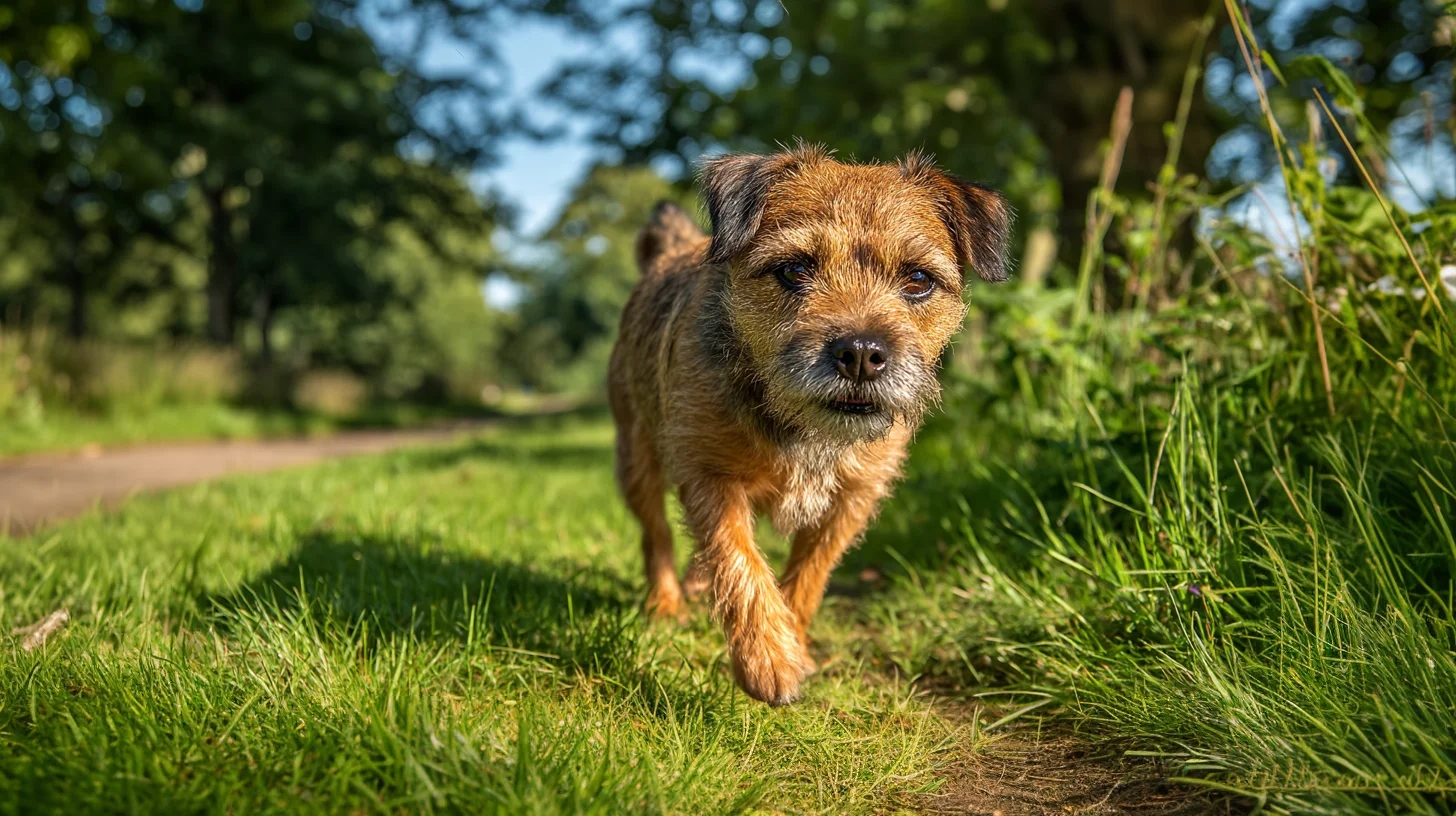
Border Terrier
Breed Facts
Height
10 inches
Weight
11-16 pounds
Lifespan
12-15 years
Key Traits
Overview
Cheerful, hardy companions with wiry coats and an adventurous, affectionate spirit. These spirited, intelligent dogs blend fearless determination with gentle loyalty—perfect for active families and individuals seeking a playful, devoted friend who loves exploring and staying close by your side.
Temperament & Personality
The Border Terrier is famously described as "a two-year-old in a dog suit" – energetic, curious, and affectionate. You'll find your Border to be alert and intelligent, always eager to play and explore the world around them. Bred for fox hunting, they love to dig and chase small animals, so provide lots of toys and supervision outdoors.
Well-socialized Borders are great family pets: they tend to be friendly with children and often get along well with other dogs. They are usually tolerant of strangers and generally not aggressive, but they do enjoy being the center of attention with their playful antics.
Care, Living Environment, & Grooming
Border Terriers are active but adaptable. They need daily exercise – at least a brisk 30- to 60-minute walk or play session – to burn off energy. A home with a yard is nice, but a Border can live happily in an apartment if you commit to adequate walks and play. Their weather-resistant double coat (a wiry topcoat over a soft undercoat) lets them handle most climates, but they still appreciate a warm coat in very cold weather.
Their care routine is relatively low-maintenance but specific:
- Brushing: Use a slicker brush weekly to remove loose fur and prevent mats; Borders don't shed heavily
- Hand-stripping: To maintain the coat texture, hand-strip (remove dead hair by hand) about twice a year. If hand-stripping isn't done, the coat will become soft
- Bathing: Only bathe when needed; frequent baths can strip the coat's oils
- Regular care: Trim nails as needed (usually monthly), brush teeth several times a week, and clean ears weekly to prevent infections (floppy ears can trap moisture)
- Feeding: Feed two meals per day (puppies more often) using a high-quality diet formulated for small breeds
Sample Grooming Schedule
- Weekly: Brush coat thoroughly; check teeth, ears, and paws
- Monthly: Bathe (if dirty) and perform a thorough health check (skin, eyes)
- Twice Yearly: Hand-stripping by a professional or trained owner to maintain the hard coat
Training & Socialization
Border Terriers are intelligent and eager to please, but they can be a bit strong-willed. Early training should focus on positive reinforcement (treats, praise, play) and keeping sessions short and fun. They generally respond well to training – they are "easy to train" – but consistency is key.
Because of their hunting background, Borders have a natural prey drive; train recall reliably and supervise around cats or small pets. Start socializing your pup early with different people, dogs, and environments so they grow up confident and well-mannered. Overall, with patience and positive methods, Border Terriers can excel in obedience, agility, and even as therapy dogs.
Health Considerations
Border Terriers are healthy and long-lived – usually 12–15 years. However, like all breeds, they have some genetic issues to watch for:
- Gallbladder Mucocele: Common in Borders – the gallbladder fills with thick mucus. Early detection by ultrasound can save your dog
- Cushing's Disease: Overproduction of cortisol in older dogs. Signs include increased thirst/appetite and hair loss
- Canine Epileptoid Cramping Syndrome (CECS): A genetic condition causing muscle cramps and seizures, usually seen in young adults
- Eye Issues (Cataracts, PRA): Cataracts can form, so regular eye exams are recommended
- Hip Dysplasia and Patellar Luxation: Joint problems common to many breeds; watch for limping or difficulty getting up
Because of these risks, Border Terriers should have appropriate health screenings: hip and knee (patella) checks, annual eye exams, and regular vet visits. Good breeders will screen for these conditions before breeding.
Cost of Ownership
Border Terriers tend to be more affordable than larger breeds. On average, expect about $1,500/year for a healthy adult Border in the U.S. Breaking it down:
- Food: $300/year for high-quality kibble
- Routine vet care: $300–$400/year for exams and vaccines
- Pet insurance: $200–$300/year
- Grooming: $150–$250/year for hand-stripping or tools
- Toys and supplies: $100/year
Border Terriers don't need professional grooming as often as some breeds, but hand-stripping tools or services add to cost. First-year expenses are higher: puppy classes, initial vet care, gear, and spaying/neutering can push costs higher (plan for $1,500–$2,000 in year one).
Pros and Cons
Pros
- Lively and affectionate; great with families and children
- Small size, adaptable (good for homes or apartments with exercise)
- Intelligent and trainable; generally obedient for a terrier
- Hardy, weather-resistant coat that doesn't shed much
- Relatively healthy and long-lived (12–15 year lifespan)
Cons
- Strong digging and prey drive; may chase cats or dig holes
- Independent streak; can be stubborn if bored or under-exercised
- Needs daily exercise and mental stimulation (boredom leads to mischief)
- Grooming needs include hand-stripping (difficult to find groomers)
- Can bark and be noisy (a typical terrier trait)
Fun Facts
-
The breed's name comes from the Anglo-Scottish border (their hunting origins). They were originally called the Coquetdale or Redesdale Terrier after local hunting kennels.
-
Bred to work alongside foxhounds, Borders have long legs for galloping with horses and bodies small enough to enter fox burrows.
-
The Border Terrier was recognized by the British Kennel Club in 1920 (the AKC followed in 1930).
Frequently Asked Questions
Do Border Terriers shed a lot?
Border Terriers are low-shedding. Their wiry outer coat holds loose hairs until you brush them out. In fact, proper grooming involves hand-stripping rather than heavy brushing, so you'll find very few tufts of hair around the house. Regular brushing and periodic stripping keep their coat healthy without much visible shedding.
Are Border Terriers good apartment dogs?
Yes – provided you commit to exercise. Borders are small and generally quiet indoors, so they adapt well to apartment life. The key is daily activity: brisk walks, playtime, or dog sports to use up their energy. With enough exercise and training, a Border Terrier can thrive in a city apartment as happily as in a country home.
How much exercise does a Border Terrier need?
Border Terriers have moderate to high energy levels. Aim for at least 30–60 minutes of vigorous activity each day (walking, running, fetch, agility). They also love digging and exploring, so let them sniff around a yard or participate in dog sports. Without enough exercise, Border Terriers may become bored and engage in undesirable behaviors (chewing or digging).
Can first-time owners handle a Border Terrier?
Yes. Border Terriers are often recommended for novice owners. They are eager to please and generally easy to train with consistent, positive methods. They're highly rated for novice families due to their good-natured and adaptable temperament. As with any dog, early training and socialization make the experience smooth.
References
Personality Profile
Find your perfect puppy pair!
Take our quick personality quiz to find the breeds that match your personality.
Start Quiz NowKey Traits
Temperament
affectionate
Reserved
Cuddly
energy Level
Calm Companion
High-Energy Dynamo
Social Behavior
good With Children
Best with Adults/Older Kids
Kid-Friendly
barking Level
Quiet-Natured
Talkative
Care & Maintenance
shedding Level
Light Shedder
Heavy Shedder
exercise Needs
Short Walks Enough
Needs Daily Workouts
Learning & Cognition
trainability
Independent Thinker
Eager Learner
mental Stimulation Needs
Content Relaxer
Needs Challenges
Breed Facts
Height
10 inches
Weight
11-16 pounds
Lifespan
12-15 years
Key Traits
You Might Also Like


Find Your Perfect Puppy Pair
Take our scientifically-backed personality quiz to discover which dog breeds align with your personality.
Start the Quiz