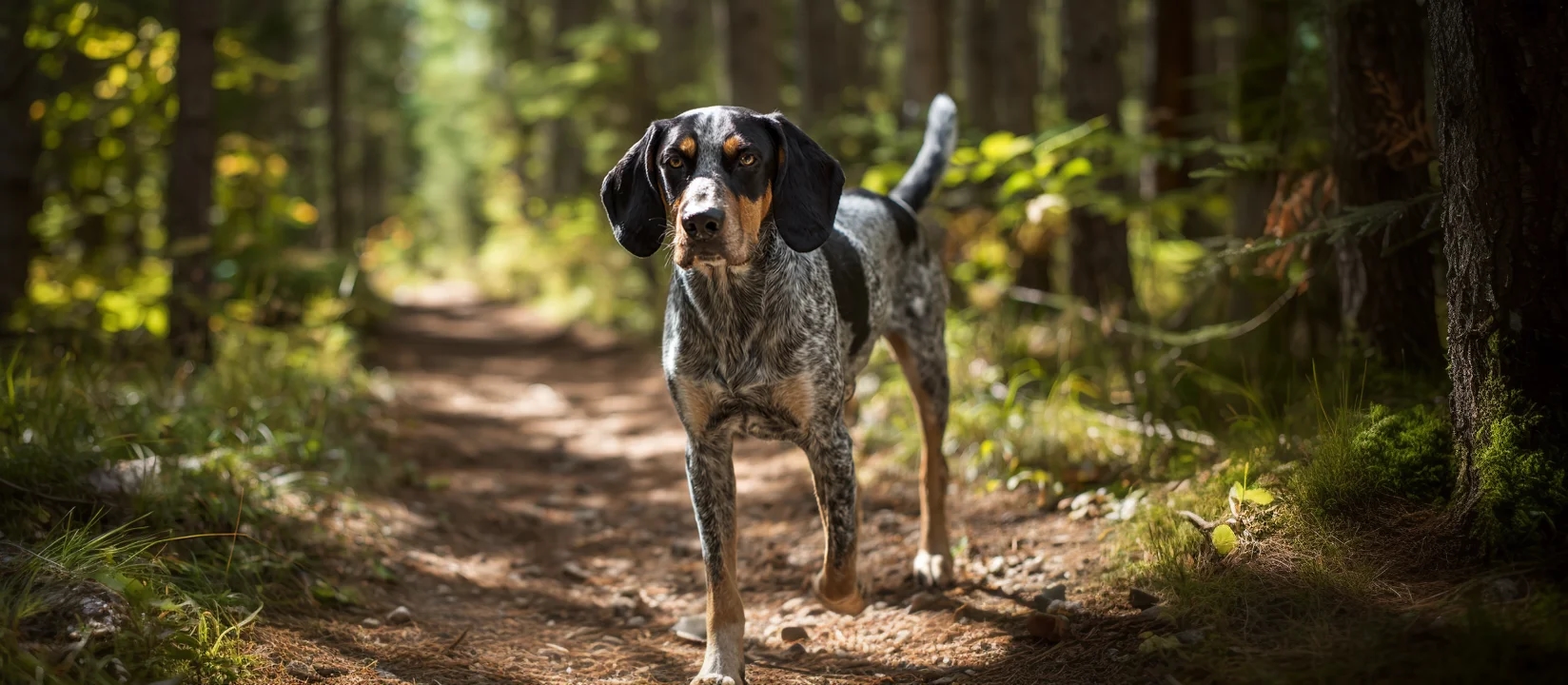
Bluetick Coonhound
Breed Facts
Height
21-27 inches
Weight
50-80 pounds
Lifespan
11-12 years
Key Traits
Overview
Friendly, determined companions with striking mottled coats and a bold, adventurous spirit. These intelligent, affectionate dogs blend powerful scenting skills with deep loyalty—perfect for active families and individuals seeking a fun-loving, devoted friend who thrives on exploration, outdoor adventures, and strong bonds at home.
Temperament & Personality
You will find that your Bluetick Coonhound has two distinct modes. Inside the home, they are often surprisingly mellow, content to snooze on the couch and offer deep affection to their family. They are loyal, charming, and can be quite goofy. However, it's crucial to understand that this calm indoor demeanor is not the breed's default state; it is the direct result of having their immense physical and mental needs met. An under-exercised Bluetick will not be a peaceful companion but a frustrated and vocal one.
When they catch a scent, their hunting instincts take over completely. Their personality shifts to that of an ambitious and incredibly determined tracker, capable of following a trail for miles. This prey drive is powerful and innate; your Bluetick must be carefully supervised around cats and other small pets. With children, they are generally good-natured, but their boisterous energy makes them better suited for older kids who can handle their enthusiasm.
A defining trait is their voice. Blueticks don't just bark; they "bay" or "bawl," a loud, musical, and far-carrying sound they use to communicate on the trail. While this is music to a hunter's ears, it's a significant lifestyle consideration for those in suburban or urban environments.
Care, Living Environment, & Grooming
Daily care for a Bluetick Coonhound centers on managing their boundless energy. These are true athletes who require at least 60 minutes of vigorous exercise every day. Long, brisk walks, running, hiking, and swimming are all excellent ways to keep them physically fit and mentally satisfied.
Their living environment is a critical component of their safety. Due to their overwhelming instinct to follow their nose, a Bluetick should never be off-leash in an unfenced area. For this breed, a tall, secure fence is not a luxury—it is an essential safety tool to prevent them from wandering off on a scent trail and getting lost or hurt. Consequently, they are not recommended for apartment living, where their energy and vocal nature can become problematic. While they are adaptable to various climates, you should provide protection from extreme heat and cold.
Grooming your Bluetick is relatively straightforward, but a few tasks are non-negotiable for their health:
- Weekly Brushing: Their short, smooth coat is low-maintenance, but a weekly brushing with a rubber curry comb or bristle brush will help control their moderate shedding and keep their coat glossy.
- Occasional Bathing: You'll only need to bathe your Bluetick when they get into something smelly during their outdoor adventures.
- Weekly Ear Cleaning: This is the most critical grooming task. Their long, droopy ears are charming but are also highly efficient at trapping moisture and debris, making them extremely prone to painful ear infections. Regular, gentle cleaning is essential.
For feeding, a high-quality, protein-rich diet will fuel their active lifestyle. Blueticks are deep-chested, which puts them at a higher risk for bloat (GDV), a life-threatening condition. To mitigate this risk, feed your dog two smaller meals daily rather than one large one, and avoid vigorous exercise for an hour before and after they eat.
Training & Socialization
Training a Bluetick Coonhound is best approached as a partnership, not a dictatorship. This breed was developed to work intelligently and independently, often far from the hunter, so they have a strong will and a problem-solving mind. Attempting to force compliance will likely result in a battle of wills.
Success comes from leveraging their intelligence and desire for a job. They respond beautifully to positive reinforcement techniques that use treats, praise, and play. Harsh methods will only create anxiety and erode their trust in you. Early and continuous socialization is vital, exposing your puppy to various sights, sounds, people, and other dogs in a positive way to build a confident, well-adjusted adult.
Because their nose is their guide, training a reliable recall is one of the biggest challenges and highest priorities for their safety. Channeling their natural instincts into fun activities like scent work or tracking games is a fantastic way to provide mental stimulation, strengthen your bond, and make training feel like a rewarding game.
Health Considerations
Bluetick Coonhounds are generally hardy dogs with an average lifespan of 11 to 12 years. While the breed is healthy, their physical structure, bred for function, predisposes them to certain conditions. Their deep chest allows for great lung capacity but increases bloat risk; their long ears help waft scent but lead to infections; and their large, powerful frame can stress their joints.
Being aware of these potential issues allows for proactive care. Common health concerns include:
- Gastric Dilatation-Volvulus (Bloat): A life-threatening emergency common in deep-chested breeds where the stomach twists on itself. Immediate veterinary care is required.
- Hip Dysplasia: An inherited malformation of the hip joint that can cause pain and arthritis later in life.
- Ear Infections: Extremely common due to their long, floppy ears that trap moisture and prevent airflow.
- Autoimmune Thyroiditis: A condition where the body's immune system attacks the thyroid gland, often leading to hypothyroidism, which can cause weight gain, skin issues, and lethargy.
- Eye Conditions: The breed can be susceptible to issues such as cataracts.
- Dental Disease: A widespread problem affecting 80% of all dogs by age two. Regular brushing and professional cleanings are essential.
When seeking a puppy, a reputable breeder will openly discuss these issues and provide health clearances from the Orthopedic Foundation for Animals (OFA) for hips, thyroid, and heart, as well as eye clearances from a veterinary ophthalmologist.
Cost of Ownership
You should budget for an average annual cost of around $1,800 to care for your Bluetick Coonhound. This figure covers routine expenses but does not include emergencies. Be prepared for significantly higher costs in the first year, which can range from $2,000 to over $4,500, factoring in the purchase price of the puppy, initial vet visits, spaying or neutering, and essential supplies.
A typical annual budget breaks down into food ($600-$1,000), routine vet care including vaccinations and parasite prevention ($500-$700), and pet insurance ($300-$750). Investing in these preventative measures is a wise financial strategy. It can help you manage the risk of much higher, unexpected costs for treating emergencies like bloat, which can cost thousands of dollars.
Pros and Cons
Pros
- Deeply affectionate and loyal to their family
- Strikingly beautiful and unique appearance
- Intelligent and a legendary hunting partner
- Good-natured with older children and other dogs (with socialization)
- Coat is easy to groom and low-maintenance
Cons
- Requires a very high amount of daily, vigorous exercise
- Extremely powerful prey drive demands constant, lifelong management
- Very vocal; their loud baying is not suitable for many living situations
- Can be stubborn and challenging to train, especially for novices
- Not a good choice for apartment living
Fun Facts
- The Bluetick's ancestry is believed to trace back to the Grand Bleu de Gascogne, French hounds gifted to George Washington by the Marquis de Lafayette during the American Revolution.
- The beloved mascot of the University of Tennessee, "Smokey," is a Bluetick Coonhound, making the breed a cherished symbol of Southern culture and college sports.
- The classic Hanna-Barbera cartoon character Huckleberry Hound, famous for his slow Southern drawl and rendition of "Oh My Darling, Clementine," is a Bluetick Coonhound.
Frequently Asked Questions
Do Bluetick Coonhounds shed a lot?
Bluetick Coonhounds are moderate shedders. Their short, smooth coat is easy to manage, and a quick weekly brushing with a hound mitt or bristle brush is typically all that is needed to remove loose hair and keep their coat healthy.
Are Bluetick Coonhounds good apartment dogs?
No, they are generally considered a poor choice for apartment life. Their high energy levels demand more space than an apartment can provide, and their loud, frequent baying is likely to cause issues with close neighbors.
How much exercise does a Bluetick Coonhound need?
They require a great deal of exercise. As high-stamina athletes, they need at least 60 minutes of vigorous activity every day. This should include more than just a walk, such as running, hiking, or extended games of fetch, to keep them content.
Can first-time owners handle a Bluetick Coonhound?
It is a significant challenge. While a dedicated novice could succeed, this breed is better suited for someone with hound experience. Their combination of intelligence, independence, high energy, and powerful prey drive requires confident and consistent management.
References
Personality Profile
Find your perfect puppy pair!
Take our quick personality quiz to find the breeds that match your personality.
Start Quiz NowKey Traits
Temperament
affectionate
Reserved
Cuddly
energy Level
Calm Companion
High-Energy Dynamo
Social Behavior
good With Children
Best with Adults/Older Kids
Kid-Friendly
barking Level
Quiet-Natured
Talkative
Care & Maintenance
shedding Level
Light Shedder
Heavy Shedder
exercise Needs
Short Walks Enough
Needs Daily Workouts
Learning & Cognition
trainability
Independent Thinker
Eager Learner
mental Stimulation Needs
Content Relaxer
Needs Challenges
Breed Facts
Height
21-27 inches
Weight
50-80 pounds
Lifespan
11-12 years
Key Traits
You Might Also Like


Find Your Perfect Puppy Pair
Take our scientifically-backed personality quiz to discover which dog breeds align with your personality.
Start the Quiz