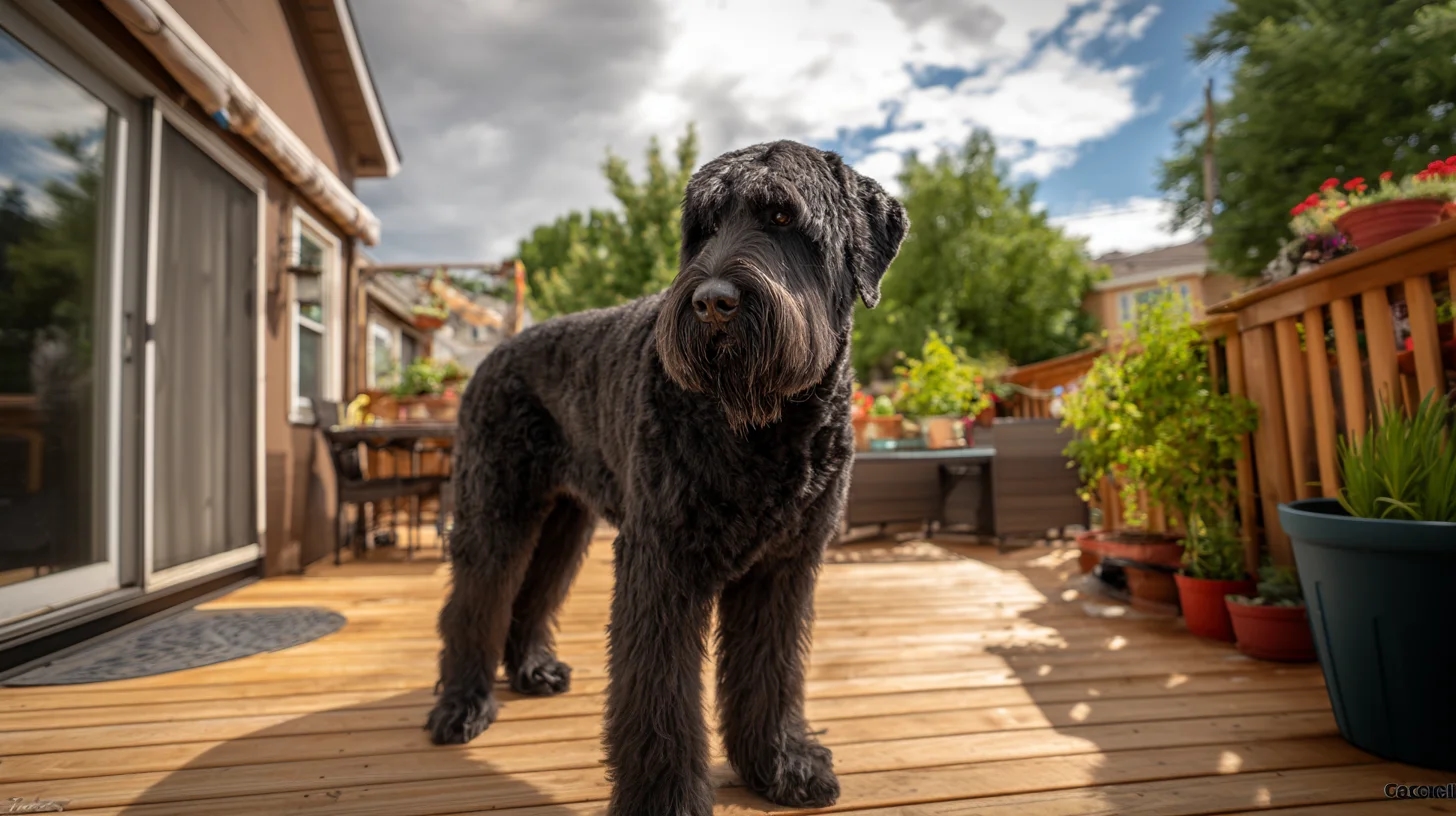
Black Russian Terrier
Breed Facts
Height
24-27 inches
Weight
80-140 pounds
Lifespan
10-12 years
Key Traits
Overview
Strong, confident companions with dense black coats and a calm, loyal spirit. These intelligent, protective dogs blend impressive strength with deep family devotion—perfect for experienced owners seeking a courageous, affectionate friend who thrives on close bonds, purposeful work, and guarding loved ones.
Temperament & Personality
The Black Russian Terrier, or BRT, is not a product of ancient history but a marvel of modern canine engineering. Developed in the mid-20th century by the Soviet military's top-secret "Red Star" Kennel, this breed was purpose-built to be a formidable, all-weather guard dog. Understanding the Black Russian Terrier's temperament means understanding its original job description. They were created to be calm, courageous, and intelligent sentries for military installations in the harshest of climates. This history is not just a footnote; it is the core software of the modern BRT. Their characteristic calmness is the self-assurance of a professional on duty. Their profound loyalty is to their designated "unit"—their family. And their natural aloofness and suspicion toward strangers is not shyness, but active threat assessment. They are not kennel dogs; they must live indoors as an integral part of their human pack to thrive.
For prospective owners, it is critical to understand that the BRT's guarding instincts mature and intensify significantly between 12 and 18 months of age. The sweet, manageable puppy will develop into a serious guardian, a transition that can seem to happen overnight. The extensive training and socialization done in the first year are not just for the puppy, but are a crucial foundation for the powerful adult dog that is guaranteed to emerge.
Care, Living Environment, & Grooming
The BRT's magnificent, all-weather coat is a hallmark of the breed, but it comes with a significant care commitment. This dense, wiry double coat, designed to protect against Siberian winters, is high-maintenance and requires diligent grooming to prevent painful mats and tangles. This is not a cosmetic preference but a health and welfare imperative. Mats can pull on the skin, causing discomfort, hiding parasites, and leading to serious skin infections. The breed's long "furnishings"—the beard, mustache, and fall over the eyes—also need regular attention to keep them clean and free of debris.
Despite their imposing size, BRTs are adaptable and can live happily in various settings, including apartments, as long as their substantial exercise and social needs are met. The most important environmental factor is their inclusion in family life; they are deeply unhappy and can become destructive or aggressive if left isolated in a yard or kennel.
- Several Times a Week: The coat must be brushed thoroughly with a slicker brush and a metal grooming rake to work through the dense undercoat and prevent mats from forming.
- Daily: The beard and mustache should be checked for food debris and gently combed.
- Every 6-8 Weeks: Your BRT will need a full groom, including bathing and trimming. Many owners rely on professional groomers who are experienced with double-coated breeds.
- Weekly: Check and clean the ears to prevent wax buildup and infections, a common issue in dogs with hair in their ear canals.
Training & Socialization
The Black Russian Terrier is a highly intelligent and trainable breed, but it is unequivocally not for a novice owner. Their breeding history has produced a dog that is both brilliant and strong-willed. They require a confident, consistent, and fair leader. In the absence of clear leadership from their human, a BRT will instinctively take charge to ensure the security of its pack, which can manifest as pushy or dominant behavior. Training is the primary way you establish this "leadership contract"—it's not about physical force, but about earning your dog's respect through consistency and clear communication.
Socialization must be early, extensive, and continuous throughout the dog's life. However, the goal is different from that for many other breeds. For a natural guardian like the BRT, the aim of socialization is to teach neutrality, not universal friendliness. You are broadening your dog's understanding of what is "normal" and non-threatening, teaching it to look to you for cues rather than making its own defensive decisions. The goal is a confident, stable dog that is unconcerned by strangers and new situations, not a social butterfly.
Health Considerations
The BRT is a robust breed, but like all large dogs, it is prone to certain health conditions. A responsible owner's first line of defense is choosing a reputable breeder who performs rigorous health screening on their breeding stock. For this breed, genetic testing is not optional; it is essential. The average lifespan is 10 to 12 years.
Due to the availability of DNA tests for some of the most serious inherited diseases, you as a buyer are empowered. You must insist on seeing proof of health clearances for a puppy's parents. This includes certifications for hips and elbows from the Orthopedic Foundation for Animals (OFA), annual eye exams from a veterinary ophthalmologist (CAER), and DNA test results for the conditions listed below.
- Hip and Elbow Dysplasia: An abnormal formation of the joints that can lead to arthritis and lameness. The OFA reported an incidence of approximately 42% for hip dysplasia and 28% for elbow dysplasia in the breed as of 2016, highlighting the importance of screening.
- Progressive Retinal Atrophy (PRA): A genetic eye disease that causes progressive vision loss and eventual blindness. A DNA test is available.
- Hyperuricosuria (HU): An inherited condition where the dog produces excess uric acid, leading to the formation of painful bladder stones that can cause blockages. A DNA test can identify affected dogs and carriers.
- Juvenile Laryngeal Paralysis & Polyneuropathy (JLPP): A devastating and fatal neurological disease that affects puppies. A DNA test allows breeders to completely avoid producing affected offspring.
- Heart Conditions: Aortic stenosis is a known concern in the breed. Regular veterinary check-ups should include listening for heart murmurs.
Cost of Ownership
The Black Russian Terrier is a significant financial commitment, both to acquire and to maintain. The purchase price from a reputable breeder is often high, reflecting the costs of health testing and raising a large-breed litter. Annual costs are also substantial, driven by the needs of a very large dog, particularly for food and professional grooming. Given the potential for expensive orthopedic or other health issues, pet insurance is highly recommended for this breed.
| Expense Category | Estimated Annual Cost (USD) | Notes |
|---|---|---|
| High-Quality Food | $900 | For a large, powerful working breed |
| Routine Vet Care | $700 | Standard care, but costs are higher for large breeds |
| Professional Grooming | $600 | A significant and non-negotiable expense (e.g., $100 every 8 weeks) |
| Insurance & Miscellaneous | $300 | Highly recommended; includes toys, supplies, etc. |
| Total Estimated Annual | $2,500 | Does not include purchase price, initial supplies, or major medical events |
Pros and Cons
Pros
- Exceptionally loyal and bonded to its family
- A formidable and confident, yet calm, guardian
- Highly intelligent and trainable with an experienced handler
- Steady and composed temperament in the home
- Majestic and imposing presence
Cons
- Not suitable for first-time or timid owners
- Requires an immense, lifelong commitment to grooming
- Needs extensive and continuous socialization
- Powerful guarding instincts can be a liability if mismanaged
- Naturally aloof and suspicious of strangers
Fun Facts
- The Black Russian Terrier was created by the Soviet military in a top-secret state-run facility called the "Red Star" Kennel, earning it the occasional nickname "Stalin's Dog".
- Despite its name, the BRT is not a true terrier. It is a member of the Working Group, created from a composite of approximately 17 different breeds, including the Giant Schnauzer, Rottweiler, Airedale Terrier, and Newfoundland.
- The breed was developed with such a strong work ethic that they are often happiest when they have a "job" to do, excelling in activities from obedience and cart-pulling to search and rescue.
Frequently Asked Questions
Do Black Russian Terriers shed a lot?
Black Russian Terriers are considered a low-shedding breed. However, their thick double coat requires extensive brushing several times a week to remove dead hair and prevent it from forming painful mats. What little hair they shed tends to get caught in the coat rather than falling out.
Are Black Russian Terriers good apartment dogs?
Surprisingly, yes. A BRT can adapt well to apartment living as long as its needs for exercise, mental stimulation, and close human companionship are met. They are relatively inactive indoors, but require daily long walks and playtime to stay happy and healthy.
How much exercise does a Black Russian Terrier need?
A BRT needs at least 30 to 40 minutes of solid exercise daily. This can include brisk walks, jogging, or active play sessions. They have great stamina and enjoy activities that challenge them both physically and mentally, like hiking or advanced obedience training.
Can first-time owners handle a Black Russian Terrier?
No, this breed is not recommended for novice owners. Their intelligence, size, power, and strong protective instincts require an experienced, confident, and consistent handler who understands the mindset of a large working dog. An owner must be prepared to establish fair leadership from day one.
References
Personality Profile
Find your perfect puppy pair!
Take our quick personality quiz to find the breeds that match your personality.
Start Quiz NowKey Traits
Temperament
affectionate
Reserved
Cuddly
energy Level
Calm Companion
High-Energy Dynamo
Social Behavior
good With Children
Best with Adults/Older Kids
Kid-Friendly
barking Level
Quiet-Natured
Talkative
Care & Maintenance
shedding Level
Light Shedder
Heavy Shedder
exercise Needs
Short Walks Enough
Needs Daily Workouts
Learning & Cognition
trainability
Independent Thinker
Eager Learner
mental Stimulation Needs
Content Relaxer
Needs Challenges
Breed Facts
Height
24-27 inches
Weight
80-140 pounds
Lifespan
10-12 years
Key Traits
You Might Also Like
Find Your Perfect Puppy Pair
Take our scientifically-backed personality quiz to discover which dog breeds align with your personality.
Start the Quiz