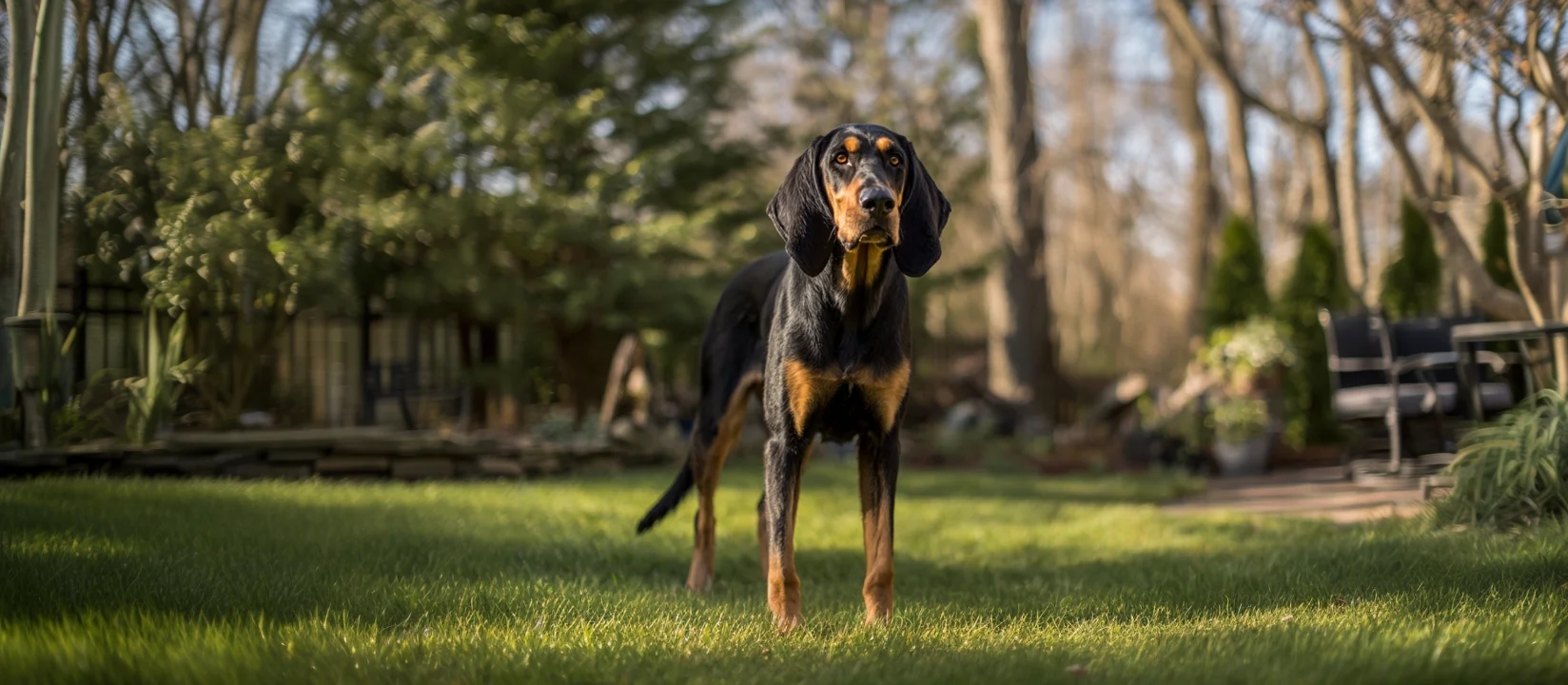
Black and Tan Coonhound
Breed Facts
Height
21-27 inches
Weight
50-75 pounds
Lifespan
10-12 years
Key Traits
Overview
Easygoing, loyal companions with sleek black-and-tan coats and an adventurous, determined spirit. These affectionate, mellow dogs blend powerful scenting skills with deep devotion—perfect for active families and individuals seeking a gentle, fun-loving friend who loves to explore and share close bonds at home.
Temperament & Personality
You'll find the Black and Tan Coonhound has two distinct, charming modes: a mellow, easy-going house companion and a tenacious, single-minded hunter. Indoors, your Coonhound will be a world-class couch potato, content to snooze by the fire or lean affectionately against you. They are famously gentle, loyal, and form powerful bonds with their families, including children and other dogs. This calm demeanor is the energy-saving mode of a high-endurance athlete.
Once outside, however, that placid nature is replaced by the soul of a working hound. Bred to track scents for miles over rugged terrain, your Coonhound is driven by an incredible nose. This instinct is powerful and deeply ingrained. When left alone or on a hot trail, your dog will communicate using its signature vocalization: a loud, mournful, and musical bay. This isn't nuisance barking; it's a tool developed over centuries to alert hunters to their location, and each hound's voice is unique. This dual nature—the loving pet and the relentless tracker—is the very essence of the breed.
Care, Living Environment, & Grooming
Caring for a Black and Tan Coonhound means catering to both their physical and instinctual needs. They require at least 40 to 60 minutes of vigorous exercise daily to stay healthy and well-behaved. However, a simple jog on pavement isn't enough. Your Coonhound needs to exercise their nose. Long, leashed walks that allow for plenty of sniffing are more fulfilling for them than a fast run. This mental stimulation is key to preventing boredom and the destructive behaviors that can follow.
Due to their large size and booming bay, this breed is not well-suited for apartment living. An ideal home has a spacious, securely fenced yard with a physical fence at least five feet high. Their powerful scent drive means they cannot be trusted off-leash in an unenclosed area; if they catch an interesting scent, they will follow it, deaf to your calls.
Grooming is surprisingly straightforward, but with a few key commitments:
- Weekly: Brush their short, dense coat with a grooming mitt or brush to remove loose hair and manage moderate shedding. The most critical task is cleaning their long, droopy ears to prevent moisture buildup and painful infections.
- As Needed: Bathe your Coonhound when they get dirty. Be prepared for drool; they are known to slobber, so keeping a "drool rag" handy is a good idea, especially after they eat or drink. Trim their nails every few weeks.
Feed your Coonhound a high-quality, large-breed dog food, splitting their daily portion into two meals to help prevent bloat, a life-threatening condition to which deep-chested dogs are prone.
Training & Socialization
Training a Black and Tan Coonhound requires understanding that their "stubbornness" is actually a high degree of functional intelligence. They were bred to work independently, often far from their handler, and to make their own decisions while following a trail. They are not a breed that will blindly obey commands.
The key to success is partnership, not dominance. They are sensitive dogs that respond best to patient, consistent training using positive reinforcement and high-value treats. Harsh methods will cause them to shut down. Keep training sessions short and engaging to hold their attention.
Early and ongoing socialization is vital to ensure your Coonhound grows into a confident, well-adjusted adult. Exposing your puppy to a wide variety of people, sights, and sounds will help them manage their natural watchdog tendencies and potential reserve with strangers. Their prey drive is extremely high, so while they are usually good with other dogs, they are not suitable for homes with cats or other small pets unless raised with them from a very young age.
Health Considerations
The Black and Tan Coonhound is a typically sturdy breed with an average life expectancy of 10 to 12 years. While generally healthy, their specific physical structure—large size, deep chest, and long ears—predisposes them to certain conditions. Responsible breeders screen their stock for the most common hereditary issues to promote the long-term health of the breed.
Key health concerns you should be aware of include:
- Bloat (Gastric Dilatation-Volvulus): A sudden, life-threatening condition where the stomach twists. It is common in deep-chested breeds and requires immediate emergency surgery.
- Hip and Elbow Dysplasia: An inherited malformation of the joints that can lead to arthritis. Maintaining a healthy weight is crucial to manage this risk.
- Ear Infections: Their long, heavy ears trap moisture and debris, creating a perfect environment for bacterial and yeast infections. Weekly cleaning is essential for prevention.
- Eye Conditions: The breed can be prone to several eye issues, including cataracts, entropion (inward-rolling eyelid), and ectropion (drooping eyelid).
- Hypothyroidism: A condition where the thyroid gland doesn't produce enough hormone, which can affect metabolism, skin, and coat.
Regular veterinary check-ups and purchasing a puppy from a breeder who provides health clearances for the parents are the best ways to ensure a long, healthy life for your companion.
Cost of Ownership
You should budget for an average annual cost of approximately $1,800 to care for your Black and Tan Coonhound. First-year costs will be higher, factoring in the purchase price of the puppy, initial vaccinations, and spay/neuter surgery.
The ongoing expenses can be broken down into several categories. Food for a large, active dog will be a significant portion, costing around $500 to $700 per year. Routine veterinary care, including annual check-ups, vaccinations, and parasite prevention, can range from $400 to $750. Because of the breed's predisposition to expensive emergencies like bloat, many owners opt for pet insurance, which can add $400 to $600 annually. Other costs include supplies like bedding, durable toys, training classes, and grooming tools, particularly ear-cleaning solutions.
Pros and Cons
Pros
- Extremely affectionate and loyal family companion
- Gentle and patient with children and other dogs
- Calm and mellow indoors when properly exercised
- Low-maintenance short coat
- A unique, all-American breed with a rich history
Cons
- Loud, frequent, and far-carrying baying
- Cannot be trusted off-leash; requires a secure, high fence
- High prey drive, especially for small animals
- Can be stubborn and independent to train
- Prone to drooling and chronic ear infections
Fun Facts
- The Black and Tan Coonhound is a true piece of living Americana. George Washington himself was an early developer of the hound stock that would eventually lead to the breed, using dogs gifted to him by the Marquis de Lafayette.
- In 1945, the Black and Tan became the very first of the six distinct coonhound breeds to be officially recognized by the American Kennel Club.
- The popular idiom "barking up the wrong tree" is thought to have originated from the coonhound's hunting method of trapping prey in a tree and baying to alert the hunter.
Frequently Asked Questions
Do Black and Tan Coonhounds shed a lot?
They have a short, dense coat and are considered moderate shedders. Regular weekly brushing is usually sufficient to remove loose hair and keep their coat healthy, preventing it from ending up all over your furniture and clothes.
Are Black and Tan Coonhounds good apartment dogs?
No, they are generally not recommended for apartment living. Their large size, need for a yard to roam, and most notably, their loud, carrying bay make them much better suited for a home in a suburban or rural setting.
How much exercise does a Black and Tan Coonhound need?
They are active dogs that require at least 40 to 60 minutes of vigorous exercise each day. This should include long, leashed walks that allow them plenty of time to use their powerful nose, which provides crucial mental stimulation.
Can first-time owners handle a Black and Tan Coonhound?
They can be a challenge for novice owners. Their independence, stubborn streak, and high prey drive require a patient, consistent, and dedicated owner. Their loud baying can also be difficult for inexperienced owners and their neighbors to manage.
References
Personality Profile
Find your perfect puppy pair!
Take our quick personality quiz to find the breeds that match your personality.
Start Quiz NowKey Traits
Temperament
affectionate
Reserved
Cuddly
energy Level
Calm Companion
High-Energy Dynamo
Social Behavior
good With Children
Best with Adults/Older Kids
Kid-Friendly
barking Level
Quiet-Natured
Talkative
Care & Maintenance
shedding Level
Light Shedder
Heavy Shedder
exercise Needs
Short Walks Enough
Needs Daily Workouts
Learning & Cognition
trainability
Independent Thinker
Eager Learner
mental Stimulation Needs
Content Relaxer
Needs Challenges
Breed Facts
Height
21-27 inches
Weight
50-75 pounds
Lifespan
10-12 years
Key Traits
You Might Also Like


Find Your Perfect Puppy Pair
Take our scientifically-backed personality quiz to discover which dog breeds align with your personality.
Start the Quiz