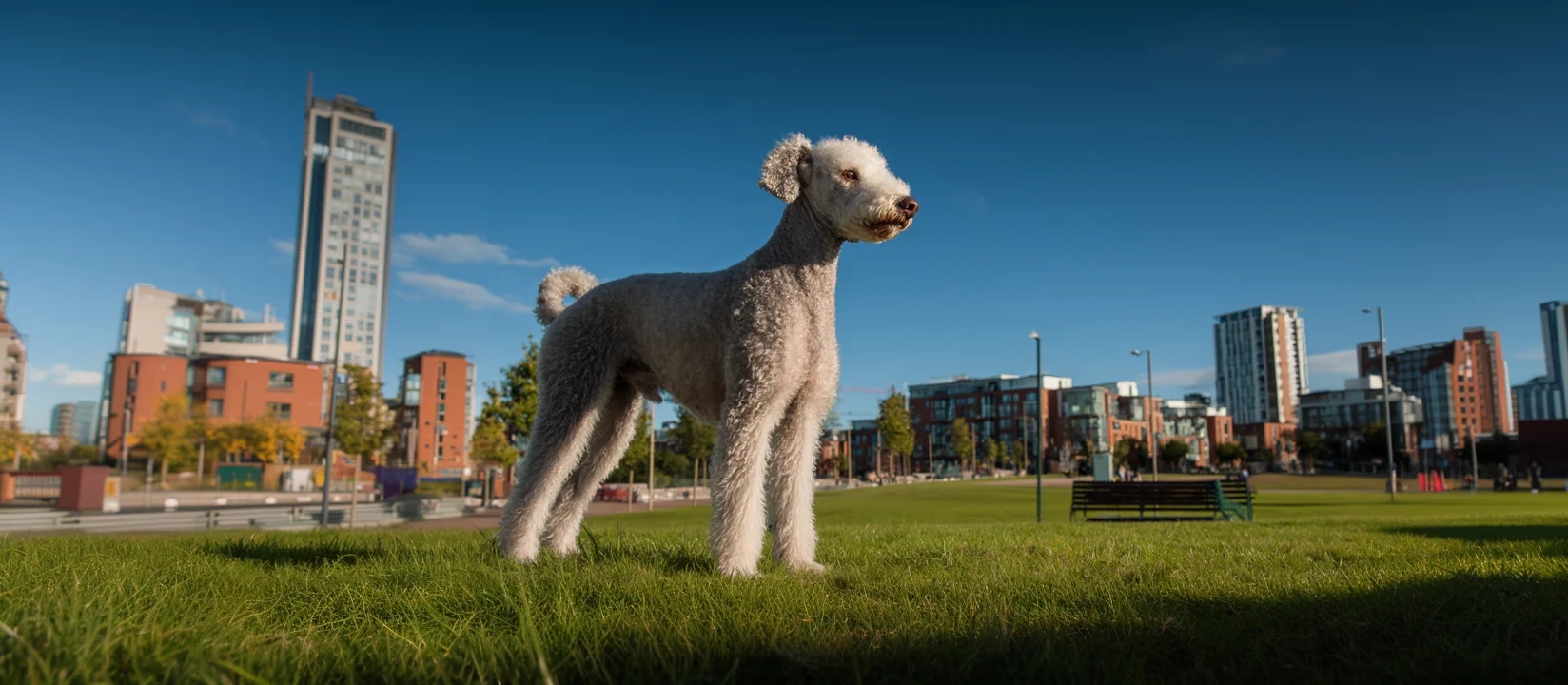
Bedlington Terrier
Breed Facts
Height
15-17 inches
Weight
17-23 pounds
Lifespan
11-16 years
Key Traits
Overview
Elegant, spirited companions with lamb-like coats and a bold, lively spirit. These intelligent, affectionate dogs blend playful energy with fearless determination—perfect for individuals and families seeking a charming, devoted friend who loves adventure, close bonds, and adding a unique touch to everyday life.
Temperament & Personality
The Bedlington Terrier is best understood through its famous description: "the head of a lamb and the heart of a lion". At home, you'll experience the lamb-like side. Your Bedlington will be a gentle, loyal, and demonstrative companion who thrives on being the center of your family's world. They are champion cuddlers, happy to curl up on the sofa with you after a good run. They are generally good-tempered and playful with children, though supervision is always wise to ensure interactions are respectful. While they can be reserved with strangers at first, they are typically polite and welcoming to invited guests.
Beneath this gentle exterior beats the heart of a lion. Bred for tough, dirty work like hunting vermin in coal mines, your Bedlington possesses a fearless and plucky spirit. This terrier courage means they rarely back down from a challenge and can be scrappy with other dogs if not properly socialized. This instinct also fuels a strong prey drive; they will eagerly chase squirrels and other small animals, making a leash an absolute necessity in unfenced areas.
This duality extends to their trainability. Bedlingtons are highly intelligent and eager to please, but they are also sensitive souls. While they can have a stubborn streak, this is not a dog that responds to a heavy hand. Harsh correction will cause this sensitive breed to withdraw or engage in a battle of wills. Success comes from understanding that their terrier tenacity must be met with patient, firm, and positive leadership, not force.
Care, Living Environment, & Grooming
A Bedlington Terrier is wonderfully adaptable to various living situations, including apartments, provided their exercise needs are met. They are generally quiet house dogs who prefer to live indoors close to their families. However, their sighthound ancestry gives them surprising speed, and their terrier prey drive means a securely fenced yard is non-negotiable for off-leash time.
You should plan for about an hour of exercise daily to keep your Bedlington physically fit and mentally stimulated. This can include brisk walks, jogging, or spirited games of fetch. They are not typically hyperactive or destructive dogs, as long as they have a healthy outlet for their energy. Many Bedlingtons excel in dog sports like agility, earthdog trials, and tracking, which satisfy both their body and mind.
The most significant commitment in caring for a Bedlington is grooming. Their unique, crisp, curly coat is a mixture of hard and soft hairs and is celebrated for being virtually non-shedding and hypoallergenic. While this is a huge plus for many households, it means the coat grows continuously and requires a demanding, non-negotiable grooming schedule to prevent painful mats and skin problems.
Your weekly and monthly grooming tasks will include:
- Brushing/Combing: The coat needs to be brushed thoroughly down to the skin several times a week, if not daily, for at least five to ten minutes to prevent tangles from forming.
- Clipping: The fast-growing coat requires a professional trim every six to eight weeks. This is a specific, stylized clip involving both scissors and clippers that many owners entrust to an experienced groomer.
- Nail & Ear Care: Regular nail trims are essential for comfort and mobility. You must also keep their ears clean and pluck the hair from the ear canal to prevent wax buildup and infections.
For feeding, a high-quality commercial dog food appropriate for their age and energy level is an excellent choice. Be mindful of portion sizes, as they can be prone to weight gain.
Training & Socialization
Training a Bedlington Terrier is a rewarding exercise in building a partnership. Their high intelligence and eagerness to please make them quick studies. However, their terrier heritage endowed them with an independent mind, which can sometimes present as stubbornness.
The key to unlocking their cooperative nature is positive reinforcement. Bedlingtons thrive on praise, food rewards, and engaging, fun training sessions. Conversely, they do not respond to harsh training methods or physical correction. Such approaches are counterproductive and will only damage your bond and their willingness to learn. Your role is to be a patient and consistent leader who makes learning a positive experience.
Early and continuous socialization is absolutely critical for this breed. From a young age, you should expose your Bedlington puppy to a wide variety of people, sounds, and environments. This helps build a confident, well-adjusted adult and tempers their natural wariness of strangers. Positive interactions with other dogs are vital to manage their potential for terrier-on-terrier squabbles. While they have a strong prey drive, they can learn to live peacefully with family cats if raised together from puppyhood.
Health Considerations
The Bedlington Terrier is a generally healthy breed with a lifespan of 11 to 16 years. However, prospective owners must be aware of one significant genetic condition that has historically plagued the breed: Copper Toxicosis.
- Copper Toxicosis (CT): This is the most serious inherited health concern in Bedlingtons. It is an autosomal recessive disease caused by a gene mutation that prevents the liver from properly excreting copper. This leads to a toxic buildup, causing chronic liver inflammation and eventual failure. In the past, a high percentage of the breed was affected or carried the gene. Fortunately, a reliable DNA test is now available, allowing responsible breeders to screen their dogs and avoid producing affected puppies. It is absolutely essential that you only work with a breeder who performs this test and can show you the results for a puppy's parents.
Other, less common health issues to be aware of include:
- Patellar Luxation: A condition where the kneecap can slip out of its groove.
- Eye Conditions: Bedlingtons can be susceptible to various inherited eye problems, such as retinal dysplasia and cataracts.
- Kidney Disease: The breed may have some predisposition to certain kidney ailments.
To ensure a healthy puppy, the Bedlington Terrier Club of America recommends that all breeding dogs be screened for these conditions. When speaking with a breeder, you should ask for health clearances for the puppy's parents, including a Copper Toxicosis DNA test, a patella evaluation, an ophthalmologist evaluation, and a cardiac exam.
Cost of Ownership
You should budget for an average annual cost of around $1,800 to care for your Bedlington Terrier. This figure can vary based on your location and lifestyle choices, but it provides a realistic baseline. The initial cost of acquiring a well-bred puppy from a reputable breeder can range from $1,500 to $3,000 or more.
The largest and most predictable ongoing expense will be grooming. Professional clipping every six to eight weeks can easily amount to $600-$900 per year. Other major annual costs include:
- Food: $400 - $600 for a high-quality diet.
- Routine Veterinary Care: $500 - $700 for annual checkups, vaccines, and parasite prevention.
- Pet Insurance: $300 - $600 for a policy that can provide peace of mind and financial protection against unexpected illnesses or injuries.
Pros and Cons
Pros
- Affectionate, loyal, and cuddly family companion
- Intelligent and playful personality
- Virtually non-shedding, good for allergy sufferers
- Adaptable to apartment living with proper exercise
- Alert and effective watchdog
Cons
- Extremely high-maintenance grooming needs (time and cost)
- Strong prey drive; must be leashed outdoors
- Can be stubborn and requires patient, positive training
- Potential for scrappiness with other dogs if not well-socialized
- Prone to the serious genetic condition, Copper Toxicosis
Fun Facts
- The Bedlington Terrier was developed in the mining shire of Bedlington, England, where miners prized them for their skill in ridding the pits of rats and other vermin.
- They earned the nickname "Gypsy Dog" as they were often used by wandering Romani people as stealthy partners in poaching activities.
- The breed's unique combination of traits led to the famous saying that they have "the head of a lamb and the heart of a lion".
Frequently Asked Questions
Do Bedlington Terriers shed a lot?
No, they are a virtually non-shedding breed, which makes them a popular choice for people with allergies. However, this means their coat grows continuously and requires significant professional grooming to prevent matting and keep them comfortable.
Are Bedlington Terriers good apartment dogs?
Yes, they can adapt well to apartment living. They are relatively quiet indoors but require at least an hour of daily exercise, such as brisk walks or runs in a secure area, to stay happy and healthy.
How much exercise does a Bedlington Terrier need?
A Bedlington needs about an hour of vigorous exercise per day. They are energetic and enjoy activities like running, hiking, and playing fetch. Mental stimulation through training or dog sports is also important to prevent boredom.
Can first-time owners handle a Bedlington Terrier?
A dedicated first-time owner can succeed, but they must be prepared. The breed is sensitive and requires patient, positive training, not harsh discipline. The biggest challenge is the non-negotiable commitment to their expensive and frequent grooming needs.
References
Personality Profile
Find your perfect puppy pair!
Take our quick personality quiz to find the breeds that match your personality.
Start Quiz NowKey Traits
Temperament
affectionate
Reserved
Cuddly
energy Level
Calm Companion
High-Energy Dynamo
Social Behavior
good With Children
Best with Adults/Older Kids
Kid-Friendly
barking Level
Quiet-Natured
Talkative
Care & Maintenance
shedding Level
Light Shedder
Heavy Shedder
exercise Needs
Short Walks Enough
Needs Daily Workouts
Learning & Cognition
trainability
Independent Thinker
Eager Learner
mental Stimulation Needs
Content Relaxer
Needs Challenges
Breed Facts
Height
15-17 inches
Weight
17-23 pounds
Lifespan
11-16 years
Key Traits
You Might Also Like
Find Your Perfect Puppy Pair
Take our scientifically-backed personality quiz to discover which dog breeds align with your personality.
Start the Quiz