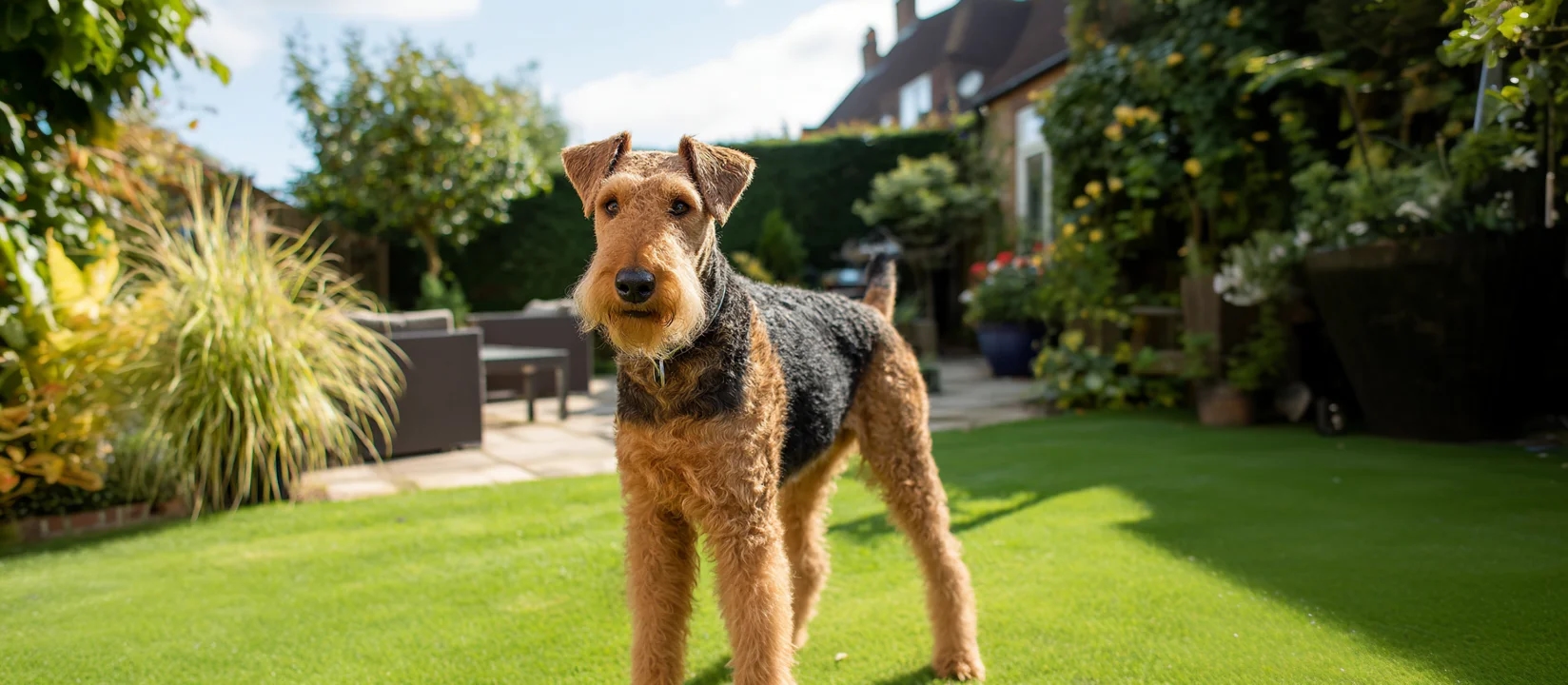
Airedale Terrier
Breed Facts
Height
23 inches (average)
Weight
50-70 pounds
Lifespan
11-14 years
Key Traits
Overview
Confident, versatile companions with wiry coats and a bold, intelligent spirit. These lively, courageous dogs blend playful charm with strong protective instincts—perfect for active families and individuals seeking a loyal, adventurous friend who excels at work, play, and forming deep bonds.
Temperament & Personality
Airedale Terriers are large, confident terriers with a spirited personality. They are friendly and loyal to family but can be reserved with strangers, making them excellent watchdogs. Terriers by nature, Airedales are intelligent and strong-willed. They often retain a puppy-like exuberance well into adulthood and love to play. With proper training, they generally get along with children and other pets. Because they were bred to hunt independently, Airedales can be headstrong. Early socialization and consistent guidance help curb their instinct to chase small animals or dig holes. When stimulated and given attention, the Airedale’s affectionate and brave nature shines through.
Care, Living Environment & Grooming
Airedales have a dense, wiry double coat that sheds very little. Their coat is relatively hypoallergenic, but it mats if not properly maintained. Brush your Airedale several times a week to remove loose hairs and prevent tangles. A professional groomer should strip or trim their coat about three to four times a year. Baths are seldom needed unless the dog gets very dirty (natural oils keep the coat healthy). Aside from coat care, routine tasks include checking the ears weekly, trimming nails and brushing teeth regularly, and cleaning around their eyes as needed.
- Daily: Provide plenty of exercise (see below), playtime, and attention. Check ears and eyes; brush teeth a few times a week.
- Weekly: Thoroughly brush the coat (use a pin or slicker brush) and inspect for mats.
- Monthly: Trim nails, rotate toys, and give a thorough ear-cleaning. Check for lumps or skin issues.
- Every few months: Professional grooming (hand-stripping or trimming) to maintain coat texture.
Airedales thrive with active owners. They can adapt to many living environments, but they do best if they have a fenced yard to romp and dig safely. They handle cold weather reasonably well due to their double coat, but in hot climates they may be sensitive to heat. Indoors, they enjoy being with family; they do not tolerate being left alone outside for long periods.
Training & Socialization
Airedale Terriers are smart and learn quickly, but their independent, terrier temperament means they can be stubborn. Training should be firm, consistent, and positive. Use reward-based methods like treats and praise to keep them engaged; repetitive drills can bore an Airedale, so vary the activities. Early socialization is crucial: introduce your Airedale puppy to many people, places, and pets to build confidence. Their strong prey drive means they’ll chase small animals, so teach good recall. Clicker training or agility classes can channel their intelligence and energy positively. With clear boundaries and gentle leadership, most Airedales respond well, but they may test limits if leadership is weak.
Health Considerations
Airedale Terriers are generally sturdy dogs with a typical lifespan of about 10–13 years. Like all breeds, they have some hereditary conditions owners should be aware of:
- Hip Dysplasia: Common in large breeds; abnormal hip joint development can cause pain and lameness.
- Bloat (Gastric Torsion): Their deep chest makes them prone to gastric dilatation-volvulus, a life-threatening twisted stomach condition. Avoid heavy exercise right after meals.
- Hypothyroidism: An underactive thyroid can lead to weight gain, lethargy, skin and coat problems. It’s treatable with medication once diagnosed.
- Allergies and Skin Issues: Some Airedales suffer food or environmental allergies, causing itchy skin and ear infections.
- Eye Problems: Occasional cataracts or lens luxation may occur. Regular eye exams can catch these early.
Responsible breeders will health-test parents (hips, eyes, thyroid, etc.) and may screen for Airedale-specific issues. Annual vet checkups and maintaining a healthy diet and weight help prevent or mitigate many problems.
Cost of Ownership
Expect to spend around $1,800/year on your Airedale Terrier. Major expenses include: about $600/year for high-quality dog food (an active 50–60 lb dog needs roughly 4–5 cups a day); $300–$500/year for routine veterinary care (annual exams, vaccinations, parasite prevention); $400–$600/year for insurance or unexpected medical issues; and $200–$300 for professional grooming and supplies (grooming clips every 3–4 months plus at-home brush and bath supplies). Cheaper DIY grooming kits and preventive care can lower some costs, but first-year expenses (spay/neutering, puppy vaccines, crate/toys) will be higher.
Pros and Cons
Pros
- Intelligent and trainable (if consistent)
- Loyal and protective of family
- Versatile – good at sports, tracking, and work
- Low-shedding, hypoallergenic coat
- Playful and fun-loving, great with active families
Cons
- Very high energy – needs lots of exercise
- Strong-willed and independent (requires firm training)
- High prey drive – may chase small pets
- Large size – needs space and strength to handle
- Regular grooming is necessary (coat maintenance)
Fun Facts
- The Airedale Terrier earned the nickname “King of Terriers” due to its size and confidence.
- In World War I, Airedales served as sentries and messengers. One named Jack delivered a critical battlefield message despite severe injuries and was posthumously awarded the Victoria Cross.
- Three U.S. presidents (Woodrow Wilson, Warren Harding, and Calvin Coolidge) all kept Airedale Terriers as pets.
Frequently Asked Questions
Do Airedales shed a lot?
No – Airedales have a hard, wiry double coat that sheds very little. Regular brushing (several times a week) removes dead hair and prevents mats. Occasional hand-stripping or trimming by a groomer (every few months) also helps keep loose hairs in check. You may see only a small amount of fur around the house compared to many breeds.
Are Airedales good apartment dogs?
Not typically. Airedales are large, active dogs who thrive on space and activity. In an apartment, you must compensate with lots of walks, runs, and play sessions. They can adapt to smaller living spaces if exercise needs are met and they have mental stimulation. However, their size and energy level usually make them better suited to homes with yards. They do best where someone is home much of the day – leaving an Airedale alone in a small space can lead to boredom and digging.
How much exercise does an Airedale need?
Airedales need daily vigorous exercise – at least 1–2 hours total. Plan on long walks or jogs, plus active play (fetch, frisbee) or dog-sport activities to burn off their energy. They benefit from multiple sessions each day rather than one long outing. Without sufficient exercise and mental challenges, Airedales can become restless and may develop unwanted behaviors (digging, chewing). Keeping them busy helps maintain a happy, well-behaved dog.
Can first-time owners handle an Airedale?
Airedales can be a challenge for inexperienced owners. They are intelligent and affectionate, but also strong-willed and energetic. They require firm, consistent leadership and plenty of exercise. First-time owners must be prepared to invest time in training and socialization. If you are patient and follow positive training methods, many first-time owners succeed. However, due to their size and terrier temperament, Airedales are generally not recommended for novices.
References
Personality Profile
Find your perfect puppy pair!
Take our quick personality quiz to find the breeds that match your personality.
Start Quiz NowKey Traits
Temperament
affectionate
Reserved
Cuddly
energy Level
Calm Companion
High-Energy Dynamo
Social Behavior
good With Children
Best with Adults/Older Kids
Kid-Friendly
barking Level
Quiet-Natured
Talkative
Care & Maintenance
shedding Level
Light Shedder
Heavy Shedder
exercise Needs
Short Walks Enough
Needs Daily Workouts
Learning & Cognition
trainability
Independent Thinker
Eager Learner
mental Stimulation Needs
Content Relaxer
Needs Challenges
Breed Facts
Height
23 inches (average)
Weight
50-70 pounds
Lifespan
11-14 years
Key Traits
You Might Also Like


Find Your Perfect Puppy Pair
Take our scientifically-backed personality quiz to discover which dog breeds align with your personality.
Start the Quiz